


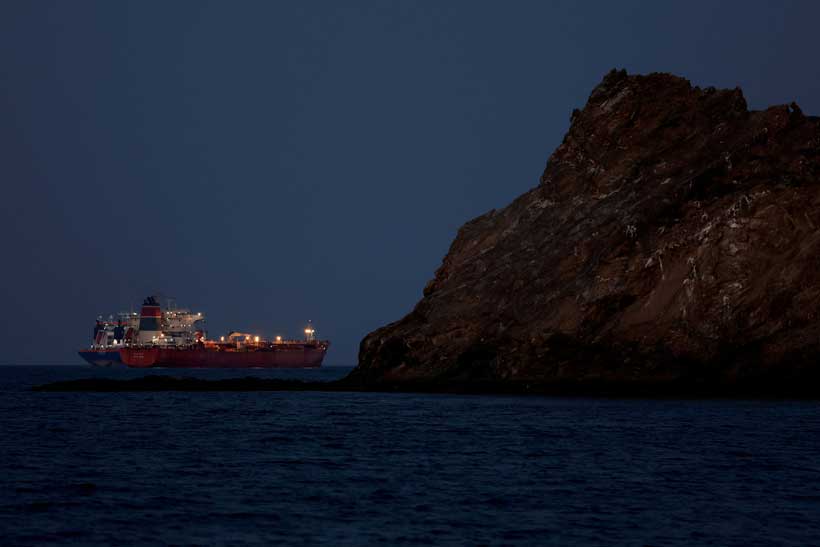
Iran says it will announce a new restricted zone in the Gulf and publish maps for a new shipping corridor through the Strait of Hormuz in the coming days, adding another layer of tension around one of the world’s most important energy routes.
Mohsen Rezaei, secretary of Iran’s Supreme National Security Council, said the restricted zone would begin where the U.S. blockade of Iran starts and extend into parts of the Gulf. Any vessel entering the zone would be placed on a sanctions list, although Tehran has provided few details about how the system would operate.
What’s Happening
Iran also says it has agreed on maps for a new international corridor through Iranian and Omani waters, with Iran taking responsibility for managing the route. Rezaei said the maps would be signed and approved within days.
He linked the reopening of the Strait of Hormuz directly to the end of U.S. military pressure, saying Iran would only commit to keeping the waterway open if Washington stopped what Tehran describes as sabotage, threats and attacks.
Stay ahead of the geopolitical week.
MD Briefing delivers expert analysis across five global fronts — the Indo-Pacific, energy, geoeconomics, European security, and the Middle East — every Monday morning. Free.
The announcement comes as military exchanges between Iran and the United States have resumed following a pause during much of August. U.S. forces struck three Iranian oil tankers on Saturday, including one near Kharg Island, while Iran’s Islamic Revolutionary Guard Corps has attacked U.S. warships in the region.
Strait of Hormuz Under Pressure
The Strait of Hormuz has become a central pressure point in the conflict. Before the war, roughly one fifth of global oil supplies passed through the waterway.
Shipping traffic has fallen sharply. An average of just 10 commodity ships crossed the Strait each day over the previous 10 days, the lowest level since May. The disruption helped push Brent crude above $97 a barrel.
Iran has demonstrated that it can threaten oil flows through the Strait, while the United States is attempting to maintain its blockade and keep commercial shipping moving.
U.S. Central Command said it had redirected 92 commercial vessels, disabled three and boarded two as part of efforts to enforce the blockade.
Iran’s Economy Faces Growing Pressure
The confrontation over the Strait is taking place alongside a deepening economic crisis inside Iran.
Three senior Iranian sources have said the U.S. campaign to block Iranian oil exports and prevent sanctions evasion is becoming increasingly difficult for Tehran to withstand.
Iranian Parliament Speaker Mohammad Baqer Qalibaf warned that attacks on Iranian interests would receive a faster and heavier response. But he also identified the economy as a major battlefield, pointing to currency volatility, inflation, unemployment and problems managing markets.
Iran’s Economy Minister Ali Madanizadeh said Tehran would respond through economic reforms and rejected the idea that U.S. sanctions would force Iran to change its political course.
Kharg Island Remains a Critical Target
Iran relies heavily on Kharg Island, its main oil export hub. Before the war, around 90% of Iranian crude exports passed through the island.
Iran says Kharg has been hit around 550 times in recent months but remains operational. The United States has continued targeting Iran’s oil export network as part of its blockade.
President Donald Trump also recently posted an AI generated video depicting Kharg Island being destroyed, prompting Iranian authorities to warn of a strong response if the island is attacked.
Why It Matters
The developments increase the risk that the Strait of Hormuz could become an even more contested part of the conflict.
Any sustained disruption to the waterway could affect global energy supplies and push oil prices higher. The impact is already being felt in fuel markets, while the conflict is also creating political pressure in the United States ahead of November’s congressional elections.
At the same time, Iran is using control over access to the Strait as leverage against Washington, while the United States is trying to demonstrate that it can maintain oil flows despite Iranian restrictions.
Key Stakeholders
Iran: Tehran is using control over the Strait and its oil infrastructure as strategic leverage while trying to manage growing economic pressure.
United States: Washington is enforcing its oil blockade while attempting to keep commercial energy flows moving through the region.
Oman: The proposed new shipping corridor would pass through Omani waters, making Oman an important party to the new arrangement.
Global oil markets: Any significant reduction in traffic through Hormuz could further raise crude prices and increase pressure on fuel consumers.
What’s Next
Iran is expected to release details and maps for the proposed shipping corridor and restricted zone in the coming days. The key question will be whether the new system can facilitate limited commercial passage or instead further complicate navigation through the Strait.
Meanwhile, continued U.S. and Iranian attacks could keep disrupting shipping and pushing oil prices higher. With diplomatic efforts stalled and the June ceasefire having unravelled, the Strait of Hormuz is likely to remain one of the most important flashpoints in the conflict.
Analysis
Iran’s proposed corridor appears designed to give Tehran greater control over shipping through waters surrounding the Strait while creating an alternative framework for passage during the conflict.
But the announcement also highlights the central contradiction facing both sides: Iran wants to retain the ability to restrict the waterway as leverage, while the United States wants to demonstrate that its blockade cannot prevent energy from moving.
As long as military confrontation continues, Hormuz will remain both an economic chokepoint and a strategic bargaining tool, with any further disruption carrying consequences well beyond the Gulf.
With information from Reuters.
