TODAY’S NUMBERS
$4,334 (gold, per ounce, near record) · $200bn (Russian reserves frozen at Euroclear) · Sept. 15 (deadline for the EU’s Russia sanctions list to lapse). Gold near records prices geopolitical risk broadly; the frozen-assets deadlock and an expiring blacklist show that machinery jamming underneath.
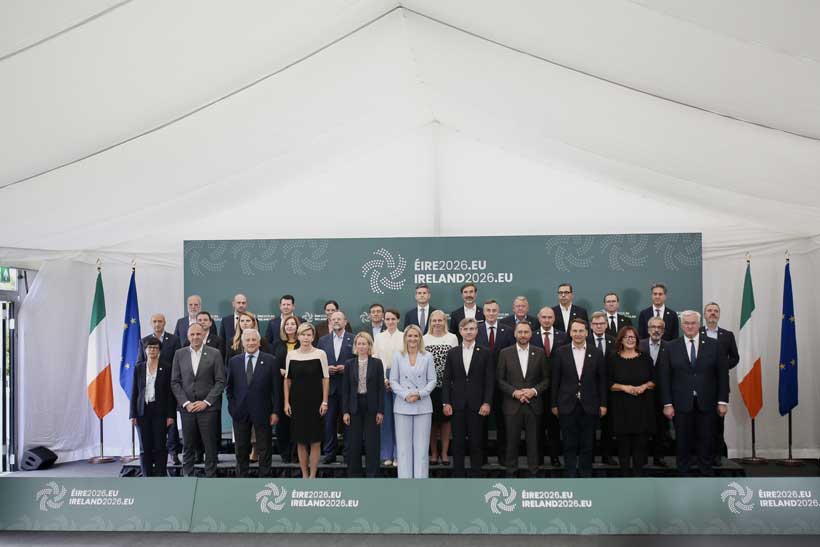
On September 1–2, EU foreign ministers gathered in Wicklow, Ireland, for an informal “Gymnich” meeting meant to close Ukraine’s funding gap for 2027. Sweden, the Netherlands, Spain and Poland used the session to revive the plan Belgium blocked in December: turning roughly $200 billion in frozen Russian central bank assets, mostly sitting at Euroclear, into a “reparations loan” for Kyiv. Belgium said no again. Separately, EU ambassadors postponed renewing sanctions on more than 3,000 Russians because Slovakia wants names delisted before the September 15 deadline.
Two sanctions instruments are jamming at once, and both jam for the same structural reason: EU sanctions decisions require unanimity among all 27 members, and unanimity means any single government has leverage.
Stay ahead of the geopolitical week.
MD Briefing delivers expert analysis across five global fronts — the Indo-Pacific, energy, geoeconomics, European security, and the Middle East — every Monday morning. Free.
Track one is the reparations loan. Since 2022 the EU has kept Russia’s central bank reserves immobilized — mostly cash from matured, Belgian-cleared debt securities now parked in money markets, worth roughly $280–300 billion worldwide and about $200 billion at Euroclear alone. The European Commission wants to convert Euroclear’s cash balances into a loan for Ukraine, repayable only once Russia eventually pays reparations, while keeping the underlying reserves nominally frozen rather than confiscated. Belgium — which would absorb the legal fallout if Moscow sues Euroclear or retaliates against Belgian assets worldwide — says it will not carry that exposure alone. This week’s four-country letter didn’t move Brussels; the Commission was asked, again, to return with a risk-sharing formula.
Track two is the individual sanctions list. The measure covering more than 3,000 Russians tied to the war on Ukraine expires September 15 and needs unanimous renewal. Slovakia, at times joined by Hungary, is withholding its vote unless Brussels first removes several individuals — continuing a pattern both governments have run since 2022, using the renewal clock itself as a bargaining chip.
The near-term winners: the delisting candidates, and Moscow, which gets a longer clock and a visible crack in Western unity to cite. The losers: Ukraine, still waiting on a funding decision Sweden’s foreign minister already calls “clearly not enough,” and Belgium, cast as the holdout for declining to underwrite a $200 billion bet alone.
Why it matters: this fight is really a test of whether “freezing” quietly becomes “confiscating” — and who absorbs the legal risk when it does. If Brussels pushes the reparations loan through over Belgium’s objections, it sets a precedent that sovereign reserves parked in Western custody are conditionally the custodian’s to redirect, not simply to hold. Every central bank still keeping reserves in euros or dollars — Gulf sovereign wealth funds, the People’s Bank of China, India’s RBI — is watching this exact fight before deciding how much more to keep there versus in gold, which is one reason gold keeps setting records even as this diplomatic track stalls.
The individual-sanctions fight is smaller but just as telling: Russia doesn’t need to win the sanctions argument outright. It only needs one EU government with a grievance to hold the entire renewal hostage every six or twelve months. That turns a nominally unified 27-country sanctions regime into a running negotiation with whichever capital is least aligned that quarter — and it means the credibility of the West’s principal financial weapon now depends on Bratislava’s mood as much as Brussels’ resolve.
Watch for: two dated checkpoints. First, September 15 — whether the EU renews the 3,000-plus-name Russia sanctions list on schedule, or lets it lapse, even briefly, while Bratislava negotiates delistings, which would be a first for the regime. Second, the European Commission’s next frozen-assets proposal, expected ahead of EU leaders’ October summit, which will show whether Brussels has found a risk-sharing formula that gets Belgium to yes — or is simply recycling the €90 billion loan Sweden’s foreign minister already dismissed as insufficient.