


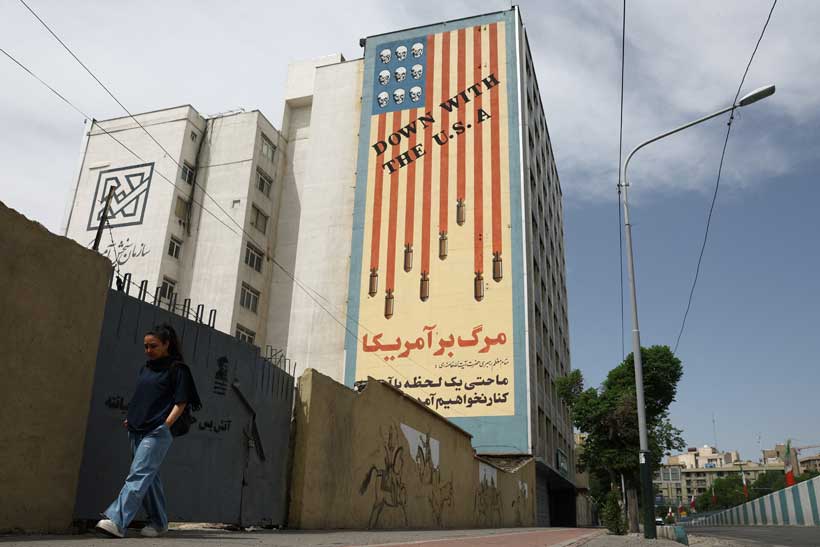
The War Enters a New Phase
Six months after the United States and Israel launched attacks on Iran, the conflict appears to be entering an endgame defined by economic pressure, military deterrence and a lack of a clear path to settlement.
Iran’s government has suffered severe economic damage but remains in power. Washington, meanwhile, is relying increasingly on sanctions and a naval blockade to pressure Tehran into changing course.
US Sanctions Shift the Battlefield
The latest U.S. sanctions mark a shift from direct military confrontation toward economic warfare. Washington is targeting Iran’s oil revenues, financial networks and trading partners in an effort to cut off the resources sustaining Tehran.
However, the strategy faces a major obstacle. China and India remain important economic partners for Iran, and enforcing secondary sanctions against them could create significant economic and diplomatic costs for Washington.
Stay ahead of the geopolitical week.
MD Briefing delivers expert analysis across five global fronts — the Indo-Pacific, energy, geoeconomics, European security, and the Middle East — every Monday morning. Free.
Iran Relies on Economic Resilience
Iran has spent decades adapting to sanctions and has survived previous maximum pressure campaigns without abandoning its strategic objectives.
Tehran’s leadership appears to believe that time is on its side. Rather than surrendering, Iran could respond to increasing pressure by raising the costs for its opponents through attacks or disruption targeting shipping, ports and energy infrastructure.
This could produce a prolonged confrontation below the threshold of full scale war.
Growing Economic Pressure at Home
The greatest vulnerability for Iran may ultimately be domestic.
Annual inflation reached 66% in July, while food prices increased by 128% year on year. The worsening economic situation has already contributed to protests, while the government’s strengthening of security forces suggests that authorities remain concerned about renewed unrest.
This creates a difficult dilemma for Washington. Economic pressure can weaken Iran’s economy without necessarily weakening the political system itself.
Gulf States Face a Difficult Choice
The Gulf states have strong incentives to see the conflict contained. They want to avoid another major war while protecting energy infrastructure and shipping routes.
The Strait of Hormuz remains central to the crisis because Iran’s ability to disrupt the waterway gives Tehran leverage over global energy markets.
A prolonged standoff therefore creates risks not only for Iran and the United States but also for Saudi Arabia and other Gulf economies.
Analysis
The central problem is that both Washington and Tehran have leverage but neither has an easy way to convert that leverage into victory.
The United States has overwhelming economic and military power, but escalating further could threaten global energy markets and deepen international opposition. Iran is economically weakened, but its leadership has demonstrated a willingness to absorb substantial costs rather than surrender its strategic position.
This makes the conflict increasingly resemble a war of endurance rather than a conventional military contest. Washington needs Iran to concede without triggering a wider regional crisis, while Tehran needs to survive the pressure without losing control domestically.
The most likely path may therefore be prolonged pressure combined with intermittent negotiations rather than a decisive military or political breakthrough. The outcome could ultimately depend less on who can inflict the most damage and more on which side becomes less willing to continue bearing the costs of the stalemate.
With information from Reuters.
