


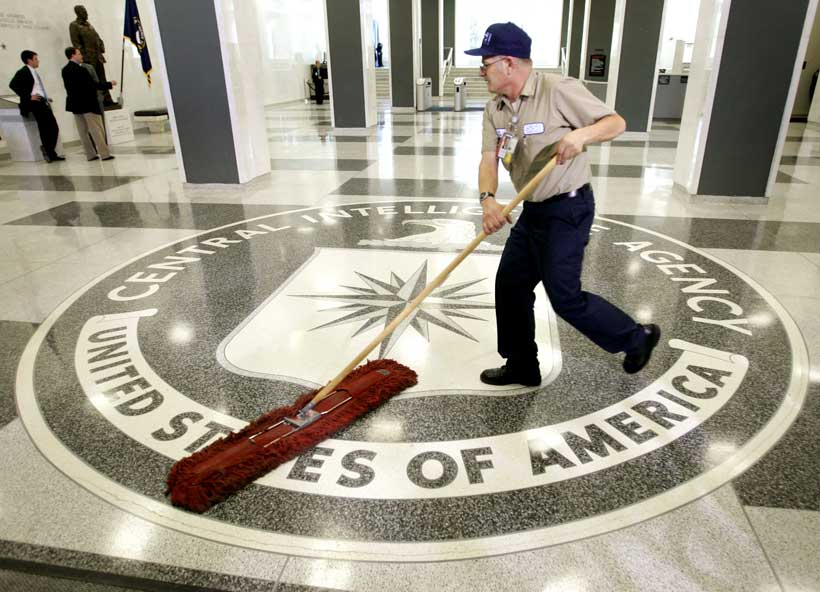
Chinese media and intelligence are closely following the exodus of the American Central Intelligence Agency CIA personnel, particularly the months-long wait for new retirees to receive their financial entitlements. The agency is facing what it describes as an unprecedented number of retirements as the Trump administration seeks to reduce its workforce. Chinese media and intelligence perspectives on this unprecedented exodus of CIA officers align with their own. The delayed payments are a key focus, with both China and the US focusing on exploiting these developments to highlight institutional weaknesses within the American administration and the declining effectiveness of espionage against Beijing. Beijing is using the CIA exodus and delayed retirement payments to cast doubt on the efficiency of American institutions, targeting disaffected and dismissed intelligence operatives to gather information. This is achieved by promoting the idea of the US administration’s collapse and attracting these affected security professionals to bolster Chinese counterintelligence capabilities. Here, Beijing is exploiting the widespread layoffs and dismissals within the CIA and other US federal agencies, turning the affected employees into valuable assets to bolster Chinese counterintelligence capabilities. The Chinese strategy focuses on transforming these dismissed experts from defenders of US national security into offensive tools that expose Washington’s vulnerabilities.
The most prominent trends in official and semi-official Chinese commentary and analysis regarding the dismissal of CIA personnel can be summarized as follows: (Chinese mockery of the China-defeat strategy and the backfiring on the strategist). This is the same point made by Chinese media reports, such as the official Xinhua News Agency, which indicated that the Trump administration had previously announced that its restructuring and hiring freeze aimed to focus on China-defeating and the trade war. However, the actual result was the dismissal of skilled and experienced personnel within the CIA. This exposes the structural failures of the US, and Chinese media highlighted the crisis as evidence of administrative chaos within the United States. The pressure to downsize the federal government has paralyzed the Office of Personnel Management (OPM). This has left Washington unable to even pay the pensions of its retired spies on time. Here, Chinese intelligence, military, political, strategic, and media circles seized upon this crisis to promote the idea of eroding American national security and the golden opportunity it presented for counterintelligence. Chinese think tanks and intelligence agencies seized upon internal American warnings that leaving thousands of former intelligence officers without income for months made them easy targets for infiltration. Beijing interpreted this as a tacit admission of the fragility of institutional loyalty within the American system in the face of financial pressures. Beijing viewed it as evidence of American administrative disarray and a prime example of the brain drain of accumulated expertise. Chinese analyses, assessments, and evaluations focused on the fact that the deferred resignation and contract buyouts programs have prompted senior analysts and field officers within the CIA (those with extensive networks and deep knowledge of Asian affairs) to abruptly leave the service, creating an intelligence gap that will be difficult to fill in the near future. From the Chinese perspective, this exposes the American narrative of transparency and efficiency and reinforces the idea of the political manipulation of intelligence. Therefore, China is exploiting this unprecedented crisis within the CIA to bolster its ongoing narrative that US intelligence agencies have become tools in partisan political conflicts within Washington. Beijing views the mass exodus as a reflection of the professional officers’ lack of confidence in the administration’s political direction. Beijing is using this as part of a counter-propaganda strategy, with Chinese media outlets employing these facts to send messages to the international community, developing countries, and the Global South, suggesting that the United States, which seeks to impose its global security hegemony, is suffering from severe internal divisions that prevent it from managing its fundamental sovereign affairs efficiently and professionally.
Regarding the Chinese political and media exploitation of the CIA staff exodus crisis, the Chinese media machine promotes these crises as evidence of the collapse and disarray of the US federal administration model. It exploits the inability of US institutions to meet their financial obligations (to portray Washington as incapable of protecting even its most sensitive agencies). Therefore, Chinese intelligence, analytical, and strategic circles employ propaganda to highlight the fragility of job security and social stability within US decision-making circles. Furthermore, China strategically and intelligence-wise exploits this internal US crisis. Chinese intelligence agencies monitor these vulnerabilities to target former employees or those facing termination. Beijing offers inducements or clandestine channels of communication through consulting and research fronts to ensnare individuals who are psychologically and financially distressed. China also exploits the frustration resulting from delayed pensions or forced layoffs to facilitate infiltration, counter-recruitment, and the acquisition of sensitive secrets.
Chinese intelligence, such as the Ministry of State Security (MSS), operates through specific and deliberate mechanisms. The MSS, which oversees Chinese intelligence operations, exploits vulnerabilities such as fractured loyalty, financial weakness, and psychological and material incentives. Beijing focuses on federal officers and probationary personnel who have been laid off from the CIA and harbor resentment, bitterness, and a desire for revenge against their former superiors. Chinese intelligence, analytical, and strategic circles then work to support these individuals to fill the financial gap. The sudden loss of a job for a security officer with high financial obligations creates fertile ground for recruitment, as China offers substantial and enticing financial incentives to secure their loyalty. Chinese intelligence circles are also actively employing digital recruitment through front companies. These are sham consulting firms. Beijing is establishing networks of consulting companies, think tanks, and fake recruitment agencies that appear Western and 100% legitimate to target talent on LinkedIn. Through these platforms, Chinese intelligence officers target former CIA employees who are seeking employment on well-known job search platforms like LinkedIn. They use disguised accounts, sometimes employing artificial intelligence, to apply for jobs. Then begins the process of gradually extracting information. The relationship starts with requests for ordinary, non-classified (publicly available) research in exchange for lucrative financial rewards to build trust. The employee is then gradually drawn into providing sensitive information and moving to encrypted communication platforms.
Stay ahead of the geopolitical week.
MD Briefing delivers expert analysis across five global fronts — the Indo-Pacific, energy, geoeconomics, European security, and the Middle East — every Monday morning. Free.
Here, Chinese intelligence agencies work to feed their counterintelligence efforts with tactical information. When China succeeds in recruiting a compromised American security operative, it doesn’t just seek international secrets but focuses on acquiring high-quality information that serves its counterintelligence apparatus. The most prominent of these is uncovering the methods of operation of the US Central Intelligence Agency (CIA). Understanding American recruitment mechanisms, how spies are planted, and methods of vetting and infiltration. Identifying profiles and characteristics (profiles) to understand the psychological and behavioral traits the CIA seeks in informants, which helps China detect potential spies within its own territory or within the People’s Liberation Army early on. This also involves uncovering technical and cyber vulnerabilities by identifying the encryption tools and systems used by US agencies, thus giving Chinese counterintelligence the ability to fortify its networks and penetrate counterespionage operations. Exploiting the absence of exit briefings, Western and American intelligence reports have revealed that some federal employees who were hastily discharged did not undergo standard exit briefings. This procedural gap left employees without direct warnings or clear reporting mechanisms should they be approached by hostile entities. Beijing exploited this as a golden opportunity to operate with minimal oversight. In response to this risk, US security agencies, such as the FBI and the National Counterintelligence and Security Center NCSC), issued heightened security alerts and shut down and blocked dozens of fake websites belonging to Chinese recruitment networks targeting discharged CIA employees.
