


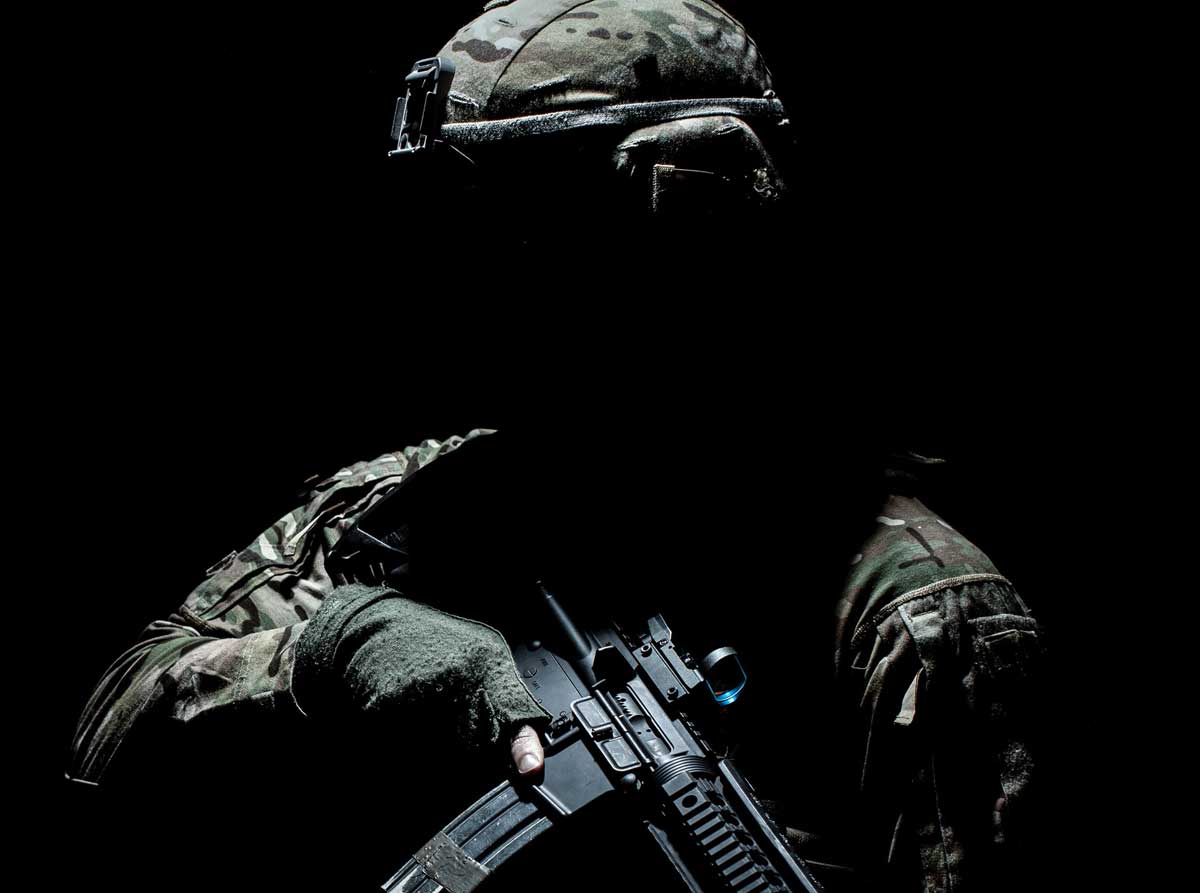
Military mobilization has always been a difficult issue for the European Union, just as difficult as the creation of a common European army. However, what was avoided until only a few years ago has now become unavoidable. Germany wants the Bundeswehr to be capable of fighting a war by 2029; the EU has set the “Readiness 2030” objective, while NATO requires allies to increase overall defense spending to 5% of GDP by 2035. These dates do not predict the beginning of a war, but they indicate that Europe still lacks the capabilities required for a prolonged and high-intensity conflict.
This mobilization gap has prompted the United States, namely President Donald Trump, to pressure European countries, demanding that they assume a greater share of the security burden. The intensification of US competition with China requires increasing amounts of American attention and resources. In all of this, the West is buying time to increase weapons production, ammunition reserves, air defense capabilities, troop numbers, and military mobility, including the “Military Schengen” project. At the same time, Europe is attempting to reduce its dependence on the United States in technology, finance, payment systems, and digital infrastructure. This reflects a broader European debate over strategic autonomy (Vulin openly expresses) and resilience, extending beyond defense into technology, infrastructure, and economic security.”
However, while mobilization is a sign of future strength, it may also be a sign of present weakness. When a system declares that it needs several years to prepare for war, its adversaries understand that the West has identified the threat but is still not fully prepared to confront it.
The Window Before Western Mobilization
Stay ahead of the geopolitical week.
MD Briefing delivers expert analysis across five global fronts — the Indo-Pacific, energy, geoeconomics, European security, and the Middle East — every Monday morning. Free.
This period of mobilization creates a strategic window in which the West is becoming stronger, while during this transition it remains cautious and focused on crisis management without being prepared for a direct confrontation.
However, for Russian leader Vladimir Putin, this approach is presented through a different formula: “If a fight is inevitable, you have to strike first.” Putin stated this as a personal lesson and a logic of self-defense, rather than as an official declaration of a preventive war, but his formula creates the premise that if a conflict has become inevitable, it could justify acting before the opponent.
Putin’s most prominent public ally in the Western Balkans, namely in Serbia, Aleksandar Vulin, in a recent interview through the expansion of BRICSview, raised the question of why Moscow should wait until 2030, when, according to him, Europe will be ready for a direct confrontation with Russia. According to him, this extreme military action is a forced response to a future threat from the West.
These statements do not prove any joint plan to initiate a war before 2029, but they confirm a shared way of thinking: if the adversary is expected to be stronger in several years, waiting does not mean peace but a loss of initiative. Vulin openly expresses what others conceal behind terms such as “deterrence,” “self-defense,” “indivisible security,” or a “multipolar order.”
For the time being, the West is pursuing a policy of controlled pressure towards Russia by supporting Ukraine and imposing sanctions while restricting Moscow’s access to technology. However, it has continuously avoided a direct confrontation between NATO and Russia. The logic may lie in avoiding a nuclear risk, but at the same time Russia is being given time to adapt, mobilize its economy, and increase military production.
Therefore, the problem that arises is that the time the West is buying does not belong solely to the West.
This time is also being used by the West’s adversaries to weaken it from within. Disinformation and political polarization, radicalization, and the loss of trust in institutions distract societies from strategic threats and reduce their ability to act collectively. Thus, the West may become militarily stronger but, at the same time, more politically and socially fragmented during the process of mobilization.
Multipolarism is gaining ground during the waiting period.
This period of Western mobilization is providing space for the consolidation of the “multipolarist” scenario. This scenario is based not solely on the economic rise of countries such as China or the expansion of BRICS, but also on a political narrative that challenges Western primacy and seeks a redistribution of global power.
Vladimir Putin has described this vision by stating that Russia should develop as “one of the centers of a more just multipolar world that is now taking shape.” Therefore, multipolarism in Russian strategy is not only about the distribution of power among several states but also about changing the international order itself. In this vision, Russia does not see itself merely as a traditional power but as a distinct civilization with its own interests, path, and strategic space.
This idea has also been adopted by Serbia and translated into a Balkan context, where, for Serbia, the weakening of the Western order and the rise of new centers of power create opportunities for Serbia to escape the constraints of the Euro-Atlantic order and achieve its national objectives.
In this scenario, Russia and China do not need to immediately defeat the West through a direct confrontation. It is sufficient for them to reduce its ability to respond effectively in areas where it has strategic interests, exhaust it through prolonged engagements and unresolved conflicts, and create the perception that the Western order is no longer the sole guarantor of stability and power.
Through the expansion of BRICS, alternative financial mechanisms, greater use of national currencies, and the strengthening of energy, technological, and military ties, Russia and China are building alternatives that gradually weaken Western exclusivity. The current order is not being replaced immediately, but it is becoming fragmented: the more alternatives states outside traditional Western structures have, the more the West’s ability to use its instruments of influence is reduced.
This is where the strategic paradox lies. Mobilization is necessary for maintaining defense capabilities, but prolonged engagement in crises consumes political, economic, and military resources, creating room for rivals to expand. Russia and China do not need to overthrow the West through a single confrontation; they only need a system in which it remains an important actor but no longer the sole center that determines rules, institutions, and the boundaries of international action.
This is precisely the space from which countries such as Serbia also benefit, because in a system where competition between centers of power increases, smaller states gain greater room for maneuver.
After the West, peace does not necessarily follow.
The decline or weakening of the West does not guarantee a more peaceful or fairer world. This is because the actors that unite against the West do not have a shared vision for governing the world.
China, Russia, India, Iran, Brazil, the Gulf powers, and other states all have different interests, political models, and rivalries. They do not have a commonly accepted approach or a shared security architecture, let alone binding mechanisms for resolving conflicts among themselves.
As long as the West remains their primary adversary, multipolarists can set these differences aside, but if the Western center were to become significantly weakened, a leadership vacuum would emerge, and the question would become who would fill it. At that point, rivalries such as those between China and India; the asymmetry in China–Russia relations; competition between Iran and Arab powers; as well as the race for leadership of the Global South, could come to the forefront.
Therefore, BRICS may be a coalition capable of opposing, but not necessarily a coalition capable of governing.
The interwar period offers a cautionary, though imperfect, historical analogy. The First World War destroyed much of the old European order, but the system that emerged lacked sufficient legitimacy, enforcement capacity, and balance to prevent renewed great-power competition. The powers of that time exploited this vacuum and created conditions that did not end competition but instead created the conditions for another war.
Therefore, the weakening of the Western order may not result in multipolar peace but rather in conflicts that would not resolve who would replace it and under what rules.
The end of this decade may find the West militarily stronger, but it could potentially also find it in a less Western and more unstable world.
Therefore, the issue is not whether the West will be ready by 2029 but how much ground it will have lost by then or what kind of order will have emerged in the meantime.
Buying hope in exchange for time, believing that it will become stronger while allowing its adversaries to use this period, brings us back once again to the question: to whom is it giving that time?
