


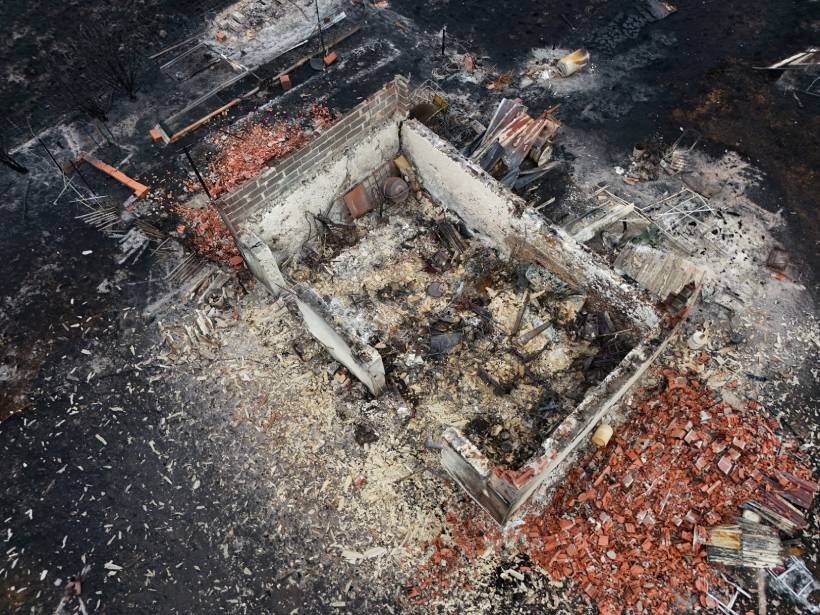
France is preparing for its fourth major heatwave of the year as soaring temperatures and prolonged drought continue to fuel one of the country’s worst wildfire seasons on record, with firefighters battling a massive blaze near Bordeaux that has already burned 42,000 hectares.
Temperatures in Bordeaux are expected to reach 33 degrees Celsius (91 degrees Fahrenheit) on Tuesday, around seven degrees above the historical average for the period between 1961 and 1990, according to the Reuters Climate Monitor. Weather officials warn temperatures could climb to 37 degrees Celsius (99 degrees Fahrenheit) on Wednesday, further increasing the risk of new fire outbreaks.
Macron Calls Wildfire Crisis Unprecedented
President Emmanuel Macron, who visited the affected region on Monday, described the crisis as the most severe France has faced in decades.
“The situation we are dealing with today is the most severe we have ever recorded, the toughest since the Second World War,” Macron said.
Stay ahead of the geopolitical week.
MD Briefing delivers expert analysis across five global fronts — the Indo-Pacific, energy, geoeconomics, European security, and the Middle East — every Monday morning. Free.
Firefighters managed to contain the blaze overnight, but authorities warned that strong winds, extreme heat and dry vegetation continue to threaten containment efforts.
“Everything will depend on how the firefighters on the ground get on,” Gironde Senator Nathalie Delattre told BFM TV on Tuesday.
Thousands Evacuated as Fire Continues to Spread
The wildfire is centered in the Landes region southwest of Bordeaux, where extensive pine forests have become highly combustible after months of dry conditions. Officials said the fire has already consumed approximately 42,000 hectares, making this France’s most destructive wildfire season since records began.
More than 220,000 people, including residents and holidaymakers, have been evacuated from affected areas as emergency services continue efforts to protect communities and infrastructure.
Conditions have improved in Biscarrosse, around 40 kilometers south of Bordeaux, where another major wildfire erupted last week. Local authorities have begun allowing approximately 15,000 evacuated residents and tourists to return home and reopen nearby campsites.
However, officials cautioned that the danger has not passed.
“The favorable development does not mean the risk has been eliminated,” local authorities said in a statement, warning that flare ups remain possible because of continued drought and changing wind conditions.
Heatwave Threat Continues
Meteorologists expect temperatures to continue rising across southwestern France through midweek, creating conditions that could rapidly accelerate existing fires or ignite new ones.
Analysis
France’s escalating wildfire crisis highlights how increasingly frequent and intense heatwaves are reshaping Europe’s climate risk landscape. The country has now experienced four major heatwaves in a single year, reflecting a broader pattern of prolonged drought, record temperatures and worsening fire conditions across southern Europe.
The scale of the Bordeaux wildfire demonstrates the growing difficulty of managing forests that have become significantly more vulnerable after successive years of extreme heat. Even when fires are contained, strong winds and persistently dry conditions create a high risk of flare ups, forcing authorities to maintain large scale evacuations for extended periods.
Beyond the immediate humanitarian impact, recurring wildfires carry significant economic consequences through damage to tourism, agriculture, forestry and public infrastructure. They also place growing pressure on emergency services that must respond to increasingly frequent climate related disasters.
As Europe continues to warm, governments are likely to face greater demands for investment in wildfire prevention, forest management and climate adaptation. The Bordeaux blaze underscores that extreme heat is no longer an isolated weather event but an increasingly persistent security, environmental and economic challenge.
With information from Reuters.
