


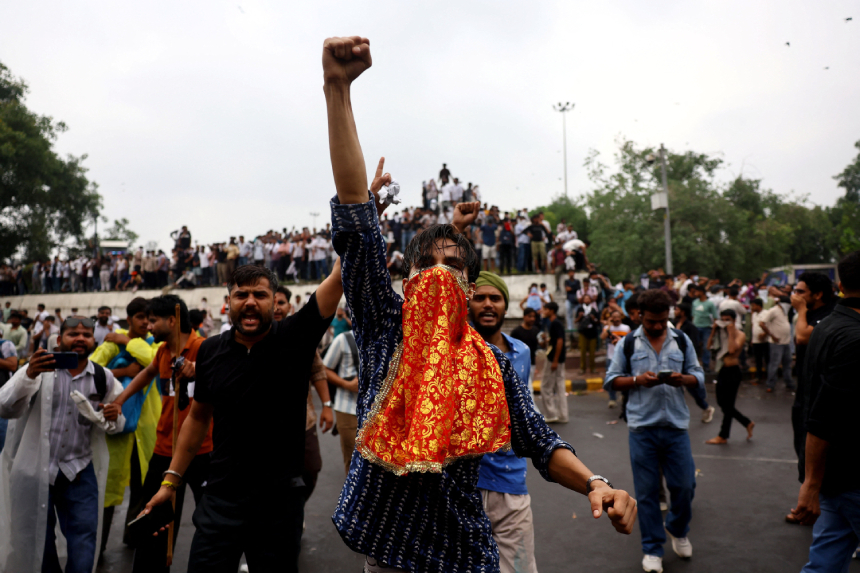
The widespread student protests that erupted across India in July 2026 over the alleged NEET UG examination paper leak and concerns surrounding the CBSE evaluation process are more than a domestic political controversy. They represent a broader global phenomenon in which failures of educational governance evolve into crises of political legitimacy. Across democracies and authoritarian systems alike, education is no longer merely a public service. It has become a measure of state credibility, institutional competence, and social justice.
India’s education system is among the largest in the world, with millions of students competing annually for limited places in prestigious universities and professional institutions. Examinations such as NEET determine access to medical education and shape the careers of countless young people. Consequently, any perception that these examinations have been compromised extends far beyond administrative shortcomings. It directly affects public confidence in meritocracy and the promise of equal opportunity.
The July protests emerged from allegations surrounding the integrity of the 2026 NEET UG examination, concerns over evaluation procedures, and broader frustration with repeated examination controversies. Student organizations demanded accountability, institutional reforms, and greater transparency from education authorities. The protests also reflected growing anxiety about the psychological burden placed upon students competing within increasingly high pressure educational systems.
This pattern is not unique to India. Across the world, failures in examination systems have repeatedly triggered widespread public unrest. In Bangladesh, student movements have mobilized against perceived inequities in public recruitment and educational policies. In Chile, education became the defining political issue that eventually contributed to constitutional reform debates. South Korea has long struggled with the immense psychological pressures associated with highly competitive university entrance examinations. Similar concerns have appeared in China, Nigeria, and several European countries where examination fairness has become synonymous with governmental legitimacy.
Stay ahead of the geopolitical week.
MD Briefing delivers expert analysis across five global fronts — the Indo-Pacific, energy, geoeconomics, European security, and the Middle East — every Monday morning. Free.
Education therefore occupies a unique place in modern politics. Citizens may tolerate inefficiencies in many areas of governance, but they rarely accept failures that directly threaten the aspirations of an entire generation. Young people invest years preparing for competitive examinations. Families often dedicate substantial financial resources to coaching, tuition, and educational support. When examination integrity is questioned, the consequences extend beyond academic outcomes to social trust itself.
The protests also underscore another significant transformation in contemporary politics: the rise of youth driven political mobilization. Young people increasingly organize through digital platforms, allowing grievances to spread rapidly across regions and social groups. Student movements that once remained confined to university campuses now possess the ability to generate nationwide political momentum within days. This transformation has fundamentally altered the relationship between governments and civil society.
Digital communication has amplified both accountability and polarization. Videos, eyewitness accounts, and social media campaigns enable protesters to communicate directly with national and international audiences. At the same time, governments and political actors seek to shape competing narratives through official statements, traditional media, and online communication. As a result, information itself becomes contested terrain, with competing interpretations often emerging faster than independent verification.
One of the most sensitive dimensions of the July protests concerns allegations regarding the policing of demonstrations. Protest organizers and various political actors criticized the authorities’ handling of public assemblies, while officials emphasized the need to maintain law and order. Such tensions are hardly unique to India. Democracies around the world continue to struggle with balancing the constitutional right to peaceful protest against the state’s responsibility to prevent violence, protect public infrastructure, and ensure public safety.
International experience demonstrates that excessive use of force during peaceful demonstrations can significantly erode institutional legitimacy, particularly when students are involved. Images of confrontations between security personnel and young demonstrators often generate public sympathy for protest movements regardless of the original policy dispute. Conversely, governments also face genuine challenges when protests risk escalating into violence or disrupting essential public services. The effectiveness of democratic governance therefore depends not only on the content of public policy but also on the perceived fairness, restraint, and transparency of state responses.
Another important lesson emerging from India’s experience concerns mental health. Competitive educational environments have become increasingly associated with anxiety, depression, and emotional distress among students worldwide. Countries ranging from Japan to South Korea, Singapore, and the United States have witnessed growing debates regarding academic pressure and student wellbeing. Allegations that examination related stress has contributed to psychological crises underscore the need for governments to view education not solely through the lens of academic performance but also through public health and social welfare.
The protests further illustrate how educational failures can rapidly evolve into broader critiques of governance. What begins as dissatisfaction with examination administration may expand into wider debates concerning transparency, accountability, institutional independence, and political leadership. Governments therefore ignore educational controversies at considerable political risk. In the twenty first century, competence in administering education has become inseparable from broader perceptions of state capacity.
From an international perspective, India’s experience also offers valuable lessons for other emerging economies. Rapidly expanding education systems face enormous logistical challenges, including examination security, digital infrastructure, standardized evaluation, and equitable access. As participation increases, maintaining public confidence becomes progressively more difficult. Any administrative failure within such systems carries disproportionately large political consequences because millions of citizens are directly affected.
Restoring confidence requires more than crisis management. Independent investigations into examination irregularities, transparent communication with the public, strengthened cybersecurity for examination systems, improved oversight mechanisms, and greater institutional autonomy are essential components of rebuilding trust. Equally important is sustained engagement with students themselves. Governments that treat young citizens as stakeholders rather than merely subjects of policy are better positioned to resolve disputes before they escalate into nationwide confrontations.
The July 2026 protests ultimately reveal a broader truth about contemporary governance. In modern societies, education is no longer simply about schools, examinations, or universities. It represents social mobility, economic opportunity, and faith in public institutions. When that faith is shaken, political consequences inevitably follow.
India’s experience should therefore not be viewed in isolation. It forms part of a wider global conversation about institutional resilience, democratic accountability, and the relationship between states and younger generations. Whether in Asia, Europe, Africa, or Latin America, governments increasingly face the same challenge: preserving public trust in systems that shape the future of millions of young citizens.
The long term significance of these protests lies not merely in the immediate political controversy but in what they reveal about governance in the twenty first century. States that fail to safeguard educational integrity risk undermining one of the most fundamental pillars of democratic legitimacy. Conversely, governments that respond with transparency, accountability, and meaningful reform can transform moments of crisis into opportunities for institutional renewal. In an era where the aspirations of youth increasingly define national futures, the credibility of education systems has become inseparable from the credibility of the state itself.
