


Diplomatic tensions between the Philippines and China escalated sharply on Tuesday after both countries summoned each other’s ambassadors following a violent confrontation in the disputed South China Sea, highlighting how rapidly maritime incidents are spilling over into formal diplomatic disputes.
The exchange comes a day after Manila accused Chinese Coast Guard personnel of striking a Philippine navy sailor with a wooden baton near the contested Second Thomas Shoal, while Beijing insisted the Philippines had provoked the confrontation.
Both Countries Summon Ambassadors
Philippine President Ferdinand Marcos Jr. ordered Chinese Ambassador Jing Quan to appear at the presidential palace on Tuesday afternoon, according to the Presidential Communications Office.
Earlier in the day, China’s Foreign Ministry announced it had summoned the Philippine ambassador in Beijing to protest what it described as Manila’s actions during Monday’s encounter.
Stay ahead of the geopolitical week.
MD Briefing delivers expert analysis across five global fronts — the Indo-Pacific, energy, geoeconomics, European security, and the Middle East — every Monday morning. Free.
The reciprocal diplomatic summons mark one of the strongest official protests exchanged by the two countries in recent years and underscore the worsening state of bilateral relations despite ongoing dialogue between the two governments.
Conflicting Accounts of the Incident
The dispute centers on an encounter near Second Thomas Shoal, one of the South China Sea’s most heavily contested flashpoints.
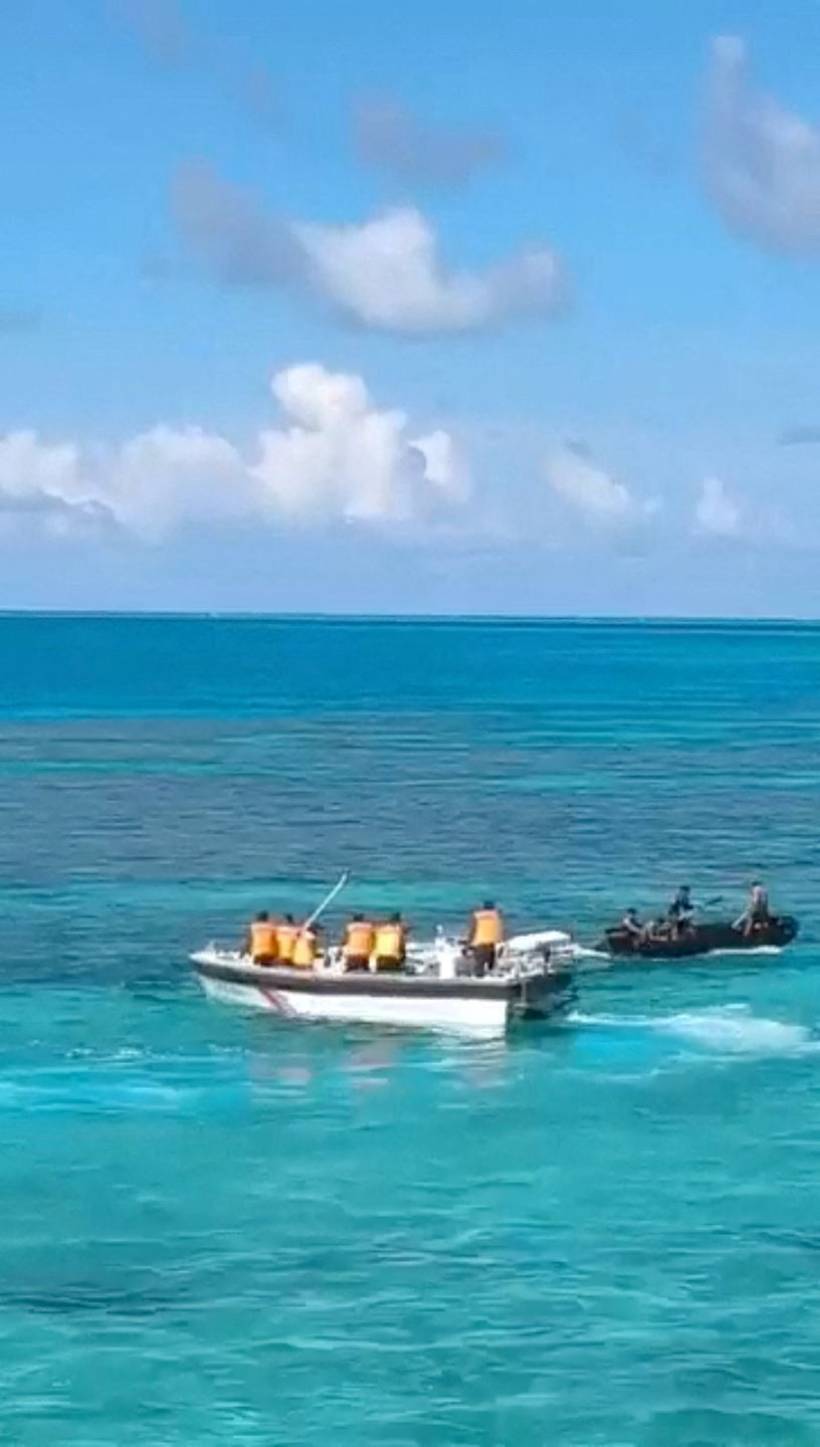
The Philippine military said Chinese Coast Guard personnel aggressively boarded close to Philippine vessels during a routine operation and struck one navy crew member on the head with a wooden baton, damaging one of Manila’s rubber boats.
Video released by the Armed Forces of the Philippines appeared to show a Chinese officer swinging a baton toward Philippine personnel.
China rejected those allegations, accusing the Philippine vessels of intentionally ramming a Chinese patrol boat and claiming Philippine sailors initiated the confrontation using oars and long sticks.
The China Coast Guard described Manila’s accusations as a distortion of the facts and said its personnel acted lawfully while protecting what Beijing considers its territorial waters.
Humanitarian Gesture or Strategic Messaging?
China also stated that it allowed Philippine personnel to evacuate the injured sailor “out of humanitarian consideration,” saying Coast Guard officers monitored the entire transfer from the grounded Philippine warship BRP Sierra Madre.
The Philippine military dismissed Beijing’s account as “false and misleading,” insisting its personnel acted professionally and did not initiate any confrontation.
The competing narratives reflect the broader information battle that increasingly accompanies maritime incidents in the South China Sea.
Rare Diplomatic Escalation
Although confrontations between Chinese and Philippine vessels have become increasingly frequent, formal ambassadorial summons remain relatively uncommon.
Tuesday’s move marks the third publicly reported occasion during President Marcos Jr.’s administration that China has formally summoned the Philippine ambassador.
Marcos himself last summoned China’s ambassador in 2023, after a Chinese Coast Guard vessel allegedly directed a military-grade laser at a Philippine patrol ship.
Each incident has reflected a gradual deterioration in relations despite repeated commitments by both governments to manage disputes peacefully.
ASEAN Meeting Adds Pressure
The latest confrontation comes as Southeast Asian foreign ministers gather in Manila for high-level ASEAN meetings, where maritime security and the South China Sea are expected to dominate discussions.
Chinese Foreign Minister Wang Yi is attending the meetings alongside senior officials from the United States, Japan, Australia, the European Union and other partners.
The incident is likely to strengthen calls from several ASEAN members for faster negotiations on a long-delayed Code of Conduct governing activities in the South China Sea.
Analysis: Diplomatic Friction Is Becoming the New Normal
The mutual summoning of ambassadors signals that tensions between China and the Philippines are no longer confined to confrontations at sea. Maritime incidents are increasingly triggering immediate diplomatic retaliation, making crisis management far more complicated.
While neither side appears interested in direct military conflict, the growing frequency of physical altercations raises the risk that a future encounter could escalate beyond diplomatic protests. With ASEAN leaders meeting this week and both Washington and Beijing closely watching developments, the South China Sea is once again emerging as one of Asia’s most dangerous geopolitical flashpoints.
If similar confrontations continue, they could further undermine efforts to negotiate a regional Code of Conduct and deepen strategic competition between China and U.S. allies in the Indo-Pacific.
With information from Reuters.
