


Authors: Stefanie Thamrin and Virgie Cerenata Nahusuly*
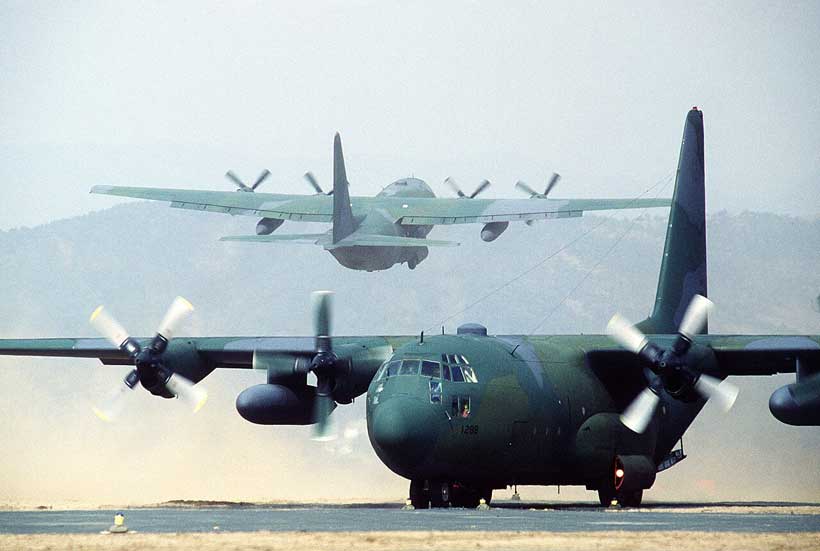
Indonesia’s relationship with the C-130 Hercules is deeply rooted in its defense history. Since receiving its first C-130 in 1960, the aircraft has evolved beyond conventional military usage serving as a key transportation mode for disaster response, delivering medical aid with strategic airlift capability to remote areas across thousands of islands.
However, Indonesia faced significant challenges during the Western arms embargoes of the 1990s and early 2000s. These restrictions severely hampered the Indonesian Air Force’s fleet readiness, serving as a stark lesson on the perils of over-reliance on foreign defense. This vulnerability is compounded by a history of incidents—up to nine accidents, most notably the 2015 Medan crash—which underscore the danger of operating aging aircraft without robust maintenance, modernization, and life-cycle management.
Therefore, the recent United States (US) offer to make Indonesia a C-130 maintenance, repair, and overhaul (MRO) hub in Asia should not be seen only as a mere aviation project. It is a strategic issue connected to defense readiness, industrial capacity, sovereignty, and Indonesia’s Indo-Pacific position. The key question is not simply whether Indonesia should accept the offer, but under what conditions the project would serve Indonesia’s national interest.
Stay ahead of the geopolitical week.
MD Briefing delivers expert analysis across five global fronts — the Indo-Pacific, energy, geoeconomics, European security, and the Middle East — every Monday morning. Free.
Domestic MRO Capabilities
Indonesia is not starting from zero. PT Dirgantara Indonesia (PTDI) has already developed domestic capacity to maintain and modernize C-130 aircraft. Recently, PTDI led a modernization program for nine Indonesian Air Force Hercules aircraft, including center wing box replacement and avionics upgrades, which are important for extending service life and improving operational capability. This program demonstrates that Indonesia already has technical facilities, skilled personnel, and institutional experience that can be expanded through a larger MRO project.
The proposed hub should strengthen Indonesian industry rather than replace it. PTDI should remain a central actor, potentially involving other domestic entities like GMF AeroAsia, provided they meet required certification and security standards. A successful MRO hub requires trained engineers, technicians, safety systems, certification access, and supply-chain coordination. If Indonesian personnel and companies are meaningfully involved, the project could create long-term industrial benefits.
Lessons from Padang Incident
The practical necessity for regional C-130 support can be seen from the Padang incident in May-June 2026, when a US military C-130 reportedly had to remain at Minangkabau International Airport due to technical problems while traveling towards Diego Garcia. The unexpected situation clearly demonstrated that Indo-Pacific operations require reliable regional MRO support. Indonesia’s geography, located between the Indian and Pacific Oceans, makes it a potentially strategic location for such support. However, the case also exposed the sensitivities surrounding foreign military aircraft in Indonesian territory. Any future hub will require clear legal procedures, transparent public communication, and strict inter-agency coordination to avoid turning technical issues into political controversies.
The United States Hub Proposal
The main proposal became public after Defence Minister Sjafrie Sjamsoeddin revealed that the United States had offered to make Indonesia the Asian hub for C-130 maintenance. Kertajati Airport in West Java has been mentioned as the likely location because of its land availability and aviation infrastructure. The proposal, linked to broader Indonesia-US defence cooperation, is still exploratory with progress potentially expected around 2028. However, the project’s scope needs further clarification on whether it will serve Indonesian aircraft, regional partners, US operations, or a combination. After all, each model carries different implications for sovereignty and geopolitics besides the technical and operational standards requirements.
Unresolved Legal Debates
The proposal also raises an unresolved legal debate. Pornomo Rovan Astri Yoga argues that an MRO arrangement may be routine in peacetime, but Indonesia’s legal position would become more complicated if the United States were involved in an armed conflict, as repairing military aircraft could be viewed as supporting a belligerent. Aristyo Rizka Darmawan’s warning against blanket access for US military aircraft similarly highlights the importance of maintaining case-by-case Indonesian control over its airspace.
Risks and Benefits
Nevertheless, the project offers several opportunities, including technology transfer through hands-on maintenance work, certification pathways, joint engineering teams, and exposure to advanced maintenance standards. Centralizing these operations is expected to spark regional economic growth, stimulate local industry, and create high-skilled employment opportunities. Strategically, it could increase Indonesia’s regional relevance by positioning the country as a defense aviation support hub in Asia.
However, these benefits are not without a catch. MRO facilities require long-term aircraft demand, competitive pricing, stable contracts, certification credibility, and strong management. Indonesia should not treat the project as a symbolic prestige project or as a simple solution to Kertajati’s low passenger traffic.
The risks are also serious. The first concerns sovereignty. Critics, including Indonesian Parliament member TB Hasanuddin, have warned that if the facility mainly supports US military aircraft, it could be perceived as a disguised foreign military base. The continuous presence of foreign aircraft, personnel, contractors, and security systems could further shape public perception. Given Indonesia’s free and active foreign policy, Indonesia must avoid appearing to align with one side, especially amid the US-China rivalry. Legal ambiguity also poses a major challenge because Kertajati is a civilian airport. Foreign military maintenance would require clear rules on security, customs, flight access, emergency procedures, and data protection. It also involves sensitive technical information and controlled components. If software, spare parts, certification, and operational decisions remain under foreign control, Indonesia risks becoming only a host without achieving real autonomy.
Recommendation
To address these risks, Indonesia should ensure that the MRO hub remains under national legal, operational, and security authority. Clear procedures should regulate the presence of foreign aircraft, personnel, contractors, and access to sensitive information. PTDI should remain a central actor, while Indonesian engineers and technicians should receive meaningful technology transfer, certification access, and direct involvement in maintenance activities. The government should also require domestic supply-chain participation, local employment, and greater access to technical knowledge, spare parts, and software. These measures are necessary to ensure that the project strengthens Indonesia’s defense industry and aircraft readiness without creating excessive foreign dependency or weakening national sovereignty.
Nonetheless, the C-130 MRO hub proposal can become a strategic milestone if it is designed as an Indonesian-controlled industrial project. It could strengthen aircraft readiness, develop domestic aerospace capability, create skilled jobs, and improve Indonesia’s regional role. However, without clear safeguards, it could also create sovereignty concerns, legal ambiguity, dependency, and geopolitical controversy. Indonesia should, therefore, pursue conditional acceptance after meticulous review over the exploratory proposal. By retaining control with strict legal and security safeguards, Indonesia can ensure the project delivers tangible technology transfers and long-term economic viability.
*Virgie Cerenata Nahusuly is a Research Assistant at D-techs Lab, Binus University. Her research interests include cyber deterrence, critical infrastructure protection, defence industry policy, and the security implications of digital dependence.
