


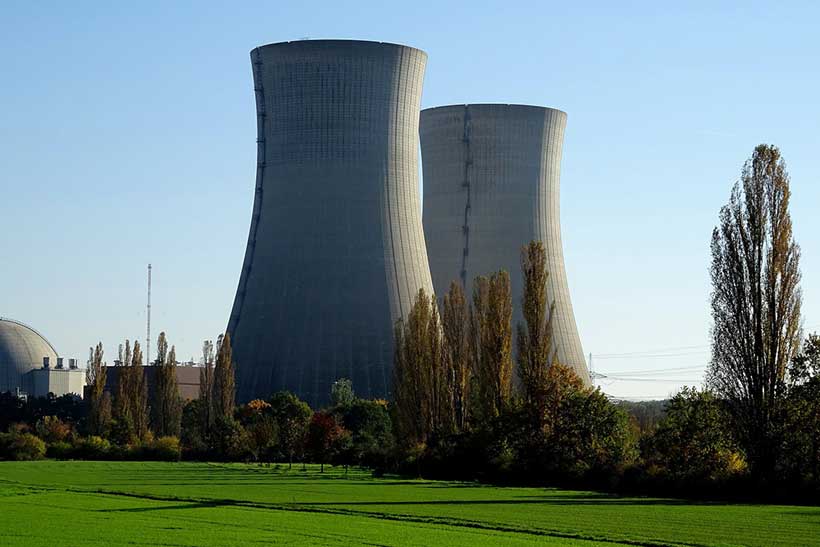
For decades, India has been working on nuclear energy. India has also been working on clean energy independence for decades. On June 26, both goals were achieved together at one place – Kalpakkam. India inaugurated a hydrogen production facility – the first of its kind in the world – at the Indira Gandhi Centre for Atomic Research (IGCAR) based in Kalpakkam, Tamil Nadu. This landmark technology was established by the Department of Atomic Energy (DAE) to validate the copper-chlorine (Cu-Cl) thermochemical cycle, a process indigenously developed by the Bhabha Atomic Research Centre (BARC). India became the first country to achieve this. This breakthrough is not just a scientific one but a strategic one. This positions India to reduce its reliance on fossil fuels and support goals for India’s national green hydrogen mission targets and its net-zero 2070 commitment under the Atmanirbhar Bharat initiative.
This breakthrough did not arrive alone. April gave India a working reactor. June gave India its first product. On April 6, 2026, India’s 500 MWe Prototype Fast Breeder Reactor (PFBR) based in Kalpakkam, Tamil Nadu, achieved its first criticality – making India the second country after Russia to operate a fast breeder reactor at this scale. It was indigenously built with BHAVINI; the breeder breeds more fuel than it consumes – a critical advantage for a country with almost no uranium but holding the world’s largest reserves of thorium, 25%. Two months later, on June 26, nuclear process heat from the Fast Breeder Test Reactor (FBTR) at the same facility was used for something beyond electricity – it was channelled into a chemical process that splits water into hydrogen, cleanly and without any emission, for the first time in the world. That heat now powers the copper-chlorine cycle (Cu-Cl), producing hydrogen with zero emissions at 50% efficiency – double that of normal electrolysis. Both the Cu-Cl cycle and the reactors powering it were built entirely by Indians — no foreign technology at any stage.
Where India Stands in the Global Race
That indigenous achievement invites an obvious question: how does it compare to what the rest of the world is doing? India’s achievement is easy to place in the wrong category. Most of the global hydrogen race is an electrolysis race: China has placed its target hydrogen cost at $3.6 per Kg and aims for 100,000 fuel-cell vehicles by the end of this decade; Japan has already selected six contract-for-difference winners, covering nearly 130 kilotons of low-emission hydrogen; the Netherlands and China are the only major economies currently on track to meet their targets. India’s Cu-Cl facility skips electricity generation altogether, using reactor heat directly to drive the chemical splitting of water. In a field crowded with players racing to make electrolysis cheaper, India took a different route entirely – and got there first.
The Dependency India Cannot Afford to Ignore
But a world first means little if the need behind it is not understood. India imports 85% of its crude oil – creating full energy dependency on foreign nations, especially dangerous in times of crisis or war. But this dependency goes deeper than oil. India’s hydrogen – used in fertilisers, refineries, and steel plants – is made of natural gas, which is also an imported energy. India pays foreign states twice – oil and gas to make hydrogen to run its own industries. Nuclear hydrogen breaks both dependencies simultaneously. Produced domestically, using indigenous reactor heat, with no fuel imported – giving India energy sovereignty and true independence in the moments that matter most. The National Green Hydrogen Mission targets 5 million metric tonnes of hydrogen by 2030 – nuclear hydrogen is a credible, indigenous way to get there.
Stay ahead of the geopolitical week.
MD Briefing delivers expert analysis across five global fronts — the Indo-Pacific, energy, geoeconomics, European security, and the Middle East — every Monday morning. Free.
The dependency argument is only half the story. India’s net-zero commitment depends on decarbonising its heaviest and backbone industries – steel, cement, and fertilisers. But solar and wind are limited – they cannot power these industries continuously. Coal provides continuous energy but at an unacceptable environmental cost – pollution. Nuclear hydrogen fills exactly this gap – powerful, continuous and clean. A country of more than 1.4 billion people and a massive network of industrial needs, this is not a choice – it is a necessity. And India’s energy future goes further still. With the world’s largest thorium reserves, PFBR’s successor reactors will eventually run on India’s own thorium reserves. India is positioned for undisputed, uninterrupted energy independence – without dependency on any other state. This is what net zero 2070 actually requires – clean, cheap and domestic energy.
Strategic independence in energy is not about fuel – it is about technology. India’s current green hydrogen plan depends heavily on imported electrolyser components and critical minerals – mostly from China. China may be a strategic partner on paper but also a rival that can exploit dependency at any moment. The Cu-Cl cycle changes this equation completely. Developed by the Bhabha Atomic Research Centre (BARC), deployed by the Indira Gandhi Centre for Atomic Research and powered by indigenously built fast reactors – every stage of India’s nuclear hydrogen supply chain is owned by Indians. No foreign patent. No foreign machine. No foreign engineer. No country can sanction India out of this technology or threaten to cut off supply. This is not just a scientific achievement – it is a step towards Atmanirbhar Bharat in its truest form.
The Commitment Gap
But India has a complicated relationship with its own milestones. The PFBR was projected for completion in 2010 but only achieved criticality in 2026 — sixteen years late. In 2019, the government proposed four additional fast breeders – it is now 2026, and none have been built. If the same pattern repeats with nuclear hydrogen, India’s energy independence will exist on paper, but dependency will continue in reality. The SHANTI Act — passed in December 2025 — allows private-sector participation in nuclear energy. But its implementation remains incomplete. Without fast private investment, nuclear hydrogen stays a pilot facility.
The question now is not capability — it is commitment. The inauguration at Kalpakkam must be the beginning of an energy commitment – not the end of one. Three things must work now – first, the government should formally integrate nuclear hydrogen into the National Green Hydrogen Mission; the mission cannot remain limited to solar and wind when India has now proven a cleaner, more continuous, and fully indigenous alternative. Second, the four additional fast breeder reactors proposed in 2019 must be fast-tracked immediately. Third – The SHANTI Act is now law – the government must now actively invite private investment to scale nuclear hydrogen from pilot to industrial production. India became first in the world on June 26. Whether it stays first depends entirely on what happens next. The technology is ready. The question is whether India’s policy is.
