


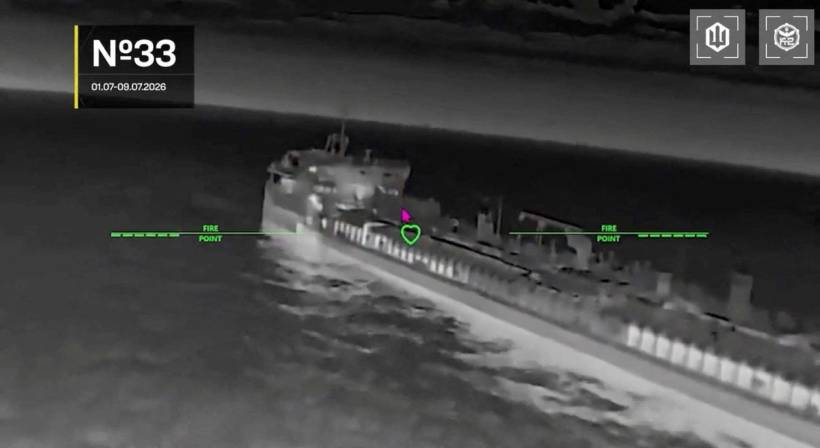
Shipping through the Sea of Azov remained restricted on Monday following recent Ukrainian attacks on commercial vessels, raising concerns over Russia’s grain exports through one of its most important agricultural trade routes.
Industry sources said security measures introduced on Friday continue to limit vessel movements into and out of the Sea of Azov, although shipping within the sea itself has not been completely halted.
The Sea of Azov handles roughly one quarter of Russia’s grain exports, making it a strategically important corridor for the world’s largest wheat exporter.
Access through Kerch Strait remains restricted
According to one industry source, commercial ships can still operate inside the Sea of Azov but are unable to enter or leave via the Kerch Strait, which connects the sea to the Black Sea, or through the Azov Don shipping channel linking the Don River with the Sea of Azov.
Stay ahead of the geopolitical week.
MD Briefing delivers expert analysis across five global fronts — the Indo-Pacific, energy, geoeconomics, European security, and the Middle East — every Monday morning. Free.
Russian authorities have not formally announced the restrictions, and the Agriculture and Transport Ministries did not respond to requests for comment.
The sources said instructions have so far been communicated verbally, with no official documentation issued.
Grain exports continue despite restrictions
Although the restrictions have raised concerns, there have been no reports of significant disruption to Russia’s grain trade.
Grain exports typically slow ahead of the annual harvest season. Agricultural consultancy SovEcon forecasts Russia will export about 2.3 million metric tons of grain in July, compared with 2.7 million tons in June. During peak export months, shipments often exceed 5 million metric tons.
Russia has already begun harvesting new crops in its southern agricultural regions, but the fresh grain has not yet reached export terminals.
Security concerns remain high
One industry source said the shipping restrictions are expected to be discussed this week by Russia’s Security Council, chaired by President Vladimir Putin.
Another source said vessel traffic remains limited because of heightened security concerns rather than a complete suspension of maritime activity.
The restrictions follow Ukraine’s reported attack on 13 Russian vessels in the Sea of Azov on July 10, including 10 tankers.
Strategic export corridor
Russia’s major grain producing regions of Rostov and Krasnodar are located along the Sea of Azov, while one of the country’s largest Black Sea ports lies near the Kerch Strait.
The region has become increasingly important for both agricultural exports and energy shipments since the war in Ukraine began.
Why it matters
Any prolonged disruption in the Sea of Azov could affect global grain markets because Russia remains the world’s largest wheat exporter. While exports have continued so far, tighter shipping restrictions could slow deliveries, increase transport costs and add volatility to international food prices.
Future outlook
Markets will closely monitor whether Russia formalizes the shipping restrictions or eases them in the coming days. The progress of the new harvest, security developments in the Black Sea region and any further attacks on commercial vessels will determine whether grain exports continue largely uninterrupted or face broader logistical challenges.
With information from Reuters.
