


Russia has intensified its aerial campaign against Ukraine in recent months, increasing the use of ballistic missiles and long range drones as fighting on the front lines has slowed. Ukrainian officials say the country faces a growing shortage of U.S. supplied Patriot air defence interceptors, the only system currently capable of reliably intercepting Russian ballistic missiles.
The latest strike comes as NATO leaders gather in Ankara for their annual summit, where Ukrainian President Volodymyr Zelenskyy is expected to press U.S. President Donald Trump for additional military support.
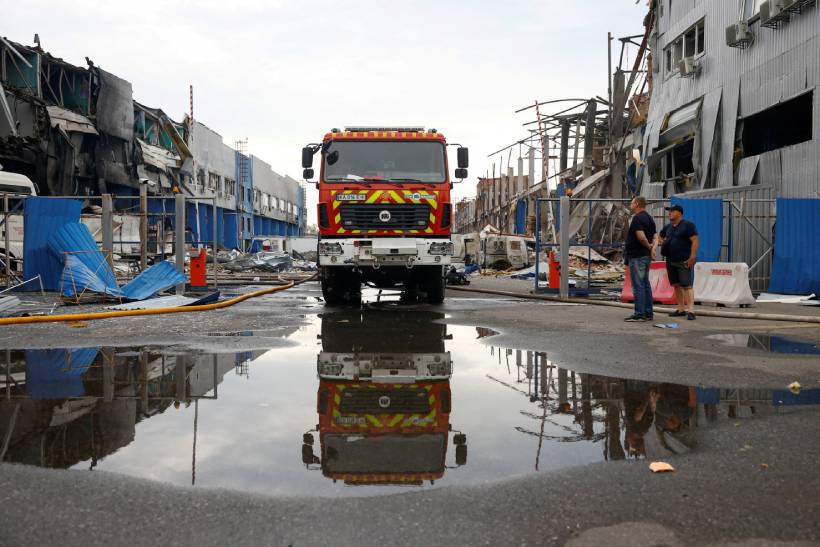
Russia launched another overnight missile and drone attack on Kyiv on Wednesday, marking the third assault on the Ukrainian capital in less than a week as officials warned that shortages of advanced air defence interceptors continue to leave the city vulnerable to ballistic missile strikes.
According to Ukraine’s air force, air defences intercepted most of the drones used in the attack but failed to destroy any of the five ballistic missiles fired by Russia.
Stay ahead of the geopolitical week.
MD Briefing delivers expert analysis across five global fronts — the Indo-Pacific, energy, geoeconomics, European security, and the Middle East — every Monday morning. Free.
The latest assault killed at least one person in Kyiv, injured two others and caused fires and damage to buildings across the capital.
Kyiv Hit Again by Ballistic Missiles
Ukrainian officials said Russia launched five ballistic missiles alongside 169 drones during the overnight attack.
Air force data showed that more than 80 percent of the drones were intercepted, but none of the ballistic missiles were successfully shot down.
Authorities said one woman was killed and two people were injured in Kyiv.
The attacks also sparked fires in storage facilities and other non residential buildings in districts on both sides of the Dnipro River.
Kharkiv Also Comes Under Attack
Russia also targeted Ukraine’s second largest city, Kharkiv.
Local officials reported missile strikes that damaged private homes and a church, although the full extent of casualties and destruction was not immediately known.
The strikes form part of Russia’s broader campaign targeting cities and civilian infrastructure across Ukraine.
Ukraine Renews Appeal for Patriot Missiles
President Zelenskyy has repeatedly urged Western allies to provide additional Patriot air defence systems and interceptor missiles.
Ukrainian officials say Patriot interceptors remain the country’s only effective defence against Russian ballistic missiles because of their speed and flight trajectory.
The issue is expected to feature prominently during Zelenskyy’s meeting with President Trump on the sidelines of the NATO summit.
NATO Summit Overshadowed by Escalation
The renewed attacks come as NATO leaders meet in Ankara to discuss defence spending, support for Ukraine and broader European security.
Trump said ahead of his meeting with Zelenskyy that he remained hopeful the war could eventually be resolved, despite continued fighting.
Meanwhile, Russian President Vladimir Putin has maintained that Moscow will continue military operations until its objectives are achieved.
Russia Continues Pressure Despite Slow Ground Advances
While Russia has made only limited progress on the battlefield in recent months, it has intensified long range missile and drone attacks against Ukrainian cities.
Ukraine has also increased strikes on Russian military logistics and energy infrastructure, prompting Moscow to maintain pressure through sustained aerial bombardments.
According to Ukrainian officials, Russian attacks on Kyiv and the surrounding region have killed around 60 people during July alone.
Why It Matters
The latest attack highlights Ukraine’s growing vulnerability to ballistic missile strikes as stocks of advanced interceptor missiles decline.
The renewed bombardment also increases pressure on NATO allies to provide additional air defence systems while underscoring the continuing intensity of the war despite ongoing diplomatic contacts.
Stakeholders
- Ukraine — Seeking additional air defence systems to protect cities from missile attacks.
- Russia — Continuing its aerial campaign while pressing military and political objectives.
- NATO Allies — Deciding future military assistance and defence commitments to Ukraine.
- United States — Facing renewed requests for Patriot interceptors and broader military support.
- Ukrainian Civilians — Remaining at risk from continued missile and drone attacks.
What’s Next
Attention will focus on the meeting between Trump and Zelenskyy at the NATO summit, where Ukraine is expected to seek more Patriot interceptor missiles and additional military assistance.
Military analysts will also watch whether Russia continues its intensified missile campaign and whether Western allies respond by accelerating deliveries of advanced air defence systems to Ukraine.
With information from Reuters.
