


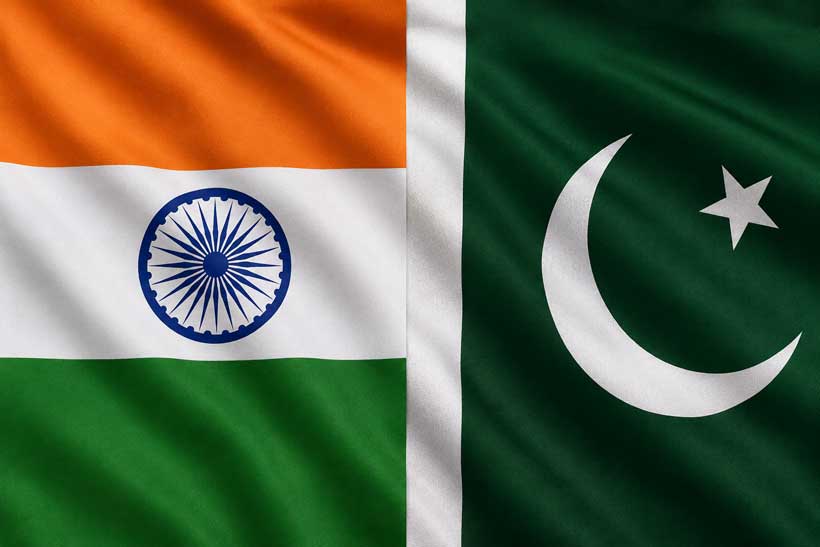
Last month, Pakistan formally objected to India’s Bhakara Dam expansion. This was the third major dispute filed under the Indus Waters Treaty in eighteen months. What might appear to international observers as routine treaty administration masks a fundamental geopolitical realignment: the institutional framework that has prevented water conflict in South Asia for 63 years is showing signs of collapse. This matters not because Pakistan and India are arguing about dams. It matters because water scarcity is becoming the mechanism through which regional power relationships are reordering.
When the Indus Waters Treaty was signed in 1960, it was hailed as proof that bitter enemies could cooperate on shared resources. It was also, tacitly, an agreement that reflected the power balance of that moment. India was weaker. Pakistan’s bargaining position was stronger. The water division was negotiated from that position. But the world has changed fundamentally. India is now a great power. Pakistan faces water stress that threatens its agricultural system and, by extension, its domestic stability. And the climate is becoming a variable that neither nation can control or manage through the old institutional framework. The treaty is not breaking because it was poorly designed. It is breaking because the geopolitical conditions it reflected no longer exist.
The Historical Pattern: India’s Water Leverage Since Partition
Understanding the current crisis requires acknowledging what happened before the treaty even existed.
After Partition in 1947, India controlled the headwaters of the Indus system. This was not accidental. The partition of India and Pakistan was negotiated in ways that gave India geographical dominance over the river system that Pakistan depended on for survival. From 1947 to 1960, India used this position aggressively. It constructed the first Bhakara Dam on the Sutlej River. It diverted water from the eastern rivers into Indian territory. It built canals that reduced downstream flows to Pakistan. These were not modest projects. They fundamentally altered water availability to Pakistani farmers.
Stay ahead of the geopolitical week.
MD Briefing delivers expert analysis across five global fronts — the Indo-Pacific, energy, geoeconomics, European security, and the Middle East — every Monday morning. Free.
The impact was immediate and measurable. As Indian dams filled and Indian canals captured water, Pakistan’s irrigation system deteriorated. The 1950s were marked by successive crop failures in Pakistan’s Punjab. Food production declined. Millions of Pakistani farmers faced water scarcity on land that had historically received abundant water. This was not an environmental crisis. This was a strategic choice made by India using its upstream position.
Pakistan’s position became desperate. The nation was economically dependent on its agricultural production from the Indus valley. If India controlled water, India controlled Pakistan’s agricultural capacity. This was not theoretical leverage. It was being exercised. Indian governments made clear that India would continue developing its upstream position without regard for downstream consequences in Pakistan.
This is precisely why the Indus Waters Treaty became necessary. The treaty was not signed because India and Pakistan suddenly became friendly. It was signed because Pakistan faced an existential crisis and because international pressure (particularly from the World Bank, which wanted to finance both nations’ development) demanded a framework to prevent outright water war. The treaty was essentially a compromise negotiated under duress. India kept control of the eastern rivers (where it had already built dams). Pakistan retained rights to the western rivers (where India had not yet built as much infrastructure). Both nations promised to stop actively weaponizing water.
But the treaty’s foundation was always precarious. It assumed that India would accept certain constraints on its ability to use upstream position for strategic advantage. For three decades, India largely respected those constraints. But by the 1990s, as India’s power grew and as climate change began affecting water availability, Indian governments began viewing the treaty less as a binding constraint and more as a framework that permitted maximum water use.
The Architectural Genius of 1960
To understand what is breaking now, you must first understand what made the Indus Waters Treaty work for so long.
Signed in 1960, the treaty represented an extraordinary diplomatic achievement. Two nations locked in geopolitical competition agreed to share a river system that provided 80 percent of Pakistan’s irrigation water. The genius of the arrangement was not that it was perfectly equitable. It wasn’t. It was that it created an institutional mechanism that made disputes manageable without requiring perfect agreement on underlying interests.
The treaty divided the Indus system’s six rivers into two categories. India retained full control of the three eastern rivers (Sutlej, Beas, Ravi), allowing it to pursue development independent of Pakistani concerns. Pakistan retained rights to the three western rivers (Indus, Chenab, Jhelum), though India was permitted certain specified uses for hydropower and irrigation. The two nations established the Indus Commission, staffed by hydrological engineers from both sides, to oversee compliance and resolve technical disputes.
This division of waters reflected geopolitical realities of 1960. India was weaker than it would become. Pakistan’s bargaining position was stronger. The partition of waters was negotiated from a position where both nations feared the consequences of conflict but also recognized the costs of compromise. The treaty survived because it was, in essence, a frozen snapshot of that particular moment of strategic equilibrium.
For three decades, the treaty functioned remarkably well. Both nations developed their allocated waters substantially. The Indus Commission became a forum where technical disputes were resolved without escalation to the diplomatic level. The treaty weathered wars (1965, 1971), political crises, and the fundamental strategic reorientation of South Asia. It survived because the underlying hydrological conditions remained relatively stable: water flows were predictable, downstream demands were manageable, and neither nation had pressing reasons to radically alter the status quo.
The New Pressures
Three fundamental changes have undermined the stable conditions the treaty assumed.
First, climate change is altering the hydrological fundamentals. The Himalayan glaciers that feed the Indus system are retreating. Monsoon patterns are becoming more unpredictable. Seasonal flows that were relatively constant in 1960 are now volatile. The treaty was designed for a world of stable water availability. It operates poorly in a world of increasing scarcity and unpredictability.
Second, both nations’ water demands have increased exponentially. Pakistan’s population has grown from 40 million in 1960 to 240 million today. Agricultural demand has intensified. Urban and industrial water needs have exploded. India’s water demands have similarly multiplied. The treaty allocated water based on 1960 conditions. Those conditions no longer exist. Both nations are now competing for water that, in many seasons, is insufficient to meet all legitimate demands.
Third, and most significantly for Pakistan’s position, India’s upstream position provides it with structural leverage that the treaty framework did not adequately address. India controls the headwaters. It can construct storage facilities, run of river systems, and hydroelectric projects that fundamentally affect water availability downstream. The treaty permitted India certain uses of the western rivers for non consumptive purposes (hydropower) and specified consumptive uses. But the sheer number of projects India can construct, each individually within treaty bounds, collectively constrains Pakistan’s water security in ways the treaty framers did not anticipate.
Pakistan currently faces a specific, measurable crisis. Its share of waters under the treaty has become insufficient. The treaty guarantees Pakistan access to certain amounts from the western rivers. But climatic variability means those flows are increasingly inadequate. Some seasons, rivers that should provide water run dry or near dry. Simultaneously, India’s dam construction upstream means that even flows that exist can be temporarily held back or redirected, reducing downstream availability.
The Pakistani position, carefully advanced through technical channels, is straightforward: the treaty was negotiated for stable hydrological conditions that no longer exist. When those conditions change materially, the institution governing them must adapt. This is not a claim that the treaty was unjust or that Pakistan was unfairly treated in 1960. It is a claim about institutional necessity: treaties that ignore changed circumstances eventually break.
The Geopolitical Dimensions: Why the World Should Pay Attention
The Indus Waters Treaty is not merely a technical arrangement between two nations sharing a river. It is one of the primary mechanisms preventing military escalation between South Asia’s two nuclear armed powers. When the treaty functions, it channels disputes into technical forums. When it breaks down, it channels them into military competition.
The connection between water stress and conflict is not theoretical. Pakistan’s water security is directly linked to its agricultural output, which is directly linked to food security for 240 million people, which is directly linked to domestic political stability. A genuine water crisis (a collapse of the treaty framework and loss of reliable Indus access) would not be merely an agricultural problem. It would be a security crisis. It would produce population migration, agricultural collapse, and the kind of domestic instability that governments respond to through military mobilization.
India understands this. This is precisely why India would prefer to maintain the treaty framework, even if it means accepting some constraints on dam construction. Water conflict between nuclear powers is not an abstract scenario. It is a strategic calculation that both governments make.
But the geopolitical dimension extends beyond bilateral India Pakistan competition. China’s role in the upper Indus is becoming increasingly significant. Through Belt and Road projects and dam construction in the Karakoram region, China is gaining upstream influence over water flows to Pakistan. Simultaneously, China is also constructing dams in areas that feed the Indian Indus tributaries. This creates a three body problem: Pakistan depends on the Indus, India controls significant portions of it, and China is building infrastructure that affects flows to both. The treaty was designed for two parties. It cannot easily accommodate Chinese influence upstream.
This is a geopolitical problem with no good solution. China will continue developing its territory as it sees fit. Pakistan cannot oppose Chinese projects without damaging its strategic relationship with Beijing. India cannot coordinate with Pakistan on managing Chinese upstream behavior without revealing coordination that both nations prefer to keep hidden. The Indus Waters Treaty, designed for bilateral cooperation, is becoming a three nation problem.
The broader geopolitical implication: water scarcity in South Asia is becoming a variable that drives regional competition rather than facilitates cooperation. As water becomes scarcer, the institutions designed to manage shared resources become strained. Climate stress becomes a mechanism through which regional power relationships reorganize. Nations that were willing to cooperate when water was abundant become adversaries when water is scarce.
This has implications far beyond the Indus. South Asia’s other shared water resources—the Brahmaputra, the Ganges, the Kosi—are all facing similar pressures. If the Indus Treaty breaks down, it sends a signal about institutional failure that will echo through every other water dispute in the region. If it holds, it becomes a model for managing water stress in an era of climate change.
The Indian Response and the Structural Problem
India’s position is equally understandable and equally structural. India argues that its dam construction is within treaty bounds. Each individual project complies with treaty specifications. India is not violating the treaty; it is maximizing its legal rights under it.
This is technically correct. It is also precisely where the institutional problem lies. The treaty was designed assuming that both nations would act with restraint. India would use its upstream position responsibly and would not construct the maximum technically permitted infrastructure. This was never explicitly stated, but it was implied in the arrangement. The treaty worked because both nations behaved with what might be called treaty conscious restraint. India could have constructed far more dams decades ago. It chose not to, partly out of respect for Pakistani interests, partly because the political costs of escalation were too high.
But India’s strategic position has fundamentally changed. India is now a great power with continental ambitions. Its water security is also a concern. The Indian government faces domestic pressure to develop its hydropower resources and expand irrigated agriculture. The incentive structure that produced restraint in 1960 no longer operates with the same force.
Pakistan’s complaint, filed repeatedly through technical channels and now escalating to formal dispute, is that India is exercising maximum treaty rights precisely when hydrological stress makes this most problematic. India builds a dam, Pakistan’s water availability declines further. India constructs another project, Pakistan’s already stressed system becomes more vulnerable. Each action is individually defensible under the treaty. Collectively, they threaten Pakistan’s water security.
The World Bank, which nominally oversees treaty disputes, acknowledged this tension in its 2016 arbitration on the Kishenganga Project. The tribunal found that India was operating within treaty bounds but also acknowledged that Pakistan’s concerns about downstream impacts were valid. The tribunal essentially found that the treaty language permitted India to act but also permitted Pakistan to object. It did not resolve the underlying structural contradiction: what happens when treaty compliant actions by one party undermine the other party’s legitimate interests?
Pakistan’s Diplomatic Challenge
This is where Pakistan’s strategic position becomes more sophisticated than headline coverage suggests.
Pakistan cannot unilaterally withdraw from the treaty. The costs would be enormous: it would lose the international legitimacy that the treaty provides, would face World Bank pressure, and would eliminate the technical forum (the Indus Commission) through which it currently advances its interests. Withdrawal would be strategically catastrophic.
Nor can Pakistan force India to renegotiate. India has no incentive to return to the table and accept a less favorable arrangement. India’s position has improved since 1960. Why would it accept constraints?
Pakistan’s actual strategy has therefore been more nuanced: advance formal objections to individual projects through treaty channels, build a technical case that demonstrates how cumulative Indian projects are breaching the treaty’s intent (if not its letter), and simultaneously develop alternative water sources (groundwater, desalination, wastewater recycling) to reduce dependence on the Indus.
This strategy has costs. It does not solve the underlying problem. But it achieves several objectives: it places India in a position of having to justify each project technically, which creates friction; it builds a record of Pakistani objections for potential future arbitration; and it signals to India that Pakistan will not simply accept water scarcity as inevitable consequence of India’s development choices.
Pakistan has also been quietly cultivating technical relationships with multilateral institutions (the World Bank, development banks) and with third party experts to establish that Pakistani concerns are legitimate and that the treaty framework is under genuine strain. This is less visible than diplomatic confrontation, but it is strategically more important. It establishes that Pakistan’s position is not merely self interested complaint, but reflects genuine institutional problems.
The Geopolitical Stakes: Why This Matters for Regional Stability
What happens to the Indus Waters Treaty over the next decade will determine whether South Asia can manage climate driven resource scarcity cooperatively or whether it will fracture into military competition.
If the treaty holds, it sends a signal about the viability of institutional cooperation between nuclear armed adversaries under stress. It would suggest that even as climate change intensifies competition for resources, there remain mechanisms (technical forums, international oversight, shared institutional interests) that can prevent escalation. This has implications far beyond water. It would establish a model that India and Pakistan (and other nations) could apply to other shared resources.
If the treaty breaks, the consequences are severe and cascading. Pakistan faces a genuine existential water security crisis. With 240 million people dependent on irrigation fed by Indus water, a loss of reliable access would trigger agricultural collapse, food insecurity, and mass internal migration. This is not a theoretical scenario. It is a strategic calculation both Pakistani and international planners make. Water driven domestic instability in Pakistan would create the conditions for either military adventurism (to deflect from internal crisis) or state collapse. Either outcome destabilizes South Asia.
But breakdown would also transform India’s strategic environment. An institutional failure on water would eliminate the mechanism that has kept water disputes from escalating into military conflict. It would unleash Pakistani claims of water theft, potential UN or international legal action, and eliminate the technical cooperation that actually serves Indian interests. More significantly, it would establish a precedent: when resources become scarce, institutional cooperation fails, and great powers revert to unilateral competition. This precedent would echo through every other regional water dispute and through the broader international system.
The hidden significance: the Indus Waters Treaty is one of the few functioning examples of sustained cooperation between adversarial powers. It survives because both nations recognize that the costs of breakdown are higher than the costs of cooperation. But that calculus changes as climate stress intensifies. The treaty is a test of whether multilateral institutions can adapt to climate driven resource scarcity. If it fails, it signals that climate change will drive international cooperation toward breakdown rather than adaptation. If it holds, it provides a template for managing resource conflict in an era of scarcity.
This is why major powers, including the United States, the European Union, and China, are quietly monitoring the Indus situation. It is not because they care particularly about South Asian water. It is because the Indus Treaty is a test case for whether the international system can manage the geopolitical consequences of climate change through cooperation or whether climate stress will drive competition toward military conflict.
The Likelihood of Adaptation
The treaty will probably not break in the next five years. The costs to both nations are too high, and the institutional mechanisms still function. Pakistan will file more objections to individual projects. These will be processed through technical channels. Some will be upheld, some rejected. The process will be slow and produce limited results, but it will prevent breakdown.
The real question is whether Pakistan and India can jointly acknowledge the changed circumstances and adapt the treaty accordingly. This requires both nations to accept that 1960 conditions no longer exist and that the institution must reflect 2026 realities. It requires India to accept modest constraints on new dam construction. It requires Pakistan to accept that some water scarcity is beyond the treaty’s capacity to solve and must be addressed through domestic adaptation.
The likelihood of this occurring is not high. Both nations face domestic political pressures that make compromise difficult. But it is more likely than either breakdown (which benefits no one) or indefinite maintenance of an increasingly strained status quo. The treaty’s strength lies not in perfect fairness but in its capacity to provide an institutional forum where disputes are technical rather than political. That capacity is being tested. Whether it survives depends on both nations recognizing that the alternative to negotiated adaptation is managed deterioration.
Pakistan’s current diplomatic approach (formal objections through technical channels, building a case that cumulative Indian projects threaten the treaty’s intent, developing alternative water sources, and quietly cultivating international support for the principle of treaty adaptation) is strategically sound. It does not promise to solve Pakistan’s water scarcity. But it preserves the institutional framework while signaling that Pakistan will not passively accept solutions that leave it vulnerable.
The geopolitical significance of Pakistan’s approach is that it demonstrates how a weaker power manages constraint without capitulation. Pakistan cannot force India to renegotiate the treaty. It cannot unilaterally alter hydrological facts. But it can use the institutional framework to build a case for adaptation, can develop alternative sources to reduce dependence, and can position itself internationally as a reasonable actor advocating for institutional evolution rather than revolutionary change.
By 2030, one of three scenarios will have unfolded: the treaty will have adapted to changed circumstances (requiring Indian concessions on dam construction), it will have fractured into military competition, or it will persist in a degraded state with Pakistan perpetually objecting to Indian projects while managing its water stress through alternative sources and domestic adaptation.
The outcome depends on whether India recognizes that treaty maintenance requires concession. But it also depends on whether international pressure (from the World Bank, from climate concerned powers, from the broader international system) reinforces the argument that the treaty’s institutional framework is worth preserving even if it requires adaptation. Pakistan’s strategy of quiet internationalization of the technical dispute is an attempt to create that pressure. Whether it succeeds will tell us something fundamental about whether the international system can manage climate driven resource conflict through institutional adaptation or whether climate change will drive great power competition toward breakdown.
The current trajectory is toward degradation rather than adaptation or breakdown. But the historical pattern is clear: when India has the choice between constraining its own development and reducing Pakistan’s water access, India has consistently chosen to develop its upstream position. This was true from 1947 to 1960. It was briefly interrupted by the treaty framework, but that restraint is now eroding. Pakistan faces not a temporary crisis but a long term structural disadvantage that has only deepened as India’s power has grown and as climate change has reduced absolute water availability. Pakistan’s diplomatic sophistication may preserve the treaty as a forum for managing disputes. But it cannot ultimately reverse the underlying dynamic: water scarcity in South Asia is becoming a mechanism through which India consolidates regional dominance.
