Overview:
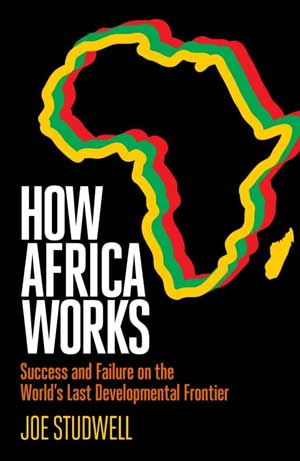
In his new book, How Africa Works: Success and Failure on the World’s Last Developmental Frontier, Studwell offers an insightful, structural analysis of why Africa has historically lagged behind, and how some of its countries are managing to break free from the persistent cycle of poverty. Studwell is best known for his 2013 study How Asia Works, which examined the policy recipe behind East Asian developmental success. Here he extends his interest to Africa, asking whether the continent can replicate a similar trajectory.
To make sense of the complex dynamics of African development, Studwell employs a paradigm in which cross ethnic political coalitions are the central actors. He argues that Africa’s relative poverty stems from three historical factors: chronically low population density, a legacy of low budget colonialism characterised by isolated enclaves of commodity exploitation, and a limiting set of initial conditions — dispersed, uneducated and politically unorganised societies. Studwell tackles a central research issue: how do regimes remain stable and effective when state institutions are weak? The answer lies in those very coalitions. In the post-colonial period, the continent’s leaders inherited artificial borders that divided ethnic groups. Those regimes that managed to forge a functional coalition, united by a common agenda of national development, whether democratic or authoritarian, were able to bring the state apparatus under their control and trigger economic growth. In this way, the author demystifies African politics, showing how leaders drive the building of governance from “above”, often isolating themselves from narrow social groups for the sake of macroeconomic survival.
Empirical Analysis:
Regional variations among African states in forms of statehood, methods of governance and mechanisms of social resistance are organised in entirely different ways. Studwell conducts his empirical analysis through four successful case studies: Botswana, Mauritius, Ethiopia and Rwanda.
Studwell describes how the specific nature of a region’s history dictates political choices. Whilst in Mauritius a developmental coalition emerged within the framework of a classical multi-party system, Rwanda and Ethiopia have followed a more authoritarian path. With regard to Paul Kagame’s Rwanda, Studwell employs the concept of spin dictatorships, borrowed from Sergei Guriev and Daniel Treisman’s 2022 study, describing a new generation of leaders who subscribe officially to democratic norms while employing manipulation and slick public relations to disguise what is in practice autocracy.
Stay ahead of the geopolitical week.
MD Briefing delivers expert analysis across five global fronts — the Indo-Pacific, energy, geoeconomics, European security, and the Middle East — every Monday morning. Free.
The Automation Debate:
Although Studwell insists on the universality of the recipe for an economic miracle, critics might argue that he underestimates the risks of automation and industrial robotics. Nevertheless, the author anticipates these doubts. Whilst acknowledging that automation is already reducing employment in the extractive sector, he argues that in light manufacturing, cheap labour retains its fundamental value, enabling the creation of thousands of jobs with minimal investment. Robots represent a sunk capital cost regardless of demand fluctuations, whereas workers in a labour surplus environment can be hired within hours. Robotics displace human labour only once wages rise sufficiently to justify capital intensive production – a threshold most African economies remain far from reaching.
External Context:
From the perspective of international relations, Studwell focuses on domestic politics, yet he also clearly delineates the external context. He criticises the international aid industry for what he terms ideologically driven prescriptions, particularly the IMF (International Monetary Fund) and World Bank’s promotion of free market financial reforms during the 1980s and 1990s, which curtailed developing countries’ capacity to implement industrial policy. He documents substantial Chinese infrastructure financing across the continent, including railway construction in Ethiopia and large scale industrial projects in Zimbabwe and Guinea, demonstrating how African countries are capitalising on great-power competition to attract investment. For the Western policy community, this is a critically important signal: the success of African elites today depends largely on their ability to diversify their external ties, striking a balance between Western programmes such as AGOA (African Growth and Opportunity Act) and Beijing’s pragmatic proposals.
Critical Evaluation:
The book’s principal analytical strength lies in its comparative method, transposing the framework of How Asia Works onto the African context and demonstrating that no uniquely African recipe for development is required. However, several limitations merit consideration. Studwell’s case studies are drawn from just four of fifty-five states, and the selection may introduce survivorship bias. Botswana and Mauritius are small, relatively homogeneous success stories difficult to replicate in larger, more fragmented polities such as Nigeria or the Democratic Republic of the Congo.
Furthermore, whilst the emphasis on political coalitions as a prerequisite for developmental progress is compelling, it raises a circular question: if coalition-building is the key, what enables it in the first place? The contrast with Daron Acemoglu and James Robinson’s “Why Nations Fail“, which Studwell references and partially critiques, is instructive. Where Acemoglu and Robinson foreground institutional design, Studwell privileges political agency and leadership, a perspective that is refreshing but carries the risk of voluntarism.
Conclusion
Ultimately, How Africa Works restores genuine political agency to the analysis of African development. Studwell makes it clear that the continent’s successful future is shaped not by IMF tranches, but by the purposeful work of local leaders. Where leaders reject the role of corrupt kleptocrats and form coalitions with a genuine agenda for national development, meaningful economic transformation becomes possible.
The book is particularly timely given the February 2025 restructuring of USAID (United States Agency for International Development) under President Trump and the accelerating competition between Western and Chinese actors on the continent. For scholars of African political economy, practitioners in the development sector, and diplomats engaged with Africa, Studwell’s work offers a rigorous, empirically grounded framework that challenges both Afro-pessimism and the uncritical optimism of periodic ‘Africa Rising’ narratives. Its core message – that developmental coalitions, not external interventions, are the engines of African progress – deserves sustained engagement from policymakers.