


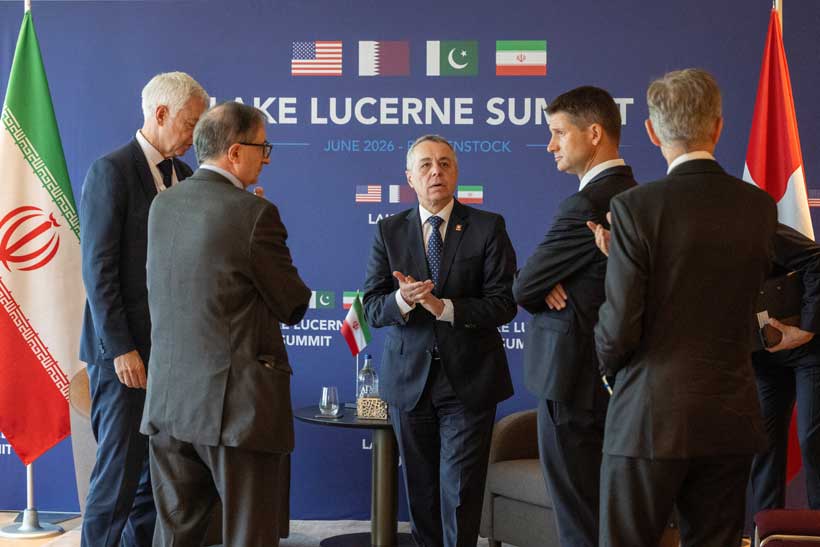
The United States has issued a 60-day waiver on sanctions against Iran following the first round of talks linked to a newly emerging interim peace agreement. The negotiations, held in Switzerland and mediated by Qatar and Pakistan, aim to stabilize relations after months of conflict involving Iran, the United States, Israel, and Hezbollah-linked tensions in Lebanon.
Under the waiver announced by the U.S. Treasury, Iran is temporarily allowed to resume limited oil exports and receive payments, marking the first significant economic relief since sanctions were tightened during the conflict escalation.
U.S. officials, including Vice President JD Vance, described the talks as laying the groundwork for a potential comprehensive peace deal, while Iranian officials denied agreeing to nuclear inspections or immediate cooperation with the International Atomic Energy Agency (IAEA).
Why It Matters
This development carries major geopolitical and economic implications:
Stay ahead of the geopolitical week.
MD Briefing delivers expert analysis across five global fronts — the Indo-Pacific, energy, geoeconomics, European security, and the Middle East — every Monday morning. Free.
- Energy markets: Iran’s partial return to oil exports could ease global supply pressures and contribute to recent declines in crude prices.
- Regional stability: The deal includes mechanisms aimed at reducing hostilities in Lebanon and improving maritime security in the Strait of Hormuz, a key global shipping route.
- Nuclear oversight tensions: Disagreement over IAEA inspections highlights unresolved issues around Iran’s nuclear programme.
- U.S. domestic politics: The deal comes amid political pressure in the United States, where rising fuel prices and election cycles are shaping foreign policy urgency.
Key Stakeholders
- United States – Leading sanctions relief while maintaining pressure for compliance.
- Iran – Recipient of the sanctions waiver, seeking economic relief while denying concessions on nuclear inspections.
- Donald Trump – Warned of unspecified consequences if Iran violates the agreement.
- International Atomic Energy Agency – Central to disputes over nuclear inspection access.
- Qatar and Pakistan – Played mediation roles in facilitating discussions.
- Israel and Hezbollah-aligned actors (in Lebanon) – Indirectly affected through ceasefire and regional de-escalation mechanisms.
What’s Next
- 60-day negotiation window: Both sides aim to convert the interim framework into a permanent agreement.
- Sanctions review: The U.S. may extend or revoke the waiver depending on Iran’s compliance.
- Nuclear talks: Future discussions are expected to focus on Iran’s nuclear programme and potential IAEA inspections, though Tehran currently disputes these terms.
- Regional implementation: Mechanisms for Lebanon ceasefire enforcement and Strait of Hormuz maritime security will be tested in practice.
- Energy flows: Iran’s oil exports and global crude prices will be closely watched for volatility
With information from Reuters.
