


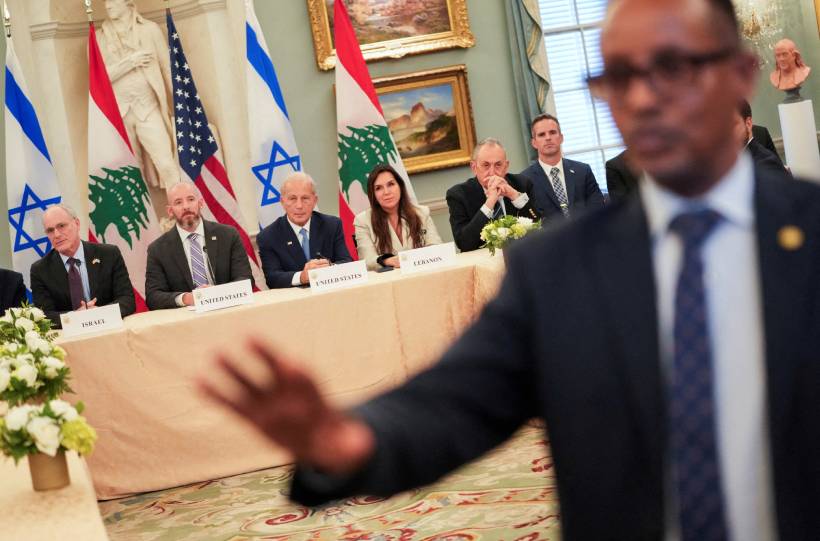
Lebanon and Israel are beginning a new round of direct negotiations in Washington aimed at ending months of conflict along their shared border. The talks come after repeated diplomatic efforts failed to secure a lasting ceasefire and amid growing concerns in Beirut that a separate U.S. agreement with Iran has weakened Lebanon’s negotiating position.
Lebanese officials insist that direct engagement with Israel remains the best path toward ending the conflict, but the latest diplomatic push is taking place against a rapidly changing regional backdrop.
Why the Talks Matter
The war between Israel and the Iran backed group Hezbollah has caused extensive destruction in Lebanon and left thousands dead since fighting escalated earlier this year.
Four previous rounds of negotiations failed to produce a durable ceasefire. As a result, both sides are entering the latest talks with low expectations but under pressure to find a framework that can reduce tensions.
Stay ahead of the geopolitical week.
MD Briefing delivers expert analysis across five global fronts — the Indo-Pacific, energy, geoeconomics, European security, and the Middle East — every Monday morning. Free.
How the US Iran Deal Changed the Situation
The recent memorandum of understanding between the United States and Iran introduced a temporary halt in fighting across multiple regional fronts, including Lebanon.
For Hezbollah and its supporters, the agreement was viewed as evidence that Iran remains a powerful regional actor capable of influencing outcomes beyond its borders.
For the Lebanese government, however, the deal created a political challenge. Beirut has repeatedly argued that decisions affecting Lebanon should be negotiated by the Lebanese state rather than through external actors. The fact that Lebanon was included in the broader U.S. Iran understanding has fueled concerns that its interests are being discussed elsewhere.
Lebanon’s Main Objective
Lebanese officials say their primary goal in Washington is securing a timetable for an Israeli military withdrawal from southern Lebanon.
Israeli leaders have signaled that they intend to maintain a military presence in parts of southern Lebanon for the foreseeable future, making this one of the most contentious issues in the negotiations.
Beirut hopes that establishing a withdrawal roadmap could create momentum for broader discussions on security and stability along the border.
Israel Focuses on Hezbollah
Israel has made clear that its central objective is addressing Hezbollah’s military capabilities.
Israeli officials argue that any lasting agreement requires Hezbollah to be disarmed and prevented from rebuilding its military infrastructure near the border.
This position creates a major obstacle because Hezbollah has repeatedly rejected calls for full disarmament and continues to view its weapons as essential for confronting Israel.
Hezbollah’s Different Strategy
Rather than relying on direct Lebanese Israeli negotiations, Hezbollah appears to be placing greater faith in Iran’s diplomatic engagement with Washington.
The group believes Tehran can secure concessions, including pressure for an Israeli withdrawal, through broader regional negotiations.
This approach highlights the divide between the Lebanese state, which supports direct diplomacy, and Hezbollah, which continues to rely on Iran’s regional influence.
Analysis
The biggest challenge facing the talks is that the core positions of both sides remain largely unchanged. Lebanon wants Israeli forces to leave southern Lebanon, while Israel wants guarantees that Hezbollah’s military threat will be permanently reduced.
Neither side currently appears willing or able to meet the other’s main demands.
The U.S. Iran agreement has complicated matters further. While it temporarily reduced violence, it also reinforced perceptions that key regional decisions are increasingly being shaped through Washington Tehran negotiations rather than through local diplomatic channels.
For Lebanon’s government, this creates a credibility problem. If Iran is seen as the actor capable of delivering results, Beirut risks appearing sidelined in discussions affecting its own territory and security.
At the same time, Israeli frustration over the U.S. Iran agreement could make Israeli negotiators less flexible. Some analysts believe Israel may push harder for security guarantees and Hezbollah disarmament in response to concerns that Iran could emerge from negotiations in a stronger position.
The talks therefore face both practical and political obstacles. Practical disagreements over military withdrawal and disarmament remain unresolved, while broader regional diplomacy is influencing the calculations of all parties involved.
What Analysts Are Saying
Analysts note that the recent reduction in violence has resulted more from the U.S. Iran understanding than from progress in Lebanese Israeli negotiations.
According to regional observers, there has been little evidence of meaningful movement in either side’s negotiating positions, raising doubts about the chances of a breakthrough.
Experts also warn that Israel’s dissatisfaction with aspects of the U.S. Iran deal could encourage a tougher negotiating stance, making compromise even more difficult.
Future Outlook
The Washington talks may help maintain diplomatic engagement and prevent an immediate escalation, but expectations for a major breakthrough remain low.
Progress will likely depend on whether negotiators can find a compromise on Israeli military withdrawals and security arrangements while also navigating the wider impact of U.S. Iran diplomacy.
For now, Lebanon’s direct talks with Israel and Iran’s negotiations with Washington appear to be running on parallel tracks, with the outcome of one increasingly influencing the prospects of the other.
With information from Reuters.
