


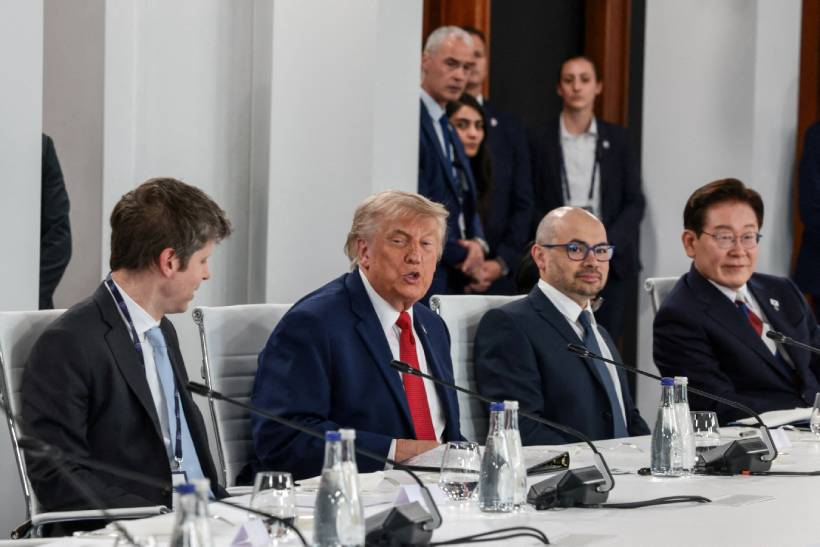
South Korean President Lee Jae Myung said U.S. President Donald Trump is willing to consider a phased approach to addressing North Korea’s nuclear programme, signalling a potential shift in Washington’s strategy toward Pyongyang.
Speaking after returning from the G7 summit in France, Lee revealed that he urged Trump to move away from an all or nothing approach to denuclearisation and instead focus on immediate steps to curb North Korea’s nuclear and missile activities while keeping full denuclearisation as a long term goal.
The comments come years after Trump’s high profile diplomacy with North Korean leader Kim Jong Un collapsed following the failure of the 2019 Hanoi summit. Since then, North Korea has expanded its nuclear arsenal, improved missile technology and declared its nuclear status irreversible.
Why It Matters
Lee’s remarks suggest Washington may be reconsidering its longstanding insistence on complete denuclearisation before offering major concessions. Such a shift would reflect the reality that North Korea’s nuclear programme has advanced significantly since Trump first met Kim.
Stay ahead of the geopolitical week.
MD Briefing delivers expert analysis across five global fronts — the Indo-Pacific, energy, geoeconomics, European security, and the Middle East — every Monday morning. Free.
A phased strategy could revive diplomatic engagement after years of stalemate and reduce the risk of further nuclear expansion. However, it would also represent a politically sensitive acknowledgment that immediate denuclearisation is no longer a realistic objective.
The issue has become more urgent as North Korea deepens military cooperation with Russia and continues to enhance its missile capabilities, raising concerns across Asia and among U.S. allies.
What Lee Proposed
According to Lee, the immediate focus should be preventing North Korea from expanding its nuclear arsenal rather than demanding complete disarmament at the outset.
His proposed short term goals include halting the production of additional nuclear material, preventing the transfer of weapons or nuclear technology abroad, and stopping further advances in intercontinental ballistic missile development.
Lee argued that sanctions alone are unlikely to solve the problem because North Korea already possesses nuclear weapons and continues producing enough fissile material to build an estimated 10 to 20 additional nuclear weapons annually.
Trump reportedly responded that Lee’s proposal “could be one way” forward and said he would consider the approach carefully.
Growing Concerns Over North Korea’s Capabilities
Lee painted a stark picture of North Korea’s military progress. He said Pyongyang’s intercontinental ballistic missile programme is approaching completion, including mastery of re entry technology needed for long range nuclear strikes.
He also warned that North Korea’s growing military relationship with Russia has weakened the effectiveness of international sanctions. The partnership has expanded amid the war in Ukraine, giving Pyongyang new opportunities to circumvent economic pressure and gain military benefits.
These developments have reinforced concerns among South Korean and U.S. officials that the window for preventing further advances in North Korea’s weapons programmes may be narrowing.
Trump Signals Interest in Renewed Diplomacy
Lee’s account suggests Trump remains interested in re engaging with Kim despite the collapse of previous negotiations.
During his first presidency, Trump became the first sitting U.S. president to meet a North Korean leader. While those meetings reduced tensions temporarily, they failed to produce a lasting agreement on sanctions relief and denuclearisation.
The latest comments indicate Trump may be exploring more flexible options if he seeks another diplomatic breakthrough with Pyongyang.
A phased agreement could potentially offer both sides incremental gains while avoiding the deadlock that doomed earlier talks.
Shipbuilding and Economic Cooperation Also Discussed
Beyond security issues, Lee revealed that Trump raised the issue of military shipbuilding during their discussions.
According to Lee, Trump asked whether South Korea could quickly build 10 U.S. warships. Lee responded positively, highlighting South Korea’s world leading shipbuilding industry and its capacity to support American naval requirements.
The conversation comes after Seoul agreed to invest $150 billion in U.S. shipbuilding projects under a bilateral trade agreement. The discussion reflects growing U.S. interest in leveraging allied industrial capacity to strengthen military readiness and counter China’s expanding naval power.
What Happens Next
No formal negotiations with North Korea have been announced, but Lee’s comments suggest exploratory discussions may be underway regarding a new diplomatic framework.
Future progress will depend on whether Washington is willing to embrace a step by step process and whether North Korea is prepared to engage after years of rejecting denuclearisation demands.
Any renewed diplomacy would also require close coordination among South Korea, the United States, Japan, and other regional partners concerned about North Korea’s expanding arsenal.
Personal take
Lee’s disclosure points to a growing recognition among policymakers that the traditional goal of rapid and complete denuclearisation has become increasingly difficult to achieve.
North Korea today is far more advanced militarily than it was during the Trump Kim summits. Its larger nuclear stockpile, improved missile technology, and expanding ties with Russia have strengthened its negotiating position and reduced the leverage of sanctions.
A phased approach could offer a more realistic path toward reducing immediate security threats. By focusing first on freezing nuclear production and limiting missile development, negotiators may be able to slow North Korea’s progress even if full denuclearisation remains out of reach.
However, such a strategy carries risks. Critics may argue that it effectively accepts North Korea as a nuclear armed state and rewards years of weapons development. Any agreement would also face the challenge of verification, enforcement, and maintaining political support in Washington and Seoul.
The significance of Lee’s comments lies less in any immediate breakthrough and more in the possibility that the United States is beginning to adapt its North Korea policy to new strategic realities. If that shift gains momentum, it could reshape Northeast Asian security diplomacy for years to come.
With information from Reuters.
