


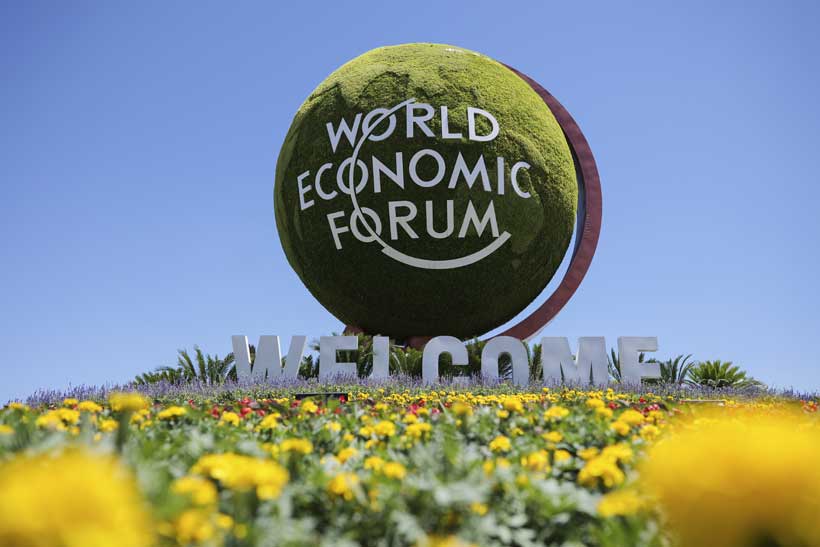
The Summer Davos Forum (the annual meeting of the new champions) in Dalian, China, represents a prominent strategic platform, reinforcing Beijing’s role as a key stabilizing force in the global economy. By strengthening cooperation with countries of the Global South and the Middle East, China is pushing for a more inclusive and balanced global governance system, moving away from regional and global polarization. China, in hosting the Summer Davos Forum, is emphasizing the innovation and economic agenda. The conference, held in Dalian, under the theme “Innovation at Scale,” brings together a select group of politicians and business leaders. Discussions at the forum focus on five key themes, which are the future of trade and supply chains in light of geopolitical changes; the future of the Chinese economy and its growth trajectories; leveraging modern technology and artificial intelligence to support the real economy and create jobs for future generations; and transforming the energy transition into a competitive advantage. The World Economic Forum in Davos will host the 17th annual meeting of the New Champions, known as Summer Davos, in Dalian, China, from June 23-25, 2026. The forum, themed Innovation at Scale, will see broad participation. The event’s key themes are highlighted by the sheer scale of the Summer Davos gathering, which will bring together over 2,000 experts, business leaders, politicians, and innovators representing more than 90 countries. The forum aims to address a number of pressing global issues, including the growing challenges facing the global economy, geoeconomic shifts and the repercussions of regional tensions, as well as investing in nature and supporting job creation and focusing on technology. The forum will explore the rapid pace of technological advancements and their use as a tool to drive sustainable growth.
The Dalian Summer Davos Forum represents a strategic platform for reshaping alliances, offering the Middle East a reliable alternative for securing its energy and trade interests amidst current tensions. It also empowers the Global South, led by China, to leverage its position against Western and American hegemony and the disruption of supply chains. The strategic importance of the Dalian Summer Davos Forum 2026 for the Middle East and the Global South lies in several key areas, most notably finding alternatives for energy and economic security. Here, Middle Eastern countries are seeking economic partnerships in Dalian that guarantee oil flows and safe shipping routes, free from Western power struggles. This positions China as a safe and stable destination for the region’s economies, while simultaneously strengthening secure supply chains, especially after the disruption of shipping lanes following the Strait of Hormuz crisis. To this end, countries of the Global South and the Middle East are striving to establish logistical and trade networks that are not subject to Western and American sanctions. The Summer Davos Forum in Dalian, China, offers an opportunity to test China’s economic leadership in the Middle East and the Global South. The forum reinforces the position of the Global South and the Middle East, led by Beijing, as a key balancing force, leveraging advanced Chinese technologies in renewable energy and electric vehicles to drive growth and the transition to green technology. The forum’s focus on innovation at scale enables the Middle East to invest in technological partnerships with Asia and accelerate its shift towards a green economy and artificial intelligence to reduce reliance on traditional fuels.
The Summer Davos Forum reinforces the position of the Global South and the Middle East as a key balancing force, led by Beijing, by presenting a multipolar economic and political model that breaks with traditional Western hegemony. It bolsters the standing of the Global South and the Middle East by providing an alternative platform, offering developing countries space to formulate economic policies free from Western constraints. This is achieved through diversifying strategic partnerships, as the Summer Davos Forum in Dalian, China, connects the Middle East with emerging Asian markets in the energy, technology, and infrastructure sectors. This fosters a geopolitical balance for the Middle East and the Global South under Chinese leadership. The Summer Davos Forum in China gives countries of the Global South the opportunity to play a balancing force role in a multipolar world and achieve economic independence, supporting the trend toward reducing reliance on the dollar in intra-regional trade. Here, the mechanisms of Chinese leadership (as a balancing force) are highlighted through the Belt and Road Initiative, which integrates the economies of the Middle East, Africa, and the Global South into China’s global logistics network. This activates China’s economic diplomacy by presenting itself as a reliable partner that does not interfere in the internal affairs of other countries. China is keen to localize its advanced technology in the Middle East, the Gulf, Africa, and the Global South, transferring its artificial intelligence and renewable energy solutions to emerging markets. Simultaneously, it highlights China’s role in promoting political mediation by leveraging its economic weight to facilitate rapprochement among regional powers in the Middle East.
The significance and strategic dimensions of the Davos Summer Forum lie in its potential as a reliable alternative for the Middle East. It allows for the diversification of economic alliances, moving away from exclusive dependence on Western markets. It secures energy and trade interests by ensuring safe and stable flows of energy and mutual investments between Beijing and the region’s capitals. Furthermore, it strengthens the Global South by giving developing countries a stronger voice and greater ability to shape new global trade rules to counter Western and American hegemony. This reduces the impact of unilateral sanctions and the disruption of traditional supply chains. Herein lies the potential gain for Middle Eastern and Global South countries from this partnership with China, particularly during the Summer Davos Forum in Dalian, China. This partnership can attract technological investments by transferring advanced Chinese technologies in artificial intelligence and renewable energy. Furthermore, it allows them to benefit from Chinese infrastructure projects and investments, connect Middle Eastern and Global South ports and projects to China’s Belt and Road Initiative, and enhance energy market stability through long-term oil and gas supply contracts that guarantee stable financial returns.
Stay ahead of the geopolitical week.
MD Briefing delivers expert analysis across five global fronts — the Indo-Pacific, energy, geoeconomics, European security, and the Middle East — every Monday morning. Free.
Thus, the Summer Davos Forum in China is working to strengthen the role of the Global South. China consistently calls for amplifying the voice and representation of developing countries in international decision-making, leveraging the World Economic Forum in Davos to highlight their capacity to lead the next phase of economic growth, the transition to advanced industries and clean energy, and to foster strategic partnerships with the Global South and the Middle East. The Summer Davos Forum in Dalian, China, provides a pivotal opportunity to solidify industrial and technological alliances between China, the Global South, the Middle East, Africa, and the Gulf. Saudi Arabia and the Gulf states stand out as key partners for Beijing, aiming to diversify their economies and attract investment in renewable energy and technology sectors, capitalizing on the Summer Davos Innovation Forum’s initiatives.
