


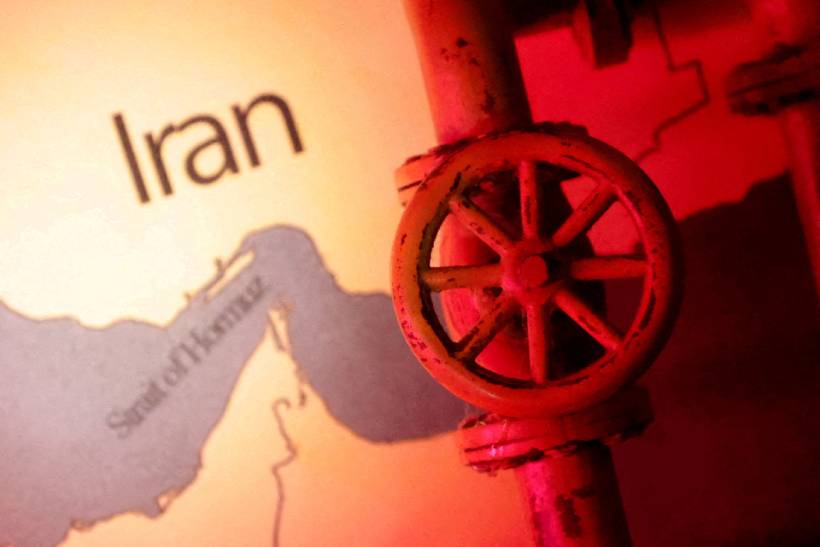
The Iran war has already caused major disruption to global energy markets, particularly crude oil and liquefied natural gas (LNG) flows through the Strait of Hormuz. Since the conflict escalated following U.S.-Israeli strikes, supply chains have been heavily strained, with significant volumes of oil and gas effectively delayed or removed from normal trade routes.
At the centre of recent developments is a tentative U.S.-Iran peace framework, which is expected to reopen the Strait of Hormuz and allow commercial shipping to resume. Early reports suggest tanker movement has already begun to recover, raising expectations of partial normalization in global energy flows.
Despite this, the crisis has left a significant mark on markets, with billions of barrels of crude and refined products disrupted and up to one-fifth of global LNG trade affected by restricted passage through the waterway.
How Markets Absorbed the Shock
Energy markets have so far avoided a sustained price spike due to a combination of strategic stock releases, shifting trade routes, and demand adjustments, particularly from major importers such as China.
Stay ahead of the geopolitical week.
MD Briefing delivers expert analysis across five global fronts — the Indo-Pacific, energy, geoeconomics, European security, and the Middle East — every Monday morning. Free.
Benchmark Brent crude has largely remained below the $100 per barrel threshold during the crisis, reflecting both supply management and growing expectations that the conflict would not escalate into a prolonged closure of the Strait.
The announcement of a framework deal between Washington and Tehran triggered an immediate market response, with oil prices easing as traders priced in the likelihood of restored shipping flows and reduced geopolitical risk.
Short-Term Outlook: Relief, Rebalancing, and Inventory Recovery
In the near term, markets are expected to experience a “relief phase” as tankers previously stuck in the Gulf begin delivering delayed cargoes. This could temporarily ease supply constraints and reduce price volatility.
However, the normalization process is unlikely to be immediate. Global energy systems will need time to rebuild depleted inventories, restore disrupted logistics chains, and rebalance supply contracts across regions.
Price dynamics will also depend on whether major producers, including OPEC+ members, can quickly ramp up output to offset earlier losses. Any delays in production increases could keep crude and LNG prices elevated even after shipping resumes.
Structural Shift: Energy Security vs Energy Transition
Beyond short-term market adjustments, the more important question is whether the Iran conflict represents a structural shift in global energy behavior.
One possible outcome is an acceleration in energy diversification. Countries heavily dependent on imported oil and LNG particularly in Asia may reassess their exposure to chokepoint risks like the Strait of Hormuz.
This could strengthen long-term interest in electrification and alternative energy sources. Early signals are already visible in markets such as Australia, where electric and hybrid vehicle adoption has surged, reflecting broader consumer sensitivity to fuel price shocks.
Similarly, governments may double down on policies supporting renewable energy, battery storage, and domestic energy security to reduce reliance on vulnerable import routes.
Winners and Losers in the Energy Mix
While oil and LNG face long-term uncertainty, coal could regain relative appeal in some markets. Countries with large domestic reserves—such as China, India, and Indonesia may continue relying on coal due to its cost advantage and supply security, despite environmental concerns.
Coal imports also benefit from more diversified shipping routes compared to Middle Eastern energy exports, making it less exposed to geopolitical chokepoints.
However, the extent of any fossil fuel reshuffling will depend on pricing trends. If oil and LNG remain competitively priced and supply stability returns, governments and consumers may revert to previous consumption patterns, limiting structural change.
Analysis: Shock Event or Lasting Turning Point?
The Iran war highlights a familiar pattern in global energy markets: sharp geopolitical shocks often trigger immediate disruption but do not always produce lasting structural change.
In the short term, the crisis behaves like a classic supply shock raising prices, disrupting flows, and forcing rapid adjustments in trade and storage. But historical precedent, including Russia’s 2022 invasion of Ukraine and earlier oil crises, shows that markets tend to adapt through rerouting, substitution, and inventory management.
The key differentiator this time will be policy response and consumer behavior. If governments use the crisis to accelerate electrification and reduce fossil fuel dependence, the impact could mirror “Dieselgate”-style structural change in transport fuels. If not, the system is likely to revert once prices stabilize and supply chains normalize.
Ultimately, whether the Iran war becomes a turning point or a temporary energy shock will depend less on the conflict itself—and more on how energy security, technology adoption, and government policy evolve in its aftermath.
With information from Reuters.
