


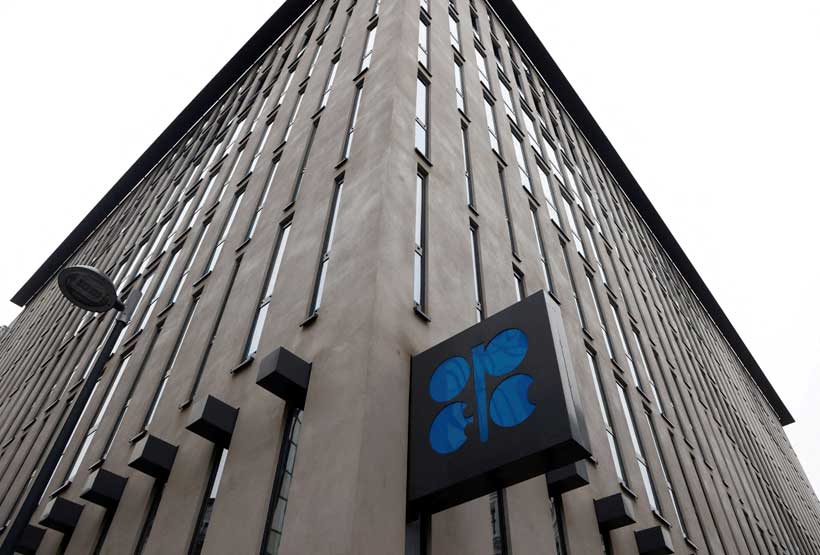
The Strait of Hormuz has long been the most important chokepoint in global energy markets, carrying nearly one fifth of the world’s oil and gas supplies. The disruption caused by the Iran war and the temporary closure of the waterway dramatically altered global energy flows, cutting Middle Eastern exports by roughly 13 million barrels per day and triggering one of the largest supply shocks in recent history.
For Gulf producers, reopening the strait would normally be viewed as a major victory. Saudi Arabia, Iraq, Kuwait, the United Arab Emirates, Qatar, Bahrain and Iran all depend heavily on energy exports to finance government spending and economic development. Months of disrupted exports have left substantial fiscal gaps that governments will be eager to close.
Yet the return of Hormuz may create a different challenge. Instead of restoring stability, it could unleash a surge of competing oil exports that undermines OPEC’s ability to control supply and influence prices.
Stay ahead of the geopolitical week.
MD Briefing delivers expert analysis across five global fronts — the Indo-Pacific, energy, geoeconomics, European security, and the Middle East — every Monday morning. Free.
Why Hormuz Matters Beyond Energy
The significance of Hormuz extends beyond oil markets.
The narrow waterway serves as a strategic artery connecting Gulf producers to major consumers in Asia, Europe and beyond. Any disruption immediately affects energy security, inflation, shipping costs and economic growth worldwide.
The recent conflict demonstrated how dependent global markets remain on Middle Eastern energy despite decades of efforts to diversify supply sources.
At the same time, the crisis accelerated shifts that may permanently weaken the Gulf’s dominance. Alternative suppliers gained market share, while importers adapted to reduced Gulf exports by drawing down reserves and increasing purchases from other producers.
The Financial Pressure Facing Gulf States
The economic consequences of the conflict have been severe.
Lost exports have deprived Gulf governments of tens of billions of dollars in revenue. Infrastructure damage to refineries, storage facilities, ports, tankers and gas facilities will require substantial investment to repair.
As exports resume, governments are unlikely to prioritize market stability over fiscal recovery. Instead, most producers will seek to maximize sales volumes as quickly as possible.
This creates a classic collective action problem.
While all producers benefit from higher oil prices, each individual producer has a strong incentive to increase exports and capture revenue before competitors do the same.
Why OPEC Looks More Vulnerable Than Before
Historically, OPEC managed similar crises through coordinated production adjustments.
During previous disruptions, including the COVID pandemic and earlier oil market shocks, the organization successfully reduced or increased production to stabilize prices.
Today, however, OPEC enters the post conflict environment in a weakened position.
Production has fallen sharply, the group’s share of global output has declined, and internal unity has been tested. The departure of the United Arab Emirates from the organization represents one of the most significant institutional setbacks in recent years.
Equally important, Saudi Arabia’s leadership position appears less secure than before. The kingdom may find it increasingly difficult to persuade financially stressed members to sacrifice export revenues for collective market management.
The Rise of Non OPEC Producers
One of the most important developments during the crisis has been the strengthening of competitors outside the Gulf.
Countries such as the United States, Brazil and Venezuela have maintained or expanded production while Gulf exports remained constrained. These producers have secured customers, strengthened trading relationships and increased their relevance to global supply chains.
This creates a more competitive environment once Gulf exports return.
To regain lost market share, Gulf producers may need to offer discounts or increase production aggressively, both of which would place downward pressure on prices.
The longer the disruption lasts, the more difficult it may become for traditional OPEC members to reclaim their former dominance.
Could a New Price War Emerge?
A renewed struggle for market share cannot be ruled out.
If multiple producers simultaneously increase output after Hormuz reopens, the market could quickly move from shortage to surplus. Analysts already warn that global supply may exceed demand by several million barrels per day under a full recovery scenario.
Such conditions would place immense pressure on oil prices.
Historically, Saudi Arabia has occasionally accepted lower prices in order to defend market share or discipline rival producers. However, today’s circumstances are different. Many producers are emerging from a costly conflict with damaged infrastructure and strained public finances.
A prolonged price war would therefore be far more painful than in previous cycles.
Analysis
The central question is not whether Hormuz will reopen but what kind of oil market emerges afterward.
The conflict has exposed structural weaknesses within OPEC that were previously masked by coordinated production management. The organization’s influence depends on discipline, spare capacity and political cohesion. All three have been weakened by war, fiscal pressures and shifting market dynamics.
The reopening of Hormuz could therefore create a paradox. The event that restores Gulf exports may simultaneously accelerate the erosion of OPEC’s market power.
Instead of acting as a stabilizing force, the organization may find itself reacting to forces beyond its control. Member states facing urgent economic needs may prioritize national interests over collective strategy, reducing Riyadh’s ability to manage supply.
The result could be a more fragmented global oil market in which production decisions are increasingly driven by competition rather than coordination.
Future Outlook
The months following a reopening of Hormuz are likely to be characterized by volatility rather than stability.
Oil prices could initially remain elevated as infrastructure recovers and supply chains normalize. However, once production resumes more fully, the risk of oversupply is likely to dominate market expectations.
Saudi Arabia will face a difficult balancing act between protecting prices and defending market share. Other Gulf producers, burdened by post war reconstruction costs, may be reluctant to accept production restraints.
Meanwhile, non OPEC producers will continue consolidating gains made during the crisis, making it harder for the cartel to reassert its traditional influence.
If these trends persist, the reopening of Hormuz may be remembered not only as the end of a major energy disruption but also as a turning point in the gradual decline of OPEC’s ability to shape the global oil market.
With information from Reuters.
