


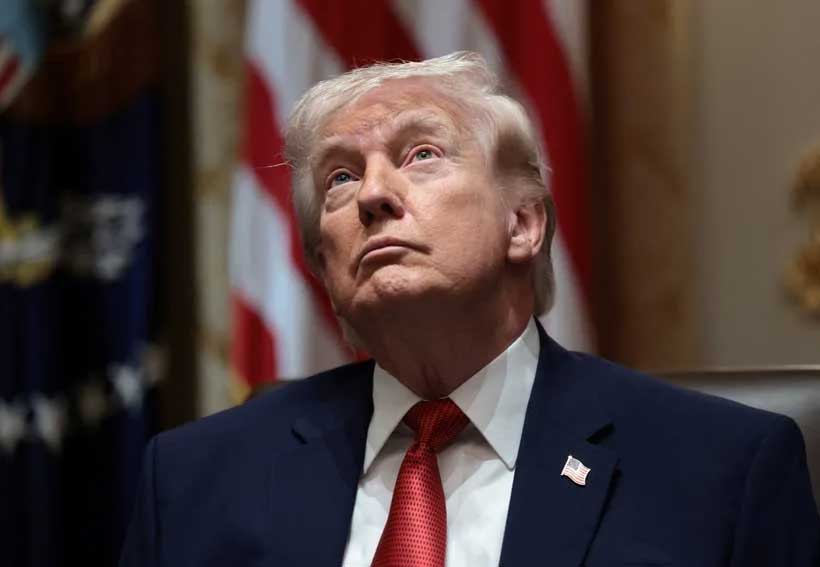
Primary elections in Maine, South Carolina, Nevada, and North Dakota offered fresh insights into the political dynamics shaping the 2026 U.S. midterm elections, with President Donald Trump once again demonstrating significant influence within the Republican Party.
In Maine, Democratic voters nominated Graham Platner for the U.S. Senate race despite controversy surrounding reports about his past personal conduct. Platner, a former Marine and oyster farmer, secured a decisive victory and will now challenge incumbent Senator Susan Collins, one of the few remaining moderate Republicans in the Senate.
Meanwhile, in South Carolina, Trump’s endorsement proved decisive in the Republican gubernatorial primary. Lieutenant Governor Pamela Evette advanced to the runoff after receiving Trump’s backing, while Representative Nancy Mace failed to secure enough support to continue her campaign.
The South Carolina results follow a broader pattern in which Trump endorsed candidates have defeated or weakened several Republican incumbents and establishment figures. Senator Lindsey Graham also appeared on course to avoid a runoff after securing a commanding lead in his primary race.
Stay ahead of the geopolitical week.
MD Briefing delivers expert analysis across five global fronts — the Indo-Pacific, energy, geoeconomics, European security, and the Middle East — every Monday morning. Free.
In Maine’s competitive congressional race, former governor Paul LePage advanced as Republicans seek to capture a district previously represented by retiring Democratic Congressman Jared Golden.
Why It Matters
The primary results offer an early indication of the political environment heading into the 2026 midterm elections and suggest that Trump’s influence remains a defining force within Republican politics.
For Republicans, the South Carolina results reinforce the importance of Trump’s endorsement in determining primary outcomes. Candidates aligned with Trump’s agenda continue to perform strongly, while those perceived as insufficiently loyal face increasing political risks.
For Democrats, Maine represents one of the party’s best opportunities to gain a Senate seat. The race against Collins could become a key battleground in determining control of the Senate, particularly if national dissatisfaction over economic conditions and foreign policy remains elevated.
The results also highlight the growing tension between electability and ideological loyalty in both parties. Democrats rallied behind Platner despite concerns about his personal history, while Republicans continued to reward candidates closely aligned with Trump even when facing experienced rivals.
At the congressional level, Maine’s open House seat could become one of the most closely watched contests of the election cycle. Given Republicans’ narrow House majority, even a handful of competitive races could determine which party controls the chamber after 2026.
- Donald Trump – Seeking to expand his influence over Republican candidates and policy direction.
- Graham Platner – Democratic challenger in a critical Senate race.
- Susan Collins – Republican incumbent facing a difficult reelection campaign.
- Pamela Evette – Trump backed gubernatorial candidate advancing in South Carolina.
- Nancy Mace – High profile Republican whose political future has been thrown into doubt.
- Lindsey Graham – Veteran senator seeking another term.
- Paul LePage – Republican candidate in a potentially pivotal House race.
- Jared Golden – Retiring congressman whose departure has created a competitive contest.
- Democratic and Republican national campaign committees seeking to shape Senate and House control in 2026.
Future Outlook
The Maine Senate race is expected to become one of the most expensive and closely watched contests in the country. Democrats view Collins as vulnerable, while Republicans see her as a critical figure in maintaining their Senate position.
Within the Republican Party, Trump’s continued success in shaping primary outcomes is likely to strengthen his influence over candidate recruitment and campaign strategy nationwide. Future primary contests may further demonstrate whether loyalty to Trump remains the dominant factor in Republican politics.
The South Carolina governor’s race now shifts toward the runoff election, where Evette enters with significant momentum and the advantage of Trump’s endorsement. Given the state’s Republican lean, the eventual GOP nominee will likely be favored in the general election.
Meanwhile, the battle for Maine’s open House seat could become a national test of voter sentiment in a politically competitive district. The outcome may provide an important indicator of whether Republicans can expand their House majority or whether Democrats can regain ground ahead of the broader midterm elections.
Overall, Tuesday’s primaries suggest that both parties are entering a highly competitive election cycle in which candidate quality, voter turnout, and national political trends will play decisive roles in determining the balance of power in Washington.
With information from Reuters.
