


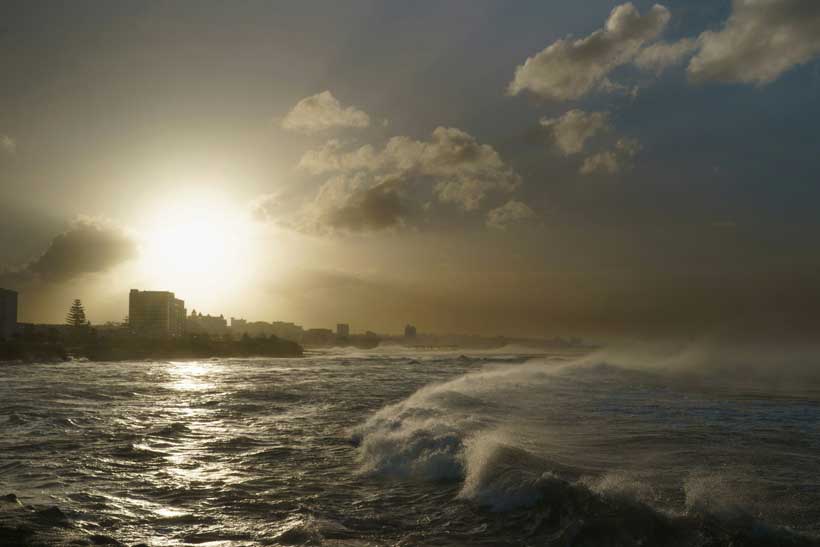
What lies at the heart of the empires that built the African continent and South Africa today? They employed corruption at the core of how they navigated the terrain of the land and maneuvered the extraction of valuable resources. They not only employed, and displayed corruption and the colonial scheme, they introduced it to our shores along with the mentality and heinous attitude of settler occupation.
It appears on the surface of things that there is no turning back for this continent. What we are seeing is that the youth are trying to find psychological release from the societal ills of the past and the economic burden as it still exists today.
This psychological release has become a sense of displeasure at satiety, and it has also become a commonplace sense of dis-ease, and distrust. The lucky ones stay in school and against all odds achieve success and they retain a semblance of normality in their lives. What has been lost is the youth who turns to the gun.
There is a silent epidemic that is growing in our midst, that is becoming a stereotype. The street child from subeconomic areas, neglected and abandoned, that lacks parental supervision, that is abused and turns to drugs. There is the youth that turns to crime, the youth that turns to the brotherhood of the gang because there is nothing left to justify their existence.
Stay ahead of the geopolitical week.
MD Briefing delivers expert analysis across five global fronts — the Indo-Pacific, energy, geoeconomics, European security, and the Middle East — every Monday morning. Free.
Then there is the marginalised and disenfranchised female who becomes a single parent. They are invisible to the rest of society. They’re just going through the motions of living their lives.
In my humble opinion, it’s time for the intellectuals to step forward. It is not just about redrafting and revising policy, it is not about accepting systemic violence in our subeconomic communities, it is about changing the course of history by writing truth to power, and acknowledging the African Renaissance, the principles, norms, and values of what we stand for, and the symbol of Robben Island, the university of our modern-day political leaders.
Everyone should be free in a democracy, not shackled, not chained to the network, the living legacy, not constrained by the decisionmaking of the past, and the choices of the minority political leaders of the past, and certainly we must not be tainted by the emotional damages and psychological, economic and social framework of the colonial scheme. We must remember Patrice Lumumba and Chris Hani, men who never separated African identity from the personal freedom of the individual. What about Wole Soyinka, Albert Camus, Nadine Gordimer, J.M. Coetzee, they wrote about the African/South African identity, they addressed the idea of personal freedom, what it meant, and challenged the understanding of the reality of both not existing.
The characters in their books inhabited those clauses. They wrote about national identity, cultural identity and the identity that was fractured. Everyone should have access to proper housing, running water and sanitation, and not the lack thereof.
It is a difficult choice to choose status (safety, comfort, ease) above the invincible power of truth.
People are still poor and uneducated in this hardwon democracy of ours, while others enrich themselves through the blaxploitation of the working classes. It is time for the intellectuals to step up, for the Nadine Gordimers to step up.
Poets in Gaza, in Palestine are writing their truth to power.
They are doing this by writing poetry. We must do what Bessie Head, Mzi Mahola, Dennis Brutus and Arthur Nortje did. We must write. We must write our truth to power and design a united Africa under the banner of the African Renaissance. Amandla! Awethu!
The power is ours. It belongs to all of us, the people of this continent. This is not South Africa’s and nor is it Africa’s last dance. Let’s stand together, united, for our beautiful land. It’s not just about reconciliation, it’s about leadership, it’s about our leaders, and their competency.
We must live by the vision of African unity, the rewriting of history and the dignity of all people. We must remember Patrice Lumumba’s words, “Political independence has no meaning if it is not accompanied by rapid economic and social development.” The day will come when Africa’s history will speak.
To have dignity, is to be liberated, is to be emancipated, is to attain liberty. Let us develop this nation so that our children, the future of this country, will have no restrictions. Let South Africa be an example for the rest of this continent and the world.
And what is addiction? What about it? What type of person becomes an addict? Why does the individual turn to drugs? We, on the outside, just see the self-destruction of the individual, and not the inner turmoil of the person. No one chooses to destroy themselves. No one chooses to turn to substance abuse. They see the people that they call friends doing it, and they don’t want to be unpopular so they try it for the first time never thinking that they’ll get hooked. That person is somebody’s child, a son, a daughter, a mother, a father.
The addict chooses to turn inward, they choose the release of the substance, of the drug because they refuse to be defined by or accept their emotional pain, and because they cannot handle their sensitivity to what is happening in their environment. Their high is not the pleasure seeking kind. They wish to escape the self. We, on the other hand, see how the addict sabotages themselves, their life, their future. We witness the harmful effects on their brain, how they lose all self-control, how they become a danger to themselves, to others and their partner, and to their children.
We, their family, have to witness the impact that drugs have on them and how it changes the trajectory of their life, and their behaviour. We call the choices that they make, with intention sometimes, and willfully, dangerous. We say that they are responsible for the choices they make. They leave us to watch their slow, painful demise and sometimes when a drug overdose occurs they leave us forever. Yes, we even go as far as to blame them. We say that it’s their problem, their stupid mistake. We willingly eject them from society.
We call their behaviour endangerment, reckless, unpredictable, out of control. Support and unconditional love is the only solution, although sometimes there is only one decision to take, one choice left, one alternative, however difficult that is, and that is to walk away.
As Robert Sobukwe said on the topic of the cost of liberation, “Freedom is not free. Its price is sacrifice.” The denial of political existence will lead to the resorting of questionable tactics, the denial of existence will lead to absolute corruption, and zero self-esteem, and the denial of movement, the denial of land is a travesty of justice. It is an invitation to use as a case study. It must launch an investigation into the maneuverings of the despotic and the impact it has on the victimhood of the wretched. The denial of our humanity will lead to the denial of the existence not only of our human rights, but the very existence of God, the Creator of the universe.
We are all stories and our silence speaks louder than words.
