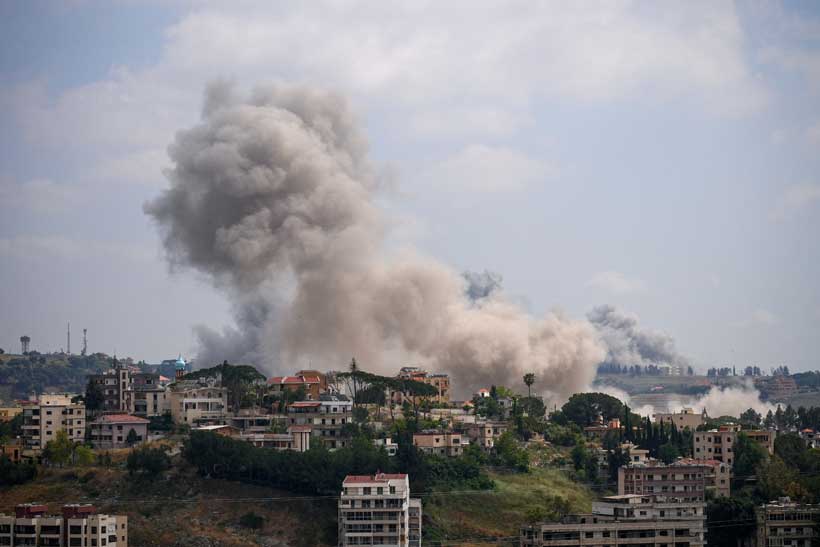
Israel continued its military strikes on southern Lebanon, particularly targeting Hezbollah, even after U. S. President Donald Trump urged Prime Minister Benjamin Netanyahu to hold off on attacks in Beirut to prevent further conflict escalation. Following Trump’s request, Lebanon’s government announced that Israel would not proceed with its planned strikes on Hezbollah’s strongholds in Beirut, while Hezbollah would cease its attacks on Israel. However, this announcement offered little reassurance to many Lebanese, with the war in the region still ongoing and Israeli military activity persisting.
The Lebanese government planned to negotiate a ceasefire expansion during talks with Israeli officials in Washington, a move that faced skepticism due to Hezbollah’s opposition. Iran has also called for a ceasefire in Lebanon as part of a potential broader agreement with the U. S. to end the conflict that began with U. S. and Israeli strikes against Iran in late February.
In southern Lebanon, Israeli airstrikes affected several towns, prompting the military to order evacuations in areas like Nabatiyeh. Hezbollah claimed to have conducted operations against Israeli forces, but there were no reported rocket attacks into Israel at that time. The Israeli military intercepted projectiles coming from Lebanon, and Defense Minister Israel Katz warned that if Israel faced attacks, it would retaliate against Hezbollah in Beirut.
Lebanese resident Faten Al Chehime expressed her distress over repeated warnings leading to displacement from her home. The ongoing conflict has displaced over 1.2 million people in Lebanon since the war began on March 2, following Hezbollah’s support of Iran.
Tensions escalated further after Netanyahu’s command for strikes on Beirut’s Dahiyeh area. Iranian media reported that talks with the U. S. had stalled due to Israeli actions, with Iran warning of possible direct confrontation if aggression continued. Despite these tensions, Trump’s intervention seemed to ease the situation, with an unprecedented communication involving Hezbollah through intermediaries, even as Washington has previously labeled the group a terrorist organization.
As Lebanese officials engaged in talks in Washington, they aimed to establish a framework for a ceasefire, possibly through designated “pilot zones. ” The goal would be to gradually achieve a complete ceasefire across Lebanon, with a focus on disarming Hezbollah. While Hezbollah had not officially endorsed the ceasefire, it had refrained from attacking northern Israel. Meanwhile, over 3,400 people in Lebanon have died due to Israeli strikes since the conflict recommenced, and Israel reported casualties among its soldiers and civilians from Hezbollah actions.
With information from Reuters