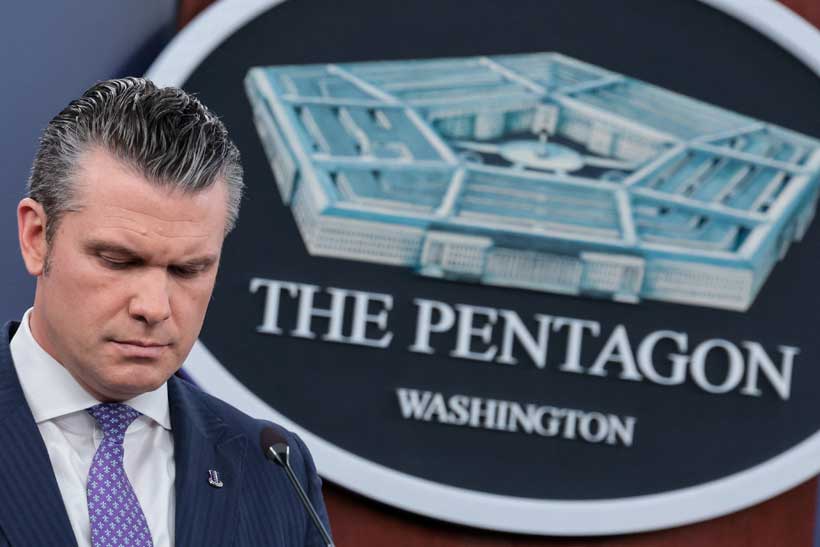
U. S. Defence Secretary Pete Hegseth called on Asian allies to increase military spending to counter China’s rising influence during his speech at the Shangri-La Dialogue in Singapore. He expressed concern over China’s military buildup and its potential to disrupt the regional balance of power. Hegseth emphasized the need for a robust network of allies that can deter aggression and maintain stability. The U. S. expects allies to raise defense spending to 3.5% of GDP, while the U. S. itself is investing $1.5 trillion in its military.
Hegseth addressed the need for action over discussions, suggesting that the region requires more military resources, such as ships and submarines, rather than just conferences. He underlined that partners want stability and that the U. S. must exhibit strength and disciplined leadership. He also noted improvements in U. S.-China relations, citing increased military communication to help manage tensions, while acknowledging that the relationship remains complicated.
Zhou Bo, a Chinese delegate, recognized a better tone in Hegseth’s remarks compared to the previous year, attributing this change to previous diplomatic engagements. He stated that both nations have communication channels open and that the situation might not be as severe as perceived. Hegseth reiterated President Trump’s call for allies to take more responsibility for their defense costs, proclaiming an end to U. S. defense subsidies for wealthy nations, emphasizing the need for allies to contribute actively.
Hegseth praised contributions from various allies and highlighted Japan’s efforts to enhance its defenses alongside the U. S. Regarding the Middle East, he stated the U. S. is prepared to resume strikes on Iran if diplomatic efforts fail and emphasized the ability to focus on both Asian and Middle Eastern interests simultaneously.
On the topic of arms sales to Taiwan, Hegseth avoided directly addressing concerns but affirmed that decisions about such sales are ultimately up to President Trump. The U. S. is reportedly considering a substantial arms package for Taiwan, which China views as its territory. Hegseth assured that there has been no change in U. S. policy towards Taiwan despite the ongoing dynamics in U. S.-China relations.
With information from Reuters