


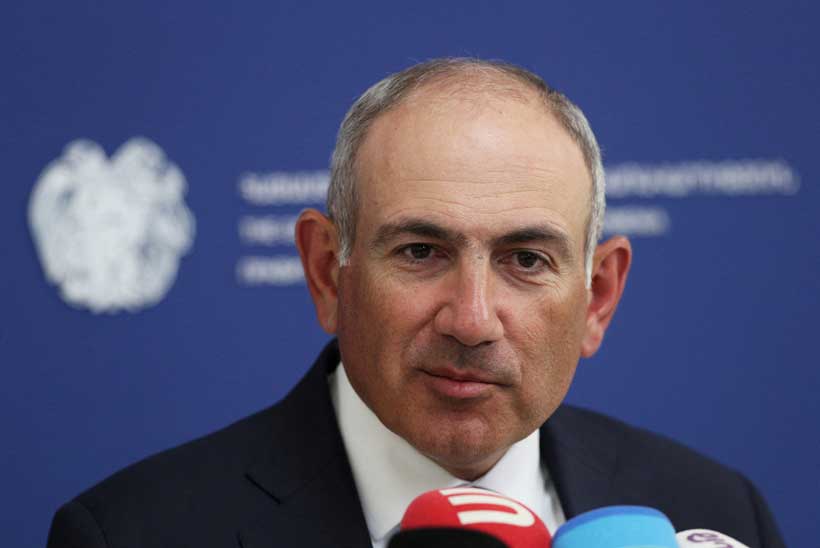
Russia has intensified efforts to undermine Armenian Prime Minister Nikol Pashinyan ahead of Armenia’s upcoming June 7 election, according to Western intelligence and government officials cited in reports.
The allegations include disinformation campaigns, covert political operations, and plans to transport large numbers of Russian Armenians into Armenia to influence the vote in favor of pro Russian candidates.
The claims come as Armenia increasingly distances itself from Moscow and deepens ties with the West, Europe, and NATO. Once firmly within Russia’s sphere of influence after the collapse of the Soviet Union, Armenia under Pashinyan has gradually shifted its foreign policy orientation following growing tensions with the Kremlin.
Relations deteriorated sharply after Russian peacekeepers failed to prevent Azerbaijan from retaking Nagorno Karabakh in 2023, a development that deeply damaged Armenian trust in Moscow’s security guarantees.
Stay ahead of the geopolitical week.
MD Briefing delivers expert analysis across five global fronts — the Indo-Pacific, energy, geoeconomics, European security, and the Middle East — every Monday morning. Free.
Since then, Armenia has suspended participation in a Russian led security alliance, strengthened relations with the United States and Europe, and supported Western backed regional initiatives.
The latest tensions have transformed Armenia into one of the newest geopolitical battlegrounds between Russia and the West.
Why It Matters
The Armenian election carries major strategic significance far beyond the country’s borders.
If Pashinyan secures re election, Armenia’s pivot toward the West could become more permanent, weakening Russia’s long standing influence in the South Caucasus region. This would represent another geopolitical setback for Moscow at a time when the Kremlin is already facing pressure from the war in Ukraine and deteriorating relations with Europe.
The election also directly affects broader regional stability. Armenia sits at a crucial crossroads connecting Europe, Central Asia, the Middle East, and Russia. Any long term shift in Armenia’s alliances could reshape trade routes, energy corridors, and security arrangements across the region.
A major issue involves the proposed transport corridor supported by the United States through southern Armenia. The route forms part of a broader peace framework between Armenia and Azerbaijan and could reduce Russian influence over regional transportation and trade.
Western officials believe Moscow sees this development as a direct challenge to its geopolitical position in the Caucasus.
The allegations of election interference also raise wider concerns about foreign influence operations, democratic stability, and the growing use of disinformation campaigns in global politics.
Key Stakeholders
Armenia
Armenia faces a defining political moment as it balances security concerns, economic pressures, and competing geopolitical influences. The election could determine whether the country continues moving closer to Western institutions or returns toward stronger alignment with Russia.
Russia
For Russian President Vladimir Putin, Armenia represents one of Moscow’s last remaining strategic footholds in the South Caucasus. Losing influence in Yerevan would weaken Russia’s regional position and further challenge its image as the dominant power in the former Soviet space.
United States
The administration of United States President Donald Trump has openly supported Armenia’s recent diplomatic and economic initiatives. Washington views Armenia as an important partner in regional connectivity, stability, and efforts to reduce Russian influence.
European Union and NATO
European governments and NATO members are closely watching Armenia’s political direction. Armenia’s growing engagement with Western institutions signals a potential expansion of Western influence into a region traditionally dominated by Moscow.
Azerbaijan and Turkey
Regional powers Azerbaijan and Turkey also hold major interests in Armenia’s political future, particularly regarding transport agreements, border normalization, and implementation of the recent peace framework.
Disinformation and Covert Operations Concerns
Western intelligence officials allege that Russia has expanded online disinformation campaigns targeting the Armenian government ahead of the election.
According to reports, Kremlin linked networks and political consultancies have promoted narratives portraying Armenia’s future prosperity as dependent on maintaining close ties with Russia.
The allegations also include claims of plans to transport Russia based Armenians into Armenia to vote against Pashinyan, although reports state there is no independent confirmation that such operations have been fully implemented.
Russian officials have denied interfering in Armenia’s internal affairs and dismissed the accusations as politically motivated.
The controversy reflects broader international concerns surrounding election interference and digital influence operations, particularly as several Western governments have accused Russia of similar activities in other countries.
Future Outlook
The upcoming Armenian election is likely to become one of the most consequential political contests in the South Caucasus in recent years.
If Pashinyan wins re election, Armenia may continue accelerating its diplomatic, economic, and security cooperation with the West. This could further reduce Russian leverage in the region and strengthen United States backed regional initiatives involving trade and transportation.
At the same time, a continued Armenian pivot away from Moscow may trigger additional economic and political pressure from Russia. Moscow has already warned Armenia about energy costs and restricted certain Armenian imports in recent weeks.
The election outcome may also influence the future of the Armenia Azerbaijan peace process. Western officials believe a Pashinyan victory would help preserve current negotiations and regional connectivity projects, while a political shift toward pro Russian forces could weaken or delay those agreements.
Security concerns surrounding Armenia’s leadership are also expected to remain high amid reports of threats, political tensions, and fears of destabilization efforts.
More broadly, Armenia’s political direction could become a symbol of a larger geopolitical struggle over influence in the post Soviet region, where Russia and the West continue competing for strategic partnerships, infrastructure routes, and regional influence.
The weeks following the election may therefore shape not only Armenia’s future foreign policy orientation but also the broader balance of power in the South Caucasus.
With information from Reuters.
