


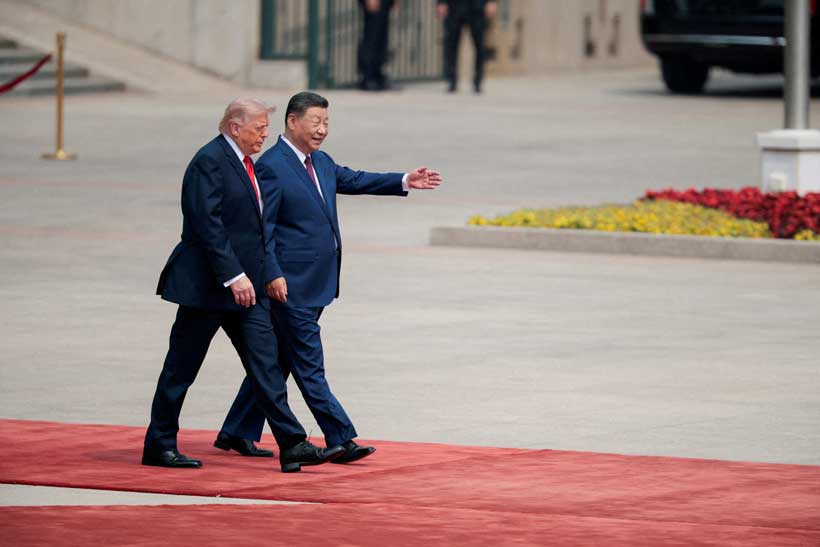
China is playing the role of diplomatic mediator through Pakistan to reduce American influence and promote a multipolar world order led by China and other powers of the Global South. It is using its economic and diplomatic rapprochement with Iran as a tool to challenge Western and American hegemony and secure its strategic interests in the Middle East and the Gulf. Here, China leverages its strong trade relations with Iran (particularly in oil purchases) for soft diplomatic pressure and crisis containment, aiming to avoid any military conflict that could disrupt its economic interests through its Belt and Road Initiative. China is playing a pivotal role as an international facilitator and guarantor supporting Pakistani mediation efforts aimed at ending military tensions and reaching a political agreement between Iran and the United States. This involves integrating Beijing’s economic and diplomatic influence with Islamabad’s on-the-ground actions to pressure the parties involved and secure international shipping lanes.
The most prominent aspect of China’s role can be summarized as its push for the Five-Point Initiative or Joint Peace Plan, in cooperation with Pakistan, to resolve the crisis between Iran and the United States. This five-point diplomatic initiative aims to halt the war, restore regional stability, and maintain security in the Strait of Hormuz. The Chinese initiative focuses primarily on ensuring the safe passage of ships and protecting vital shipping lanes in the Middle East and the Gulf. China also proposes opening channels for ongoing dialogue between all parties. The Chinese points include an immediate cessation of military operations and the establishment of direct channels for negotiations between Washington and Tehran. Here, Pakistan seeks to involve China as a key guarantor of any future agreement or commitments reached between the two sides. This involves exerting pressure on Tehran, with Beijing leveraging its strong economic ties with Iran, such as the 25-year agreement and joint oil investments, to urge the Iranian leadership to make flexible concessions regarding its nuclear program in exchange for security guarantees. China is keen on high-level coordination, and there is ongoing and direct coordination between Chinese and Pakistani officials, such as the recent talks between Pakistani Prime Minister Shehbaz Sharif and Foreign Minister Ishaq Dar in Beijing to unify their perspectives and intensify mediation efforts.
As for the most prominent geopolitical and economic motives for China’s leading mediation efforts with Iran and protecting its economic interests, China seeks regional stability to ensure the flow of Iranian and Gulf oil supplies and to safeguard its Belt and Road Initiative and the China-Pakistan Economic Corridor (CPEC). While Beijing attempts to bolster its diplomatic influence, China is trying to replicate its previous historic mediation success in 2023 between Saudi Arabia and Iran, thus reinforcing its image as a peace-making and neutral superpower capable of engaging with all parties.
Chinese diplomacy has solidified its position as a global superpower through coordinating mediation efforts with Pakistan to de-escalate tensions and avert military escalation between the administration of US President Donald Trump and Iran. This Chinese move primarily aims to secure vital energy routes, particularly the Strait of Hormuz, and to consolidate strategic stability to extend Chinese influence in a multipolar international system. The most important aspects of the mediation and negotiations sponsored by China to halt the military escalation in the region stand out, particularly through China’s sponsorship of the trilateral coordination mechanism with Iran. Beijing called on Islamabad to intensify mediation efforts and propose initiatives to bridge the gap between Washington and Tehran and to work on securing waterways, focusing on ensuring freedom and safety of navigation in the Strait of Hormuz. Beijing also sought to ensure that the strait would not be closed or subjected to illegal transit fees. China officially adopted the settlement track with Tehran, and these Chinese efforts resulted in the drafting of an American proposal that was conveyed to Iran through the Pakistani mediator, amid anticipation of progress towards a long-term agreement that guarantees the stability of global energy supplies.
Stay ahead of the geopolitical week.
MD Briefing delivers expert analysis across five global fronts — the Indo-Pacific, energy, geoeconomics, European security, and the Middle East — every Monday morning. Free.
To achieve its objectives, China is pushing for a multipolar world to counterbalance American influence. Beijing seeks to establish a new international order not governed by Western and American rules by strengthening alliances opposed to US policies to reduce dependence on the dollar and expand economic blocs. China is leading efforts to expand and activate the BRICS group, which Iran has officially joined, as a key platform for representing the interests of developing countries and the Global South and for building a parallel financial and trade system. This reflects China’s focus on the role of the Global South in its new strategy. China has also presented numerous global and developmental initiatives based on President Xi Jinping’s vision of a shared future for mankind, such as initiatives related to development, security, civilization, and global governance. In doing so, China presents itself as an economic leader and a defender of the interests of the Global South, capitalizing on growing resentment against Western sanctions and American hegemonic policies. With China’s efforts to support anti-Western regimes, integrating countries like Iran into the Asian economic system is part of a broader Chinese strategy to build a unified international front capable of resisting American and European pressure and sanctions.
In this context, China’s most important interests in the international structural transformation are highlighted, particularly in maintaining energy stability. As the world’s largest oil importer, China seeks to ensure the uninterrupted flow of energy supplies from the Gulf. Furthermore, China aims to assert its own power, emerging as a reliable strategic partner for Iran and playing an indispensable role in Middle Eastern crises. This bolsters its position as a global counterweight to the United States in the multipolar international system. Consequently, Chinese mediation efforts, coordinated with Pakistani efforts, successfully persuaded US President Donald Trump to continue negotiations and avoid military escalation with Iran, with the goal of securing vital waterways. Simultaneously, China strives for strategic stability that safeguards its interests amidst an international structural shift towards a multipolar order.
The details and motivations behind this complex scenario can be understood through the lens of China’s role and mediation efforts. Washington relies on economic and diplomatic pressure from Beijing, given China’s heavy dependence on Iranian oil and gas. Consequently, Beijing, along with the Pakistani capital Islamabad, provided platforms for mediation to achieve a ceasefire. China played a key role in ending the Iranian blockade of the Strait of Hormuz and bringing Tehran to the negotiating table. China also leveraged Pakistan’s pivotal role, positioning it as an active regional mediator and the primary coordinator of messages between Washington and Tehran. Pakistan successfully brokered de-escalation agreements and facilitated talks leading to memoranda of understanding that ended the war. This paves the way for a shift towards a multipolar world, where the rise of China and the independent diplomatic efforts of both Beijing and Islamabad pose a structural challenge to American hegemony. Washington is well aware of this trend, which is why the Trump administration’s policy focuses on negotiations and economic deals to contain Chinese influence in a world structurally moving towards multipolarity.
