


Africa’s rise as an important geopolitical area in international politics is due to its rich resources, growing population, and geographical location at key maritime crossroads between the Indo-Pacific Ocean, Atlantic Ocean, Red Sea, and Mediterranean Sea regions. As a result, the increased attention to Africa by external powers in both political and economic terms can be attributed to these features.
Due to the growing geopolitical importance of Africa, there has been growing competition among various superpowers such as China, Russia, the US, and even Europe for influence over the continent by way of investment, security cooperation, infrastructure development, and diplomatic partnerships. This trend has made Africa one of the most important battlegrounds for the emerging multipolar international order.
China’s Expanding Footprint in Africa
China has had various occurrences of increased influence in African countries in the last two decades, mostly resulting from the Belt and Road Initiative (BRI), which began in 2013. China has invested heavily in transport, energy, telecommunication, ports, railway, and industrial projects through the use of infrastructure diplomacy. This approach has ensured that China is viewed as the major trading partner for Africa. These efforts are mainly as a result of the strategic importance of Africa, market expansion, and natural resources in the continent.
Various infrastructure projects financed by China have included the construction the Addis Ababa-Djibouti railway, which providing Ethiopia access to the ports of Djibouti and of the Standard Gauge Railway, which connects Mombasa and Nairobi in Kenya. China has been growing port and maritime development in line with its Maritime Silk Road strategy while setting up its first foreign military base in Djibouti.
Stay ahead of the geopolitical week.
MD Briefing delivers expert analysis across five global fronts — the Indo-Pacific, energy, geoeconomics, European security, and the Middle East — every Monday morning. Free.
On the other hand, the involvement of China in developing the Digital Silk Road through firms such as Huawei and ZTE has been on the rise, contributing to digital infrastructure development, 5G networks, and the development of smart cities in Africa. The increasing involvement of China has, nonetheless, brought into focus issues related to debt sustainability, dependence, cybersecurity, and sovereignty due to the debt crisis experienced by Zambia.
Russia’s Strategic and Security Engagement in Africa
Russia has increased its presence in Africa through military diplomacy, security cooperation, energy relations, and political engagement especially in areas of instability and weakened Western presence. While China concentrates more on infrastructure development in its foreign policy, Russia has concentrated on defense and security areas where it builds relations with countries facing insurgencies, political changes, and civil strife. This is part of Russia’s wider strategy of seeking to assert itself as a world power amidst the Western-dominated multipolar world.
Military cooperation has now taken center stage in Russia’s relations with Africa. Several defense treaties have been inked between Russia and several African nations that include military aid, training, intelligence exchange, and counterterrorism efforts. Russia has become a key supplier of weapons in the Sahel region, especially in countries like Mali and Burkina Faso, where tensions arose with France after the departure of French troops from the regions due to anti-French sentiments.
Another key element in Russia’s foreign policy includes private military groups, specifically the Wagner group. Members of the Wagner group assisted in providing security and military support, as well as military training in some countries like the Central African Republic and Mali. As a result, the Russians received access to mining rights in exchange for their services.
Russia has consolidated its position through the use of narratives against the West that stress themes of sovereignty, non-intervention, and anti-neocolonialism. In addition to the security partnership, Russia has also sought to build relations in areas such as mining, hydrocarbon resources, and energy, as well as in diplomacy for gaining support from Africa on the international stage.
Western Re-engagement in Africa
The rising influence of China and Russia in Africa has led to increased participation of Western countries, especially the US and the European Union, in developing a more holistic strategic approach towards Africa. The economic strength of the continent, its fast-growing population, its abundance of minerals, and its geographical significance in the region have led to the need for a rethink of the way Western countries view the geopolitical significance of the continent in the changing global scenario of multipolarity. This has led to a change in the strategic approach of the West towards Africa.
The US has been escalating its engagement on the African continent through numerous diplomatic, economic, and security approaches with the intention at curbing the influence of China and Russia on the continent. The recent US policies focus primarily on sectors including trade, technology, investment in renewable energy, and democracy. Such programs include the US-Africa Leaders Summit and the Partnership for Global Infrastructure and Investment (PGII) among others that are run by the G7, and aim at offering alternative options to Chinese infrastructural investments.
Likewise, the European Union has augmented its engagement through programs such as the Global Gateway, which focusses on investments in transport, connectivity, health, energy, and education. This program is considered the European approach to the Chinese Belt and Road Initiative, completely in terms of infrastructure and connectivity. European decision-makers have now understood that staying influential in Africa entails developing economic partnerships and cooperation that are based on investments rather than relying only on historical relationships.
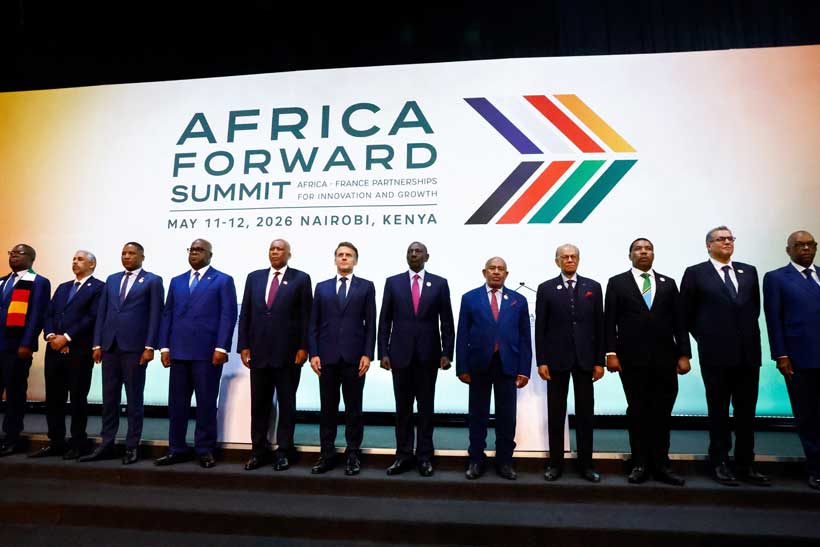
The role of France in Africa has also progressed amongst growing anti-French sentiments and dwindling influence in the Sahel region. The recent “Africa forward” summit by President Emmanuel Macron purposes to reframe the relationship through investment diplomacy, economic cooperation, and decreased military reliance after France pulled out of Mali, Burkina Faso, and Niger.
African Agency in the Emerging Multipolar Order
Even as rivalry between China, Russia, the US, and Europe grows fiercer, the African states seem to be exercising their strategic agency and not acting merely as playgrounds for rival powers to compete. The emergence of a multipolar world has presented new avenues for the African countries to pursue diverse partnerships, derive maximum economic advantage, and gain negotiating power by engaging with various international players. Unlike before, when Africa aligned itself with one particular bloc, African nations now pursue their national interests pragmatically.
The growing agency of Africa is demonstrated by its multidirectional diplomatic approach. The African states negotiate with China on financing infrastructure projects, with Russia on cooperation in security matters, with the EU on trade deals and development aid, and with the US on technology and strategic collaboration. Through this balancing act, African countries are able to ensure that they are not overly dependent on any one partner and improve their leverage in international relations.
Continent-based institutions have also helped to improve the collective diplomatic power of Africa. The African Union has been increasingly advocating for African solutions to African problems through the building of peace, integration, and diplomacy. Likewise, the African Continental Free Trade Area seeks to establish a common market in the continent through increased intra-African trade, industrialization, and economic sustainability.
Expansion of BRICS has only served to underscore the importance of Africa in the developing multipolar world order. The involvement of Africa in BRICS, among other Southern blocs, serves as proof of the increasing advocacy for reforms in international financial institutions and global governance regimes by African states. This is part of the efforts by Africa towards sovereignty and influence on the global stage.
Challenges and Risks in Africa’s Emerging Geopolitical Environment
Even though Africa’s relationship with many global actors has enhanced its strategic options, it has also led to certain structural problems and dangers. Among the major challenges that have been faced by Africa is the issue of economic dependence because the use of external funding, development projects, and security support may limit the country’s policy flexibility. This is because it becomes hard for the African nations to influence the course of externally sponsored projects.
Another area that has been receiving considerable attention is the issue of debt sustainability. There are many African countries that have incurred considerable amounts of public debts associated with infrastructural development in transportation, energy, and urban areas. While such investments promote modernization and economic growth, the need to pay back these debts can undermine fiscal stability and make the country vulnerable to external economic policies.
There are also significant dangers associated with the increasing militarization of foreign engagements. The use of foreign military relations, counter-terrorism activities, and foreign security forces is becoming increasingly common in areas like the Sahel and the Horn of Africa. Although it is intended to combat insecurity, this can actually lead to the consolidation of militarized state structures and impede institutional development.
The issue of governance adds to the difficulties that Africa faces within the new multipolar world system. The lack of political stability, corruption, poor governance structures, and the rule of law hinder efforts at collaboration and investment from outside. However, outside involvement through the use of strategic narratives and media and geopolitical rivalry can affect internal politics and foreign policy direction. As Africa becomes the center of the world’s competition, the ability to maintain balance between external involvement and sovereignty and sustainability is crucial.
Conclusion
Sovereignty issues are yet another dilemma facing Africa’s interaction with the global order. Although African states wish to pursue their own policies, the practicalities of financial and military assistance and economic integration can place them in situations where they have to make compromises in terms of their sovereignty. However, balancing sovereign interests and external involvement is something that needs to be done skillfully in order to avoid dependence on one particular block of countries. The main problem faced by Africa here is not participation in the global competition, but rather transforming it into sustainable development.
The geopolitics of Africa is going to become even more important in the coming years as the rivalry among the global powers increases, and their need for Africa’s resources and market access grows. In fact, Africa has gone from being an observer in global politics to becoming one of the major arenas where global powers battle for supremacy through investments, cooperation, and diplomacy.
The course of the future for Africa will largely be determined by whether or not it can translate the emerging external competition into benefits for sustainable development and strategic independence. Properly handled, the multipolar dynamic can result in diversification of partnerships, increased leverage, and rapid development for Africa. The critical question is whether or not this external competition ends up reinforcing or weakening the sovereignty and agency of Africa in the international system.
