


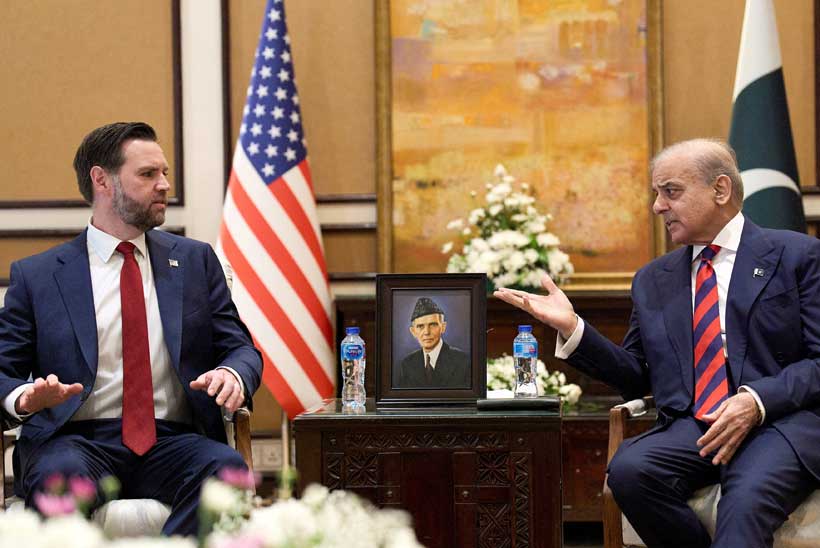
Diplomatic activity has increased as Pakistan seeks to accelerate stalled discussions between United States and Iran. The effort comes amid a fragile ceasefire that has held for six weeks but has failed to produce meaningful progress toward a lasting agreement.
Rising oil prices and instability in global energy routes have added urgency to the situation. Concerns over inflation and slower global economic growth are now shaping political decisions in Washington as well as in other major capitals.
At the same time, tensions remain high in the region following years of confrontation involving Iran, Israel, and allied forces, with repeated strikes and retaliations contributing to wider instability.
Pakistan Expands Diplomatic Engagement
Stay ahead of the geopolitical week.
MD Briefing delivers expert analysis across five global fronts — the Indo-Pacific, energy, geoeconomics, European security, and the Middle East — every Monday morning. Free.
Pakistan has stepped up coordination efforts with multiple parties involved in the conflict. Officials are attempting to improve communication channels between Washington and Tehran in order to speed up responses and reduce delays in negotiations.
Pakistan Interior Minister visited Tehran recently as part of these efforts. The country is positioning itself as a facilitator capable of maintaining dialogue between rival sides that currently lack direct trust.
Army Chief Asim Munir is also considering travel to Tehran to further support mediation efforts, highlighting the military level engagement in the diplomatic process.
United States Position and Political Pressure
President Donald Trump has signaled conditional patience in the negotiations, stating that Washington may wait only a few days for acceptable responses from Tehran. He has also indicated that military options remain on the table if diplomacy fails.
Domestic political pressure is increasing as rising fuel prices affect public sentiment in the United States. Economic concerns are becoming a central issue ahead of upcoming elections, adding urgency to foreign policy decisions.
Iran Response and Strategic Demands
Iran is currently reviewing the latest US responses while continuing to maintain a firm negotiating position. Tehran has proposed terms that include sanctions relief, access to frozen assets, and changes in regional security arrangements.
Iranian leadership has also warned against renewed military action, stating that any escalation could widen the conflict across the region. The government continues to emphasize its strategic demands while resisting external pressure.
Strait of Hormuz and Global Energy Impact
The Strait of Hormuz has become a central point of global concern due to disruptions in oil and gas shipments.
Although limited shipping activity continues, the volume remains far below normal levels. New maritime control measures introduced by Iran have raised concerns about potential restrictions and fees that could further affect global trade routes.
Several large oil tankers, including shipments linked to Asia, have recently passed through the strait under complex arrangements, reflecting cautious cooperation despite ongoing tensions.
Regional Military and Political Context
The broader regional situation remains volatile following years of conflict involving Iran and Israel. Military operations, missile exchanges, and proxy engagements have contributed to significant human and strategic losses across multiple countries.
Despite a temporary ceasefire, underlying tensions remain unresolved. Iran continues to maintain military capabilities, including missile systems and drone production, while regional actors remain alert to renewed escalation risks.
Analysis
The current diplomatic push reflects a convergence of urgent political and economic pressures. Rising energy costs are directly influencing global inflation expectations, which in turn is increasing pressure on major powers to stabilize the situation quickly.
Pakistan is emerging as a rare intermediary trusted enough by both sides to facilitate communication. Its engagement signals an attempt to prevent diplomatic breakdown at a time when direct communication between the United States and Iran remains limited.
For the United States, the issue is increasingly tied to domestic political stability and economic performance. President Donald Trump is balancing a hardline security stance with growing voter sensitivity to fuel prices and inflation.
For Iran, the strategy appears focused on maximizing negotiating leverage while maintaining deterrence capabilities. The combination of economic sanctions pressure and regional security threats is shaping its cautious but firm approach.
Overall, the situation remains highly unstable. Without rapid diplomatic breakthroughs, the risk of renewed escalation in both military and economic dimensions remains significant, particularly around global energy supply chains and regional security architecture.
With information from Reuters.
