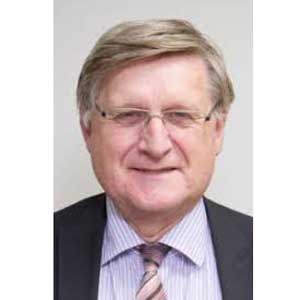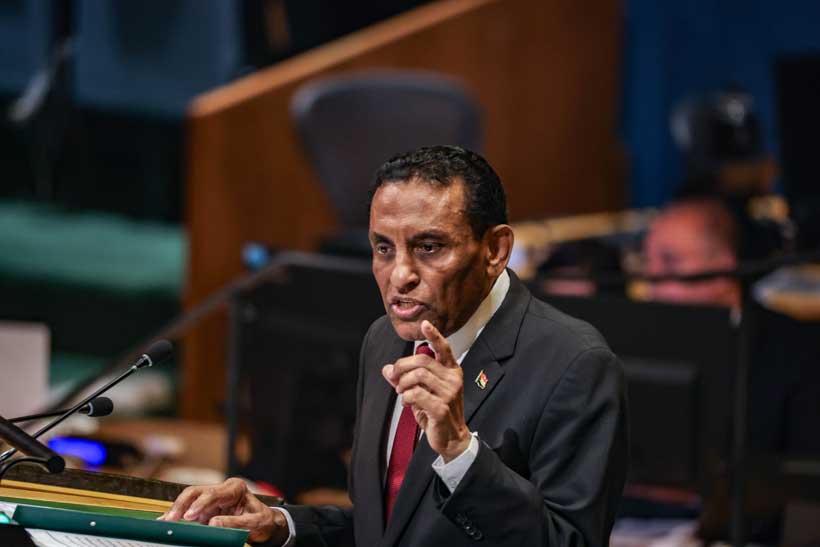
There will not have been many international leaders taken in by Sudanese Prime Minister Kamil Idris’ opinion article published this week on the Al-Jazeera website. No doubt a piece of performative diplomacy around the Berlin conference on Sudan, the article calls for negotiation and civilian transition. This is difficult to take seriously when the power behind Prime Minister Idris, General Abdel Fattah al-Burhan, head of the Sudanese Armed Forces (SAF), has consistently resisted meaningful peace talks unless they occur entirely on his terms.
Idris advocating “inclusive dialogue” without acknowledging Burhan’s obstruction of the peace process is at best disingenuous. It avoids the key blocker—a plethora of spoilers by the SAF in the various peace initiatives of the past three years. In the early days of the war in April and May of 2023, the SAF formally agreed to short truces related to the Jeddah talks yet continued their airstrikes on Khartoum and Omdurman and failed to consistently implement humanitarian pauses. They were willing to sign agreements tactically but not to comply operationally.
In negotiations in mid to late 2023, SAF representatives insisted first on RSF withdrawal from civilian areas before deeper talks and suspended their participation multiple times. The SAF then went on to reject the IGAD mediation of late 2023 and early 2024, which proposed direct talks and even a Burhan–Hemedti meeting. Burhan refused to attend a proposed summit in Uganda. He also objected to Kenya’s role as mediator, accusing it of bias. The result was the fragmentation of mediation efforts and delay of any unified peace track.
The SAF also has a track record of resisting civilian-inclusive political frameworks. Various initiatives, including the African Union and civilian coalitions like Taqaddum, pushed for a return to civilian rule. The SAF leadership has rejected arrangements that would limit military dominance in a transition. They have continued to frame the war as a fight to preserve the state, justifying ongoing military control. This contradicts calls, exactly like those in Idris’ Al-Jazeera article, for a genuinely civilian-led process.
Stay ahead of the geopolitical week.
MD Briefing delivers expert analysis across five global fronts — the Indo-Pacific, energy, geoeconomics, European security, and the Middle East — every Monday morning. Free.
The SAF has also been steadfast in this refusal to recognize the RSF as a legitimate negotiating partner. Burhan has repeatedly framed the RSF as a “rebel militia” or terrorist group rather than an equal party. This creates a structural barrier. Negotiations typically require mutual recognition. Without it, talks become conditional on RSF disarmament first.
During both 2024 and 2025, the SAF has continued offensives during negotiation windows. Even when new mediation attempts emerged, such as renewed Jeddah or AU-led efforts, the SAF escalated offensives, especially in Omdurman and central Sudan. This reflects a strategy of negotiating while fighting to improve battlefield leverage, which undermines trust.
Most recently, in Berlin this week, the SAF’s attitude toward the Sudan talks was obstructive in practice. They did not fully engage as a committed negotiating party. It framed the talks as premature, arguing that military conditions on the ground had to be addressed first. Like in other processes, they insisted that the RSF should withdraw from occupied areas and lose de facto power before meaningful political negotiations. It was yet another example of their overriding drive to resist any legitimization of the RSF.
There is also the tremendous ambiguity—and limited influence of—civilian figures like Idris to consider. Civilian political figures associated with, or tolerated by, SAF structures have tended to publicly support peace and transition rhetoric. What they have not done is openly challenged Burhan’s red lines, such as no power-sharing with RSF on equal terms. There is a substantial gap between public messaging and actual decision-making power.
A glaring omission from Idris’ article is the extent to which the SAF is dependent upon Islamist militias, including the Muslim Brotherhood. The Sudanese branch of the Muslim Brotherhood has recently been designated as a terrorist organization by the United States, and there are deep concerns in the international community about the hold that the Brotherhood has over Burhan and the SAF, especially over this Iran-backed group gaining an ever-stronger foothold on the Red Sea via its Sudan presence. The Brotherhood and other militias, driven by their own self-preservation, are also a major factor in why Burhan will not engage meaningfully in any peace process. The Islamists do not want to write themselves out of the Sudan picture.
Iran’s impact on the Sudan conflict is not limited to Tehran’s backing of Islamist militias. Iran has long been supplying weapons to the SAF. Just this week, a Los Angeles-based woman was arrested on suspicion of helping Iran send weapons to Sudan. Shamim Mafi will face charges that she brokered the sale of “drones, bombs, bomb fuses, and millions of rounds of ammunition” between Iran and the Sudanese Armed Forces, First U.S. Attorney Bill Essayli said in a statement on Sunday. The Mafi case follows years of reporting on the Iranian shipments arriving in Sudan, as well as Iran’s aspirations for a base on the country’s Red Sea coast.
Idris’ article was clearly designed to signal moderation to the international community and to position the prime minister as a civilian, peace-oriented figure. He is trying to distance himself rhetorically from the war, even as we all know that he lacks real leverage. Al Jazeera was probably wasting their column inches by inviting him to submit this piece. They would have been better off ignoring Idris and instead insisting that Burhan sit down for a live televised interview in which he actually explained his resistance to peace.