


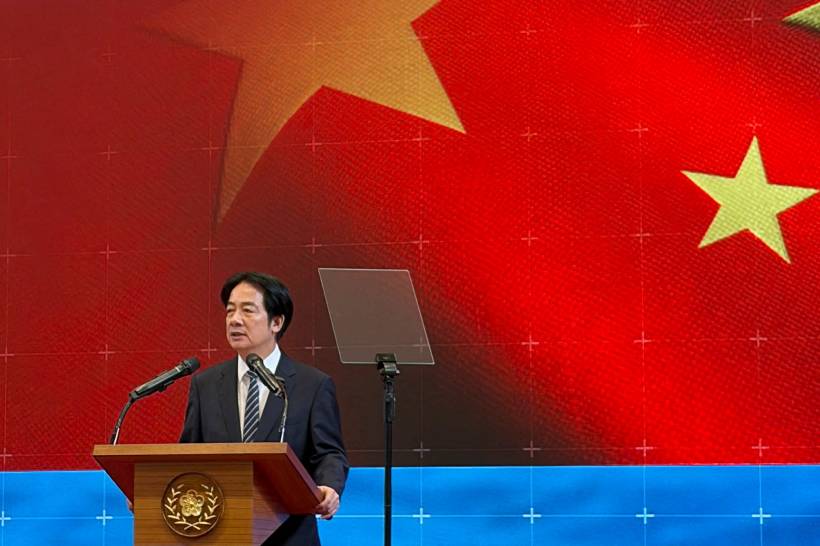
Tensions between China and Taiwan have intensified after Lai Ching-te was forced to cancel a planned diplomatic visit to Eswatini due to denied overflight permissions.
The incident marks the first time a sitting Taiwanese president has had to cancel an overseas trip because of restricted airspace access. It reflects growing pressure from Beijing to limit Taiwan’s international engagement and diplomatic visibility.
Taiwan maintains formal diplomatic relations with only a small number of countries, including Eswatini, making such visits symbolically and politically significant.
Overflight Denials and China’s Response
Taiwanese authorities stated that Seychelles, Mauritius, and Madagascar revoked previously granted permission for the presidential aircraft to pass through their airspace.
Stay ahead of the geopolitical week.
MD Briefing delivers expert analysis across five global fronts — the Indo-Pacific, energy, geoeconomics, European security, and the Middle East — every Monday morning. Free.
China publicly welcomed the decision. A spokesperson for Beijing’s Taiwan Affairs Office praised the countries for adhering to the “One China” principle, which asserts that Taiwan is part of China.
Beijing has consistently framed Taiwan as a core sovereignty issue and a non negotiable “red line” in its foreign policy.
Escalating Diplomatic Pressure
China’s reaction underscores its broader strategy to diplomatically isolate Taiwan. By influencing third countries to deny even logistical support such as airspace access, Beijing is expanding its efforts beyond formal recognition to restrict Taiwan’s global mobility.
Taiwanese officials accused China of using economic leverage to pressure smaller nations into compliance. While Beijing denied these claims, such tactics align with longstanding concerns about the use of economic influence in diplomatic negotiations.
The incident also highlights how even countries without formal ties to Taiwan can play a role in shaping its international engagement.
Taiwan’s Response
Taipei strongly condemned the actions of the three African nations, describing their decisions as being driven by external pressure.
Officials reiterated that the Republic of China, Taiwan’s formal name, is a sovereign entity with the right to participate in international affairs. They argued that restricting travel undermines this right and reflects an erosion of diplomatic norms.
Domestically, the issue has also drawn political reactions. Members of the opposition Kuomintang called for restraint from Beijing, warning that excessive pressure could be counterproductive.
Broader Geopolitical Context
The development comes shortly after diplomatic engagement between Beijing and Taiwanese opposition figures, including a meeting between Chinese leadership and senior Kuomintang representatives.
At the same time, China has introduced economic incentives aimed at Taiwan, such as easing certain import restrictions, suggesting a dual strategy of pressure and outreach.
Internationally, some United States lawmakers have criticized the move, describing it as coercive and aimed at isolating a democratic partner.
Analysis
The cancellation of President Lai’s trip represents a significant escalation in China’s campaign to constrain Taiwan’s international presence. By targeting overflight rights, Beijing is extending its influence into the logistical infrastructure that enables diplomacy itself.
This shift reflects a more sophisticated approach to isolation. Rather than focusing solely on formal diplomatic recognition, China is leveraging its economic and political influence to shape the behavior of third countries in ways that indirectly limit Taiwan’s global engagement.
For smaller states, particularly in Africa, the decision to deny overflight rights illustrates the balancing act between maintaining relations with China and engaging with Taiwan. Given China’s economic weight, alignment with Beijing often becomes the more pragmatic choice.
From Taiwan’s perspective, the incident highlights the fragility of its international space. Even routine diplomatic travel can be disrupted, raising concerns about its ability to maintain and expand global partnerships.
At the same time, China’s strategy carries potential risks. Heavy handed pressure may generate backlash among democratic allies and reinforce perceptions of coercion, potentially strengthening international support for Taiwan in some quarters.
Ultimately, the episode underscores the evolving nature of cross strait tensions. The contest is no longer confined to formal recognition or military signaling but increasingly extends into everyday mechanisms of international interaction, where influence over access, mobility, and cooperation can shape geopolitical outcomes.
With information from Reuters.
