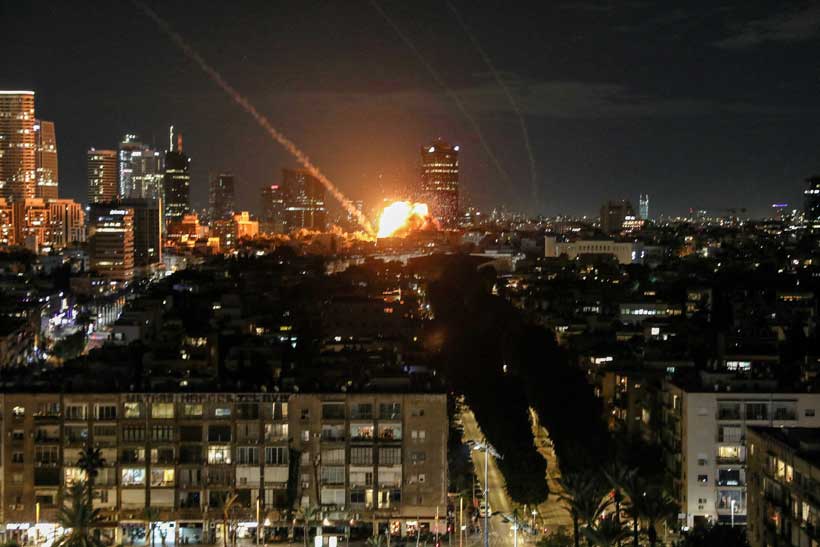
Iranian missiles and drones have continued to target important energy facilities and other sites in Gulf countries and the broader Middle East. The U. S. and Israel aim to neutralize Iran’s missile and drone capabilities, but this task is anticipated to be challenging.
Before the war, Iran possessed the largest stockpile of ballistic missiles in the Middle East, with varying ranges of up to 2,000 kilometers (1,240 miles) that can reach Israel and speeds of up to 17,000 km an hour (10,550 mph). Some of the fired missiles include cluster munitions, complicating defenses against them. Estimates of Iran’s missile stockpile range from 2,500 to about 6,000. The Arms Control Association indicates that Iran’s missile program is largely based on designs from North Korea and Russia, with help from China. Significant missile sites are located in Tehran and there are at least five known underground missile cities across various provinces.
Iran is also a major drone manufacturer, capable of producing around 10,000 drones per month, which it sells in large quantities, including to Russia for the war in Ukraine. Recent assessments indicate that the status of Iran’s arsenal is critical to the war’s outcome. While U. S. President Donald Trump claimed Iran’s ballistic missile capacity was largely destroyed, General Dan Caine noted that Iran still has some missile capabilities. Israeli Prime Minister Benjamin Netanyahu reported that Iran’s missile and drone capabilities had been significantly reduced.
Despite this, Iran insists that its missile stockpile is intact and that production continues. However, challenges in maintaining supplies and the impact of strikes on launchers could limit missile deployment. Drone use might continue longer, as they can be produced at various facilities. Recent Iranian missile and drone attacks have decreased in frequency, but incidents still include damaging strikes in Qatar and Kuwait.
With information from Reuters