


Israeli Prime Minister Benjamin Netanyahu on Monday ordered the military to carry out strikes against targets in Beirut’s southern suburbs, an area widely regarded as a stronghold of Hezbollah.
According to a statement from Netanyahu’s office, the decision was made jointly with Defense Minister Israel Katz following what Israel described as repeated violations of the Lebanon ceasefire by Hezbollah and continued attacks against Israeli cities and civilians.
The targeted area, known as Dahiyeh, has long been considered one of Hezbollah’s most influential strongholds and has frequently been the focus of Israeli military operations during periods of conflict.
The latest strikes come despite a ceasefire that was intended to reduce hostilities between Israel and Hezbollah. However, both sides have continued to exchange fire in recent weeks, raising concerns that the truce is steadily weakening.
Stay ahead of the geopolitical week.
MD Briefing delivers expert analysis across five global fronts — the Indo-Pacific, energy, geoeconomics, European security, and the Middle East — every Monday morning. Free.
Hezbollah and Israel Continue Cross Border Hostilities
Since the ceasefire took effect in April, Israeli forces and Hezbollah fighters have continued to engage in periodic attacks.
Israeli officials say Hezbollah has increasingly relied on low cost kamikaze drones that are difficult for air defense systems to detect and intercept. Several Israeli soldiers have reportedly been killed in such attacks in southern Lebanon.
Hezbollah maintains that its military operations are linked to broader regional developments involving Iran and Israel, while Israel argues that the group’s continued attacks justify military responses aimed at protecting its population and security interests.
Lebanon Conflict Remains a Major Regional Flashpoint
The fighting between Israel and Hezbollah has become one of the most significant consequences of the wider regional conflict involving Iran and its allies.
Hostilities intensified after Hezbollah launched rockets and drones toward Israel in support of Iran, opening a northern front that has expanded the scope of the regional crisis.
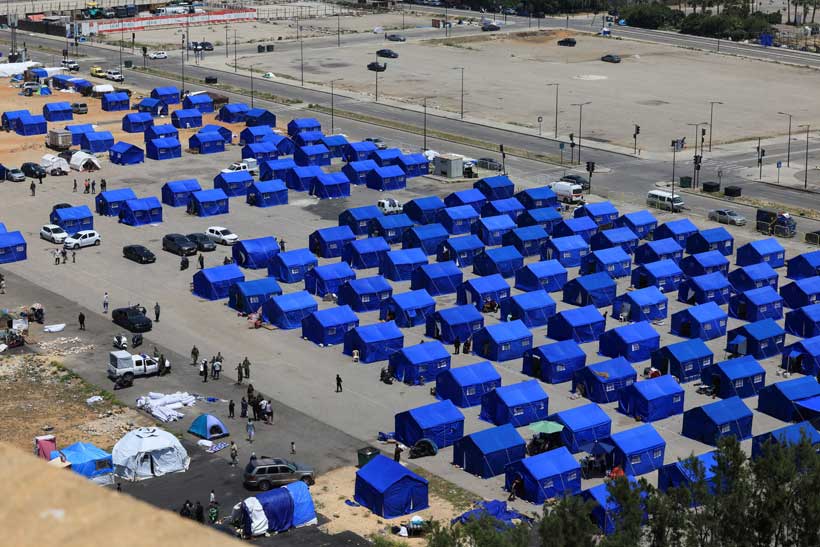
The conflict has placed enormous pressure on Lebanon, where repeated air strikes, military operations, and evacuation orders have forced large numbers of civilians from their homes.
Humanitarian Impact Continues to Grow
The conflict has had a severe humanitarian impact on both sides of the border.
According to Lebanese authorities, thousands of people have been killed since the escalation began, while more than one million Lebanese have been displaced by ongoing military operations and evacuation orders.
Israel has also faced significant disruption, with attacks from Lebanon forcing tens of thousands of residents in northern communities to leave their homes. Israeli authorities report military and civilian casualties resulting from Hezbollah attacks.
The continuing displacement crisis has increased international concerns about regional stability and the long term humanitarian consequences of the conflict.
Why It Matters
The strikes on Beirut’s southern suburbs signal a further deterioration of an already fragile ceasefire and increase the risk of a broader conflict between Israel and Hezbollah.
Any escalation involving Beirut carries particular significance because the Lebanese capital is a political, economic, and population center. Military action in the city raises fears of wider destruction and additional civilian displacement.
The conflict also remains closely connected to tensions involving Iran, meaning developments in Lebanon could have consequences for security across the Middle East.
Key Stakeholders
Israel
Israel seeks to stop Hezbollah attacks, secure its northern border, and allow displaced residents to return home safely.
Hezbollah
The Iran aligned group remains a major military and political force in Lebanon and continues to position itself as part of the regional resistance network against Israel.
Lebanon
The Lebanese government faces growing humanitarian, economic, and security challenges as fighting continues across parts of the country.
Iran
Iran remains Hezbollah’s principal ally and supporter, making developments in Lebanon closely linked to broader regional tensions.
United States and International Community
Global powers and international organizations are seeking to prevent further escalation and encourage diplomatic efforts aimed at preserving regional stability.
What Happens Next
Israel may continue targeting Hezbollah infrastructure and operational sites if attacks from Lebanon persist. Hezbollah is also likely to maintain military pressure if it views Israeli operations as escalatory.
Diplomatic efforts aimed at preserving the ceasefire are expected to continue, but repeated exchanges of fire are increasing concerns that the truce could collapse entirely.
International mediators will likely intensify efforts to prevent a wider confrontation that could draw additional regional actors into the conflict.
Analysis
Netanyahu’s decision to authorize strikes in Beirut’s southern suburbs reflects Israel’s growing frustration with what it sees as Hezbollah’s continued violations of the ceasefire. The move indicates that Israeli leaders are increasingly willing to target high profile locations associated with Hezbollah despite the risks of broader escalation.
For Hezbollah, continued military activity serves both strategic and political purposes, allowing the group to demonstrate support for its regional allies while maintaining pressure on Israel. However, ongoing attacks also expose Lebanon to further destruction at a time when the country is already facing severe economic and humanitarian challenges.
The greatest risk is that localized exchanges could evolve into a much larger confrontation. With Iran, Hezbollah, and Israel all deeply involved in overlapping regional conflicts, even limited military actions have the potential to trigger wider instability. Unless diplomatic efforts gain momentum, the ceasefire is likely to remain under increasing strain, raising the possibility of a renewed large scale conflict in Lebanon.
With information from Reuters.
