


A five-week conflict is forcing a quiet but significant shift in how the world pays for oil
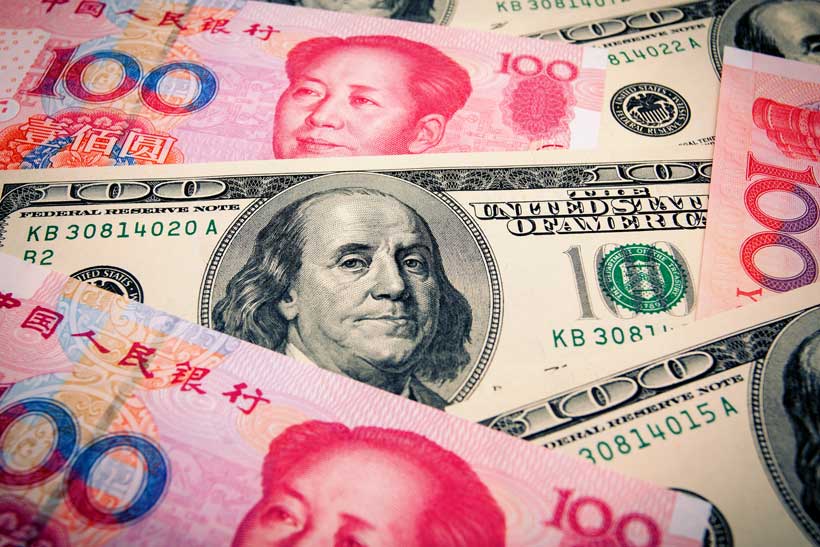
The US-Israeli war on Iran which started five weeks ago requires people to reevaluate the petrodollar system which has supported American financial strength for more than fifty years. Analysts believe that as Iran establishes yuan-based tolls for oil shipments through the Strait of Hormuz, the conflict will change the dollar’s status as the primary currency for global energy transactions. The dollar maintains its short-term strength as a safe-haven asset which creates a paradox because today’s dollar value appears stronger while its dominant power shows early signs of deterioration.
The Deutsche Bank assessment from last week indicated that the ongoing conflict might trigger the decline of petrodollar supremacy while starting the petroyuan system. The German lender’s strategist Mallika Sachdeva explained in a note that the ongoing conflict tests the security-for-oil pricing system which has maintained dollar-based global oil pricing since the 1970s. The petrodollar system originated from a 1974 agreement between the US and Gulf states which established dollar-based oil sales and US Treasury reinvestment for security provisions from Washington. The system has maintained low borrowing prices for American consumers and the US government throughout the years. The current war might be breaking the agreement established between the two groups.
The Strait of Hormuz serves as Iran’s main strategic point because it controls this vital waterway which handles 20 percent of global oil and natural gas shipments during times of peace. Since the war started on February 28, Tehran has blocked US and Israeli linked vessels while allowing limited access to ships that carry crude oil settled in Chinese yuan. Fortune reported through Lloyd’s List that “at least two vessels” have paid transit fees in yuan. According to CNBC, Iran has exported at least 11.7 million barrels of crude through the strait since hostilities began, all directed to China. After Tehran issued a threat to attack any vessel that attempted to cross through the waterway, vessel-tracking data shows that many ships have stopped their tracking operations.
The data presents an unambiguous narrative. Iran exported approximately 1.22 million barrels of oil daily to China during the war which represented a decrease from the pre-war export rate of 2.16 million barrels per day that was reached in February the most significant amount since July 2018. China had been stockpiling aggressively in the months before the conflict. Beijing raised its crude oil imports by 15.8 percent during the first two months of the year when compared to the previous year. China has about 1.2 billion barrels of oil reserves which allows the nation to meet its oil needs for three to four months. The ongoing war allows Beijing to use its reserves as a strategic resource for maintaining operational flexibility.
Stay ahead of the geopolitical week.
MD Briefing delivers expert analysis across five global fronts — the Indo-Pacific, energy, geoeconomics, European security, and the Middle East — every Monday morning. Free.
Iran has restarted the process of loading tankers at its Jask oil and gas terminal located along the Gulf of Oman which operates without using the Strait of Hormuz. The facility operates at a lower level of productivity. Jask requires up to 10 days for loading one Very Large Crude Carrier while the main Kharg Island terminal can complete the same process in one to two days. TankerTrackers co-founder Samir Madani described the Jask facility as having domestic propaganda value which lacked practical benefits for logistical operations.
The conflict has created a strategic setback for Washington in the Gulf region. Iran has gained complete control over the Strait of Hormuz which enables Iran to decide which ships will navigate through the waterway. The US established its global supremacy through its long-standing practice of controlling vital maritime routes. Sachdeva wrote that the US failure to ensure security in the Gulf could unwind the premise on which the petrodollar is built. The current conflict has the potential to reveal additional problems which will undermine the US security protection over Gulf infrastructure and maritime operations that safeguard international oil transportation. Gulf states might reduce their dollar-denominated foreign asset investments because economic losses from the Gulf will impact their merchandise value.
Trump himself has acknowledged the shift. He announced on April 1 during a press conference that the United States no longer requires access to the Strait of Hormuz. “You know, we don’t use the strait. We don’t need it,” he said. “Europe needs it. Korea, Japan, China, a lot of other people. So they’ll have to get involved a little bit on that.” He told struggling countries to “go get your own oil” in the strait, adding that the US would not help them. The message was blunt: America’s energy independence has changed its interests, and its allies are now on their own.
The United States has become less reliant on Gulf oil compared to its dependence during the 1970s. The US now stands as the world’s leading oil and gas producer while it sells more energy products than it buys. The United States imported 84.26% of its oil from the Western Hemisphere in 2025 which marked its highest import proportion from that region and established a ninth straight year of record imports from that area. The United States receives 6% of its crude oil imports through the Strait of Hormuz. Middle Eastern oil sources provide Asia with about 60 percent of its oil needs, which creates major risks for the entire region.
The dollar is still standing strong despite its expected collapse. The dollar index is currently experiencing a growth phase. The Dollar Index surged to 2026 highs as the war began, breaking through key resistance levels and testing the 99.50 mark. The dollar gains temporary advantages because the current crisis situation makes it lose its long-term power. The high oil prices force importers to acquire dollars which they need for buying expensive crude oil. The greenback experiences natural demand in which people need it most during times of weak market confidence. The burden of the situation falls entirely on Europe. The price of natural gas in Europe has risen 39 percent while the US market experienced only a 3.5 percent increase which creates a situation that supports dollar strength while putting pressure on the euro.
The dollar maintains its reserve status despite the petrodollar system showing signs of decline according to some experts. Commerzbank’s Volkmar Baur argued this week that the Gulf region’s share of global oil exports has fallen from 55 percent in 1980 to less than 35 percent by 2024, and that semiconductor trade now rivals petrodollar flows in scale. “For the US dollar, it is therefore now more important that computer chips are traded in US dollars than that oil from the Gulf region is traded in USD,” Baur wrote. In 2020 and 2021, when oil demand was low due to the pandemic, more integrated circuits were exported globally in US dollar terms than crude oil. That is a striking shift.
The overall pattern shows clear signs of existence. The dollar’s share of global foreign exchange reserves fell to 56.77 percent in 2025, its lowest level since the IMF began tracking the data in 1995. Central banks are diversifying their assets through aggressive strategies. Brazil’s central bank doubled its gold holdings in 2025, lifting gold to 7.19 percent of total reserves from 3.55 percent, while the share of dollar assets in its reserves fell to a record low of 72 percent. Other central banks are following suit, reducing their exposure to the greenback.
Trump’s April 1 address offered little clarity on how the war might end. He said three more weeks are needed. The US will withdraw from Hormuz after three weeks regardless of the battle outcome. He claimed Iran had asked for a ceasefire and said Washington would consider the request only after the strait is reopened, a claim swiftly rejected by Tehran as false and unfounded. The US lacks an exit strategy while the Gulf states that used American security guarantees now experience anxious uncertainty.
The petrodollar system will continue to function until the war reaches its conclusion. The dollar maintains its status as the primary reserve currency for the world because it represents over 50 percent of global reserves while the yuan accounts for under 2 percent of total reserves. The future trajectory has become evident. Sachdeva described the war as the inception period of the petroyuan. The United States needs to restore its Gulf security credibility to determine if the transition will succeed after the war concludes. The situation does not look good for both matters.
