


The large-scale Iranian missile and drone attacks across the Middle East in March 2026 could be an inflection point. Although the immediate military outcome highlighted the overall effectiveness of multi-layered air defense systems, the broader lesson is more sobering: even an advanced missile defense architecture is vulnerable to saturation attacks, while the proposition is that external security guarantees—especially from the United States—cannot be applied indefinitely under crisis.
For countries in the Middle East, the question is no longer how to defend against a single attack, but how to build a sustainable security structure under permanent threat and partial U.S. retrenchment. One useful historical analogy lies not in modern alliance structures but in the older and often overlooked Concert of Europe model, which was forged in 1815.
Today’s Middle East is faced with similar—albeit not identical—structural conditions that are comparable in important aspects. This part of the world can be characterized by a fractured power structure, protracted rivalry, and an ever-evolving external security environment. Iran’s attack in March 2026 showcased that saturation attacks—through large-scale missiles and drones—no longer remain a theoretical possibility but have become an operational baseline. At the same time, the event demonstrated that even the most sophisticated air defense systems risk interceptor depletion, exposing critical vulnerabilities as time elapses. In addition, despite the U.S.’s deep engagement in the region, it is increasingly being constrained, especially due to competing strategic priorities in the Indo-Pacific.
Under such circumstances, a purely bilateral or U.S.-centric security structure is insufficient. Instead, what is needed is a multilateral framework that does not necessitate complete political alignment while enabling regional actors to coordinate, manage crises, and provide collective deterrence. In that sense, a Middle Eastern application of the Concert of Europe offers a plausible and realistic path to pursue.
Stay ahead of the geopolitical week.
MD Briefing delivers expert analysis across five global fronts — the Indo-Pacific, energy, geoeconomics, European security, and the Middle East — every Monday morning. Free.
To be sure, such an architecture would not replicate the institutional formulation of the Concert system of the 19th century. Yet it could reflect the fundamental logic through a more structured and operationalized framework. At its core, a permanent consultation and operational organization—for example, it could be termed a Gulf-Levant Integrated Air Defense Coordination Cell (GLIAD-CC)—could be placed, headquartered either in Riyadh or Abu Dhabi. This organization could function as a constant mechanism for real-time threat assessment, crisis consultation, and collective reaction planning among major countries—including Saudi Arabia, the UAE, Jordan, and Bahrain.
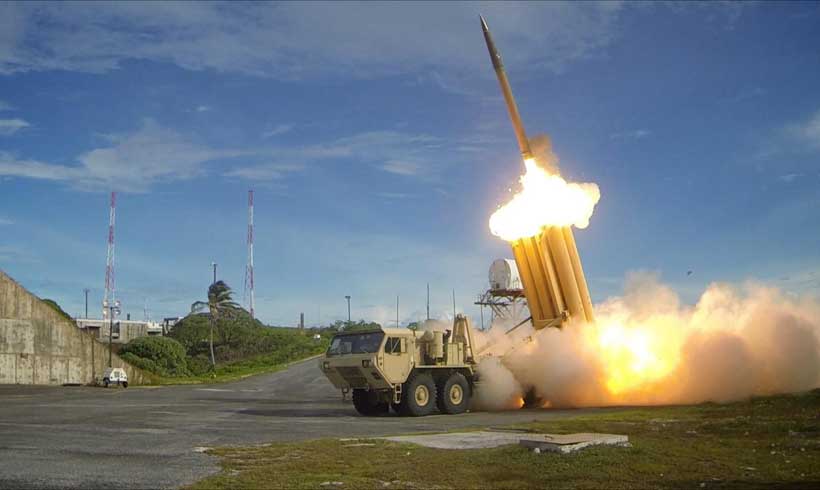
Within the structure, roles would likely be differentiated depending on each country’s respective capabilities. Considering the scale and stockpile of upper-tier missile defense systems, including THAAD batteries, Saudi Arabia would likely function as a major interception hub that could absorb massive ballistic missile threats. The UAE could serve as the network’s central coordination and data fusion node, based on its advanced command-and-control architecture, forming a regional detection structure that could conduct high-precision tracking and provide battle management inputs using its proven early warning and sensor capabilities. As for Jordan and Bahrain, they could play an important role as forward early-warning and geographical bridging nodes, albeit in a limited capacity.
The operational backbone of this new system would be integrated air and missile defense. In the contemporary Middle East, the balance of power can no longer be defined solely by conventional force ratios but by the ability to withstand and respond to massive missile and drone attacks. This necessitates a regional network that transcends nationally fractured systems, integrating collected data—collected through ground-based radar, airborne early warning platforms, and other ISR assets—into a shared operational picture. A multi-layered defense structure comprised of upper-tier interceptors like THAAD, mid-tier systems like Patriot PAC-3 MSE, and low-tier C-UAS should be coordinated across national boundaries while necessitating a hybrid command structure that centralizes threat prioritization and decentralizes engagement authority.
Moreover, this system should be designed for endurance. To sustain operations in response to saturation attacks, it would require the stockpiling of interceptors that could withstand at least 30 to 60 days of high-intensity warfare; this would mean the deployment of hundreds or even thousands of rounds of interceptors across the network. If such magazine depth is not secured, continuous attacks could neutralize even the most sophisticated system.
Alongside this defensive structure, a collective deterrence concept should emerge. Unlike official alliances like NATO, it would not require an obligation for automatic mutual defense. Instead, it should be based upon a response architecture that is proportionate and coordinated. By clearly setting the criteria for retaliation and integrating kinetic and non-kinetic means, including cyber and electronic warfare, regional countries could strengthen deterrence without being entangled by rigid alliance responsibilities. This reflects the principles of the Concert of Europe that valued flexibility and consultation over binding commitments.
Although institutional design is invaluable, the viability of such a system would heavily depend on capability. In that sense, South Korea provides a very meaningful model. South Korea’s defense structure has been developed under the conditions of constant missile threat, proximity to a highly militarized adversary, and partial reliance on the United States. As a result, the three-axis system—a mixture of multi-layered defense, preemptive strike, and retaliatory doctrines—was developed. This model illustrates how a middle power could build a resilient deterrence structure under persistent threat.
Equally important is the specific capability that South Korea can offer. Weapon systems like Cheongung-II (M-SAM II) could play a critical role in the context of multi-layered defense—primarily focused on mid-tier interception—and are suggested as cost-effective alternatives. Compared to expensive systems including Patriot PAC-3 MSE, this system offers a scalable option, thus expanding defense coverage without an exorbitant financial burden. For example, if 6 to 10 M-SAM II batteries are deployed by major Gulf countries, they could substantially reinforce distributed defense capabilities both against aircraft and ballistic missiles. This would ultimately reduce the overall dependence on expensive upper-tier interceptors.
Meanwhile, the South Korean defense industry has an advantage in production capability and delivery. Unlike some Western countries that are faced with production bottlenecks, South Korean firms have demonstrated rapid supply as well as flexible industrial cooperation methods, including co-production and technology transfer. This feature is particularly important for Middle Eastern countries that are attempting to build a sustainable defense ecosystem—one that makes long-term maintenance, retrofitting, and resupply possible—going beyond mere procurement of defense hardware.
To realize this concept, regional countries should quickly institutionalize coordination and align procurement strategies. Institutionalization of GLIAD-CC would provide an organizational foundation for real-time cooperation, while standardization of procurement centered on mid-tier interception systems like M-SAM II could heighten interoperability and generate economies of scale. At the same time, a regional ISR network—that integrates satellite, air, and ground surveillance assets—capable of supporting preemptive detection and response should be strengthened.
Nonetheless, defense capability alone would be insufficient for deterrence. Regional countries should develop credible response options. By concretizing proportional retaliatory systems and conducting joint exercises to demonstrate their feasibility, countries can reinforce deterrence while minimizing the risk of uncontrolled escalation. Simultaneously, logistical elements including interceptor stockpiling, maintenance, and resupply should also be treated as central components of strategy.
The Concert of Europe was successful—at least for one century—because it offered a framework that could manage rivalry, instead of eliminating it. The Middle East does not necessarily need a perfect or unified alliance system. Rather, it necessitates a structure that could prevent systematic collapse while aligning different interests to an extent that enables action against a common threat.
The March 2026 event underscores the urgency of this task. As the Middle East ushers in an era of near-constant massive missile and drone threats, reliance on external security guarantees is not enough. If a concert-like institutional framework and capability—especially those that South Korea could provide—that are both expandable and cost-effective are paired, Middle Eastern countries could build a resilient and increasingly independent security structure.
The lessons from 1815 are not that peace could be preserved by agreement but that it is maintained by structure. Building such a structure for today’s Middle East is no longer an option; it is an imperative.
