


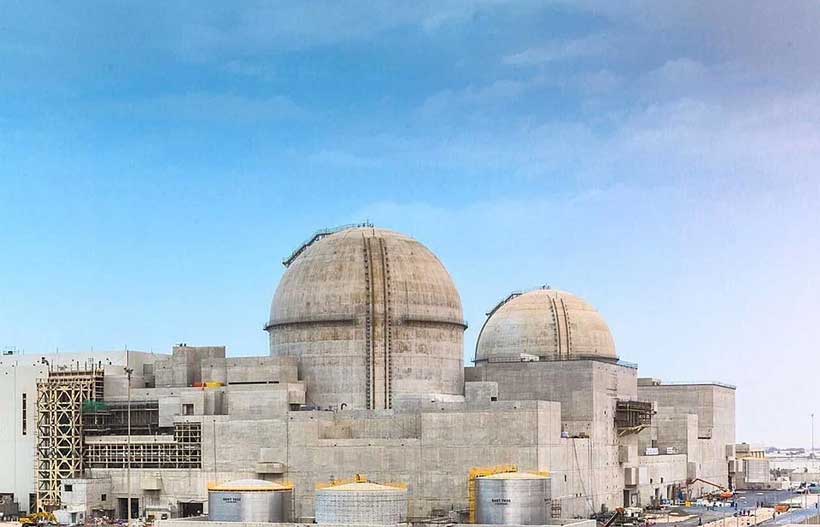
Chinese intelligence and military agencies consider Iran’s targeting of the UAE’s Barakah nuclear reactor after the Beijing summit to be a multi-faceted Iranian deterrent message. They believe the attack aimed to disrupt the growing security cooperation between the Gulf states and the United States, deplete the defense resources of Washington’s allies, and demonstrate Tehran’s ability to expand the scope of conflict. Within this framework, Chinese intelligence, military, defense, and security agencies are analyzing the implications of this event through several strategic lenses, most notably: (considering the Iranian targeting of the Barakah nuclear reactor a response to the US rapprochement with the Gulf states and the UAE, and a way of sending coded messages to Washington through a brinkmanship strategy). Chinese intelligence views the Iranian attack against the UAE as Tehran’s direct message that it is not isolated and possesses significant leverage. Beijing believes Tehran used this attack as a bargaining chip to demonstrate its ability to threaten vital installations in the Gulf and as a response to the threat of a US naval blockade. Here, Beijing recognizes the security coalition dilemma, meaning that the Chinese military understands that striking nuclear reactors aims to disrupt normalization plans and the defense partnership between the Gulf states, the United States, and Israel. This targeting puts Washington in a difficult position regarding its ability to effectively protect its allies without dragging the region into a full-scale war.
Here, Beijing diagnoses the situation as a security coalition dilemma. Its military and intelligence apparatus understands that any Iranian targeting of Gulf and Emirati nuclear reactors aims to (disrupt the Abraham Accords normalization process with Israel and the defense partnership between the Gulf states, the United States, and Israel). This places Washington in a very awkward position regarding its ability to effectively protect its allies without being drawn into a full-scale war in the region. This strategic dilemma can be broken down into several dimensions, including a strategy of disruption. Beijing believes that the objective of those targeting nuclear facilities extends beyond simply disabling capabilities, it aims to create a strategic shock that shatters any emerging political rapprochement or defense alliance between Washington and Riyadh, Abu Dhabi, and Tel Aviv in particular. Here, Chinese intelligence recognizes the dilemma of American commitment, meaning that Washington faces a complex challenge. Decisive American intervention to protect its allies could plunge the entire region into a wider war, while hesitation or limited intervention would undermine the credibility of American security guarantees to the Gulf states. Furthermore, China’s regional agenda comes into play. Beijing has consistently and vehemently opposed targeting peaceful nuclear facilities, with the Chinese Foreign Ministry asserting that such attacks violate international law and escalate tensions. China also closely monitors and analyzes American military strengths and weaknesses in the Middle East and the Gulf region, learning from its approach to conflict management. Beijing fears that any collapse of security deterrence in the Middle East and the Gulf could directly threaten its vital economic interests and energy supplies, leading it to consistently push for diplomatic solutions and avoid a full-scale military escalation.
As for the significance and objectives of the timing of the Iranian attack on the Barakah nuclear reactor in the UAE, following President Trump’s visit to China, it demonstrates the failure of direct pressure tactics. Chinese military analysts believe the attack occurred at a time when the Trump administration was attempting to force Iran to make concessions and curtail its nuclear and military programs. They view the attack on the UAE as a field response from Iran, confirming Tehran’s rejection of any American dictates. This also serves as a test of China’s position, as the attack represents a precise test of its stance based on balancing interests. On the one hand, Beijing rejects the militarization of the Strait of Hormuz and is committed to energy security, while on the other hand, it seeks to strengthen its alliance with Tehran as a counterweight to American influence in the Middle East.
On the other hand, targeting the (Barakah nuclear power plant in the UAE) represents an indirect Iranian deterrent message that coincided with (the US-China talks and ceasefire negotiations), through which Iran aims to pressure Washington by threatening regional energy security, and to demonstrate Tehran’s ability to cross red lines if sanctions are not lifted and its interests are not guaranteed. Thus, Iran is attempting to achieve a number of strategic goals through this, including (pressuring mediation efforts). This can be analyzed as the Iranian targeting of the Emirati Barakah nuclear reactor, intended to pressure major powers and the mediator (China) to compel the United States to make concessions in peace negotiations with Iran and lift the naval blockade imposed on it in the Strait of Hormuz. This falls within the context of the Iranian response to the regional alliances of the Gulf states and the UAE. It is considered a strongly worded Iranian message to the UAE because of its hardline stances and strengthening its defense partnership with Washington and Israel. It is also an Iranian threat of nuclear escalation, as targeting a civilian nuclear site is an Iranian warning of the brink of the abyss to demonstrate the catastrophic environmental and economic damage that could result from any open war. This is considered an Iranian military attempt to (prove capabilities). It has drawn attention to the ability of Tehran and its proxies in Iraq to penetrate advanced defense systems and target the vital infrastructure of all US allies in the region and the Gulf.
Stay ahead of the geopolitical week.
MD Briefing delivers expert analysis across five global fronts — the Indo-Pacific, energy, geoeconomics, European security, and the Middle East — every Monday morning. Free.
Here, Beijing’s assessment of (asymmetric warfare emerges), drawing lessons from the Middle East and the US-Israeli war against Iran. By placing Taiwan in the equation as a bargaining chip with Washington, it demonstrates to China and the People’s Liberation Army (PLA) the success of Iranian drone technology. In relevant circles in Beijing, Iranian drone operations against strategic sites in the Gulf are viewed as a remarkable success of Iran’s asymmetric warfare tactics against Washington’s Gulf allies.
Here, the People’s Liberation Army (PLA) analyzes these Iranian military operations in the Gulf region specifically, seeking to understand how a middle power like Iran can confound a superpower like the United States or cripple its costly air defenses. Beijing benefits from monitoring this armed conflict between Iran and the UAE and the Gulf states within the context of a war of attrition with Washington. Chinese intelligence assesses the exorbitant geopolitical and economic cost to the United States of expending advanced munitions against Iran and its allies or other proxies in the Middle East. This serves Beijing strategically in any potential future scenario in the Taiwan Strait. China continues to manage the Iranian crisis by playing a (dual role): on the one hand, it calls for restraint to protect its economic interests, while on the other hand, Chinese intelligence and military agencies study all Iranian military tactics and continue to provide strategic and technical support to Tehran, thus achieving and serving its long-term strategic interests, particularly regarding Taiwan.
