


One month since the United States and Israel began their major airstrikes on Iran, something unusual is happening in the heart of MAGA country. The once ironclad unity that defined Donald Trump’s political movement is starting to show visible cracks.
At the last week’s CPAC conference in Texas, the annual gathering that has long served as a loud, enthusiastic showcase of Trump loyalty, the atmosphere felt different. In the hallways between panels and during informal conversations, supporters who once cheered every Trump decision were speaking with hesitation, frustration, and even open disagreement. What began as quiet grumbling on social media just a few weeks ago has now evolved into a real and deepening split inside Trump’s core base. For the first time in his second term, some of his most dedicated followers are asking the same uncomfortable question out loud: “Is this really what ‘America First’ was supposed to look like?”
The first major public rupture came with the resignation of Joe Kent. A decorated combat veteran, former intelligence officer, and one of Trump’s most trusted and loyal allies, Kent stepped down last week from his senior position as director of the National Counterterrorism Center. In his resignation letter, which he posted on X and quickly went viral, Kent was direct and unflinching: “I cannot in good conscience support this war. Iran posed no imminent threat to the United States, and it’s clear we were pushed into this conflict by Israel and its powerful lobbying network in Washington.”
For many in the MAGA world, Kent’s departure landed like a shockwave. This wasn’t coming from a liberal critic or a longtime Never-Trumper. Joe Kent was exactly the kind of battle-hardened, no-nonsense patriot Trump loved to highlight on the campaign trail. When someone with his background and loyalty says the war is misguided and driven by foreign pressure rather than American interests, it forces even staunch supporters to pause and reconsider.
Stay ahead of the geopolitical week.
MD Briefing delivers expert analysis across five global fronts — the Indo-Pacific, energy, geoeconomics, European security, and the Middle East — every Monday morning. Free.
But Kent was far from alone. In recent days, several prominent MAGA voices have begun turning against the war in increasingly strong terms. Tucker Carlson devoted segments of his show to criticizing the conflict, telling his audience, “We promised to end stupid foreign wars, not jump back into the Middle East again.” Megyn Kelly posted bluntly on social media: “This is exactly what Trump swore he would never repeat.” Candace Owens and even Marjorie Taylor Greene — usually one of Trump’s most aggressive defenders — have also voiced serious reservations. The criticism has created a fierce backlash from the pro-war side of conservatism. Figures like Ben Shapiro and Mark Levin have hit back hard, accusing the skeptics of being “weak,” “isolationist,” or “not real MAGA.” The online fighting has grown so bitter and personal that some longtime observers are calling it the ugliest internal battle the MAGA movement has ever experienced.
Public opinion polls are beginning to reflect this growing divide. While roughly 90 percent of hardcore, die-hard MAGA voters continue to back the war, the numbers look significantly different when you examine Trump’s broader coalition. According to a recent Politico survey, only 46 percent of all Trump voters believe the conflict genuinely aligns with core MAGA principles. A substantial portion are either unsure or actively opposed—particularly as gas prices have surged past five dollars a gallon in many states and inflation is once again rearing its head. The working-class and rural Americans who have formed the backbone of Trump’s political strength are feeling the economic pain directly — at the gas pump, in grocery stores, and in their monthly bills. Many are now asking why they are once again being asked to pay the price — both financially and potentially with American lives — for a war their leader repeatedly promised to avoid.
This split is not limited to online arguments or conference chatter. At this year’s CPAC, even among the loyal audience, heated debates broke out in the aisles and breakout sessions. One conservative activist from Florida, who had previously worked on Trump’s campaign, told NPR: “Look, I still love Trump. He’s done a lot of good things. But this war really worries me. We were supposed to be focusing on securing the border, fixing the economy, and putting America first—not spending trillions of dollars again and sending our young men and women back into another Middle East conflict.”
This internal division poses serious danger for Trump on two major fronts.
First, from a purely political standpoint, MAGA has always been his greatest asset. It was never just a voting bloc — it was a passionate, fiercely loyal movement that defended him through every controversy, dominated social media, showed up at rallies, and stuck with him when almost everyone else had written him off. Now, for the first time in his second term, a noticeable and growing segment of that base feels genuinely betrayed. They interpreted “America First” as a commitment to avoiding endless foreign wars and focusing on domestic priorities. When a respected veteran like Joe Kent publicly states that the war was driven more by foreign lobbying than by clear American national interest, it strikes many supporters as a profound betrayal of the very principles that brought Trump back to power.
Second, the damage is personal and reputational. Trump has always cultivated an image as the strong, unbeatable, larger-than-life leader of a completely unified movement. He presents himself as someone who commands total loyalty and never wavers. But when even his closest allies begin distancing themselves in public, and when parts of his own media and influencer ecosystem openly criticize his policy, that carefully built aura of invincibility starts to crack. It sends a signal—both to his supporters and to his political opponents—that Trump may not have the total control over his movement that he claims.
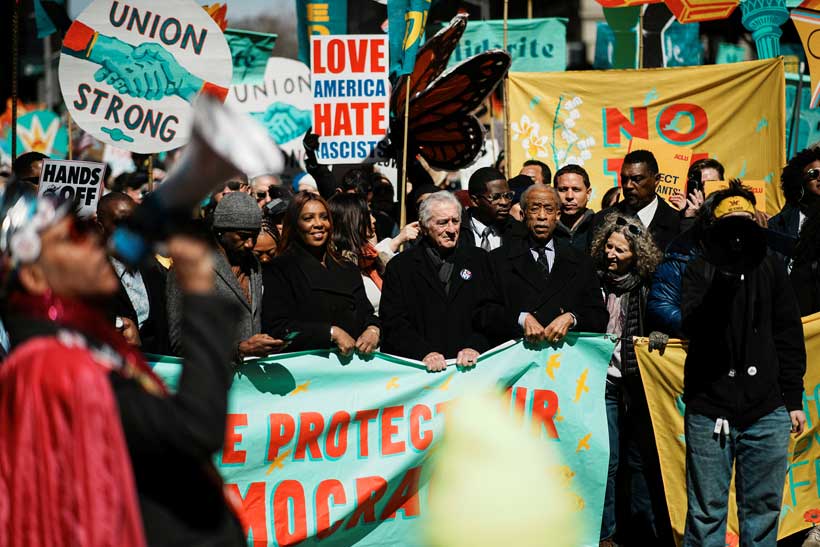
The timing of this crack-up could not be worse for the president. The U.S. economy is already showing signs of strain from war-related inflation and higher energy costs. Meanwhile, Democrats are eagerly seizing on the internal Republican fighting to portray Trump as weak and divided. Last weekend, massive “No Kings” protests took place in cities across the country, with demonstrators accusing Trump of acting like an authoritarian leader who starts wars without proper congressional approval. On Truth Social, the president has tried to push back by dismissing his critics as “not real MAGA” and repeatedly declaring “I am MAGA,” but the defensive tone of his posts only highlights how seriously he views the threat.
In the end, this growing crack in the MAGA base may represent the first serious warning sign of deeper trouble ahead for Donald Trump. For years he has claimed that he alone can hold this movement together and channel its energy. But right now, the movement is fracturing from within — not because of attacks from Democrats or the so-called “deep state,” but because of a major policy decision that Trump himself chose to make.
If the president cannot find a way to close this divide quickly — whether through clear communication, policy adjustments, or bringing dissenting voices back into the fold — the consequences could be far more serious than a few heated online arguments or another high-profile resignation. In the long run, it could cost him the single most important ingredient that carried him to victory twice: the unconditional, passionate loyalty of his base.
