


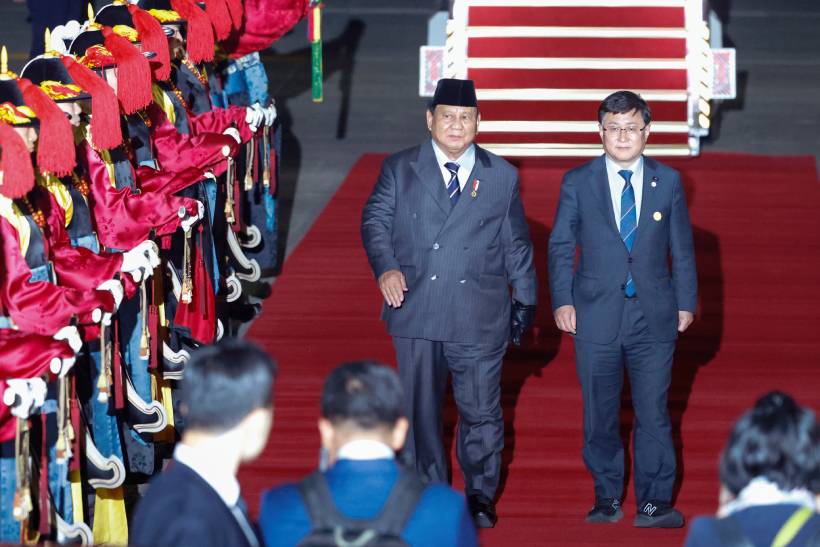
Lee Jae Myung and Prabowo Subianto convened in Seoul to address growing concerns over global energy security, positioning their countries as key partners in an increasingly volatile geopolitical landscape.
The talks come at a time when instability in the Middle East has heightened anxieties over energy supply chains, prompting both nations to prioritize resilience and diversification. South Korea, heavily dependent on energy imports, views Indonesia’s role as a stable supplier of liquefied natural gas and coal as strategically vital.
Complementary Economies, Converging Interests
The partnership reflects a classic case of economic complementarity. South Korea brings advanced industrial and technological capacity, while Indonesia offers abundant natural resources and a large, expanding market.
Indonesia remains the world’s largest exporter of thermal coal, while South Korea continues to rank among the top global importers. This interdependence has laid the foundation for a relationship that extends beyond trade into long-term strategic alignment.
Stay ahead of the geopolitical week.
MD Briefing delivers expert analysis across five global fronts — the Indo-Pacific, energy, geoeconomics, European security, and the Middle East — every Monday morning. Free.
Trade figures underscore this dynamic: South Korean exports to Indonesia reached $7 billion in 2025, while imports totaled $11.3 billion, reflecting a resource-driven imbalance that both sides now seek to leverage more effectively.
Critical Minerals and Technology Cooperation
A key outcome of the summit was the agreement to expand cooperation in critical minerals and advanced technologies sectors increasingly central to global economic competition.
From battery production to semiconductor supply chains, critical minerals have become geopolitical assets. By aligning in this domain, Seoul and Jakarta aim to secure their positions within emerging industrial ecosystems, particularly in renewable energy and digital infrastructure such as data centres.
From Trade to Strategic Partnership
The signing of multiple preliminary agreements signals a shift from transactional engagement to a broader strategic partnership. Cooperation is expected to expand into areas such as artificial intelligence, infrastructure development, shipbuilding, and energy transition.
This evolution reflects a shared recognition that economic security and technological advancement are now deeply intertwined with national power.
Defence Cooperation: Ambitions and Constraints
While both leaders emphasized the importance of strong defence capabilities, tangible progress in this domain remains limited. Discussions surrounding the joint development of the KF-21 Boramae fighter jet yielded no concrete agreements.
Indonesia is reportedly considering the purchase of an initial batch of the aircraft, though financial commitments to the joint development programme remain unresolved. The delay highlights the challenges of translating strategic intent into actionable defence cooperation.
Regional and Global Context
Prabowo’s visit to Seoul follows earlier engagements in Japan, where Indonesia also sought to strengthen energy coordination. This broader diplomatic activity suggests Jakarta is actively diversifying its partnerships amid shifting global dynamics.
For South Korea, deepening ties with resource-rich Southeast Asian nations aligns with a wider strategy to mitigate supply chain vulnerabilities and reduce dependence on unstable regions.
Symbolism and Statecraft
The summit also carried symbolic weight. Lee is set to award Prabowo the Grand Order of Mugunghwa, South Korea’s highest civilian honour, underscoring the importance Seoul places on the bilateral relationship.
Such gestures reinforce not only diplomatic goodwill but also the political commitment required to sustain long-term cooperation.
A Partnership Shaped by Uncertainty
At its core, the South Korea–Indonesia partnership reflects a broader shift in international relations where energy security, resource control, and technological capability define strategic alliances.
As global uncertainty persists, both nations appear intent on transforming mutual dependence into a structured and forward-looking partnership, one that extends beyond immediate needs to long-term geopolitical positioning.
With information from Reuters.
