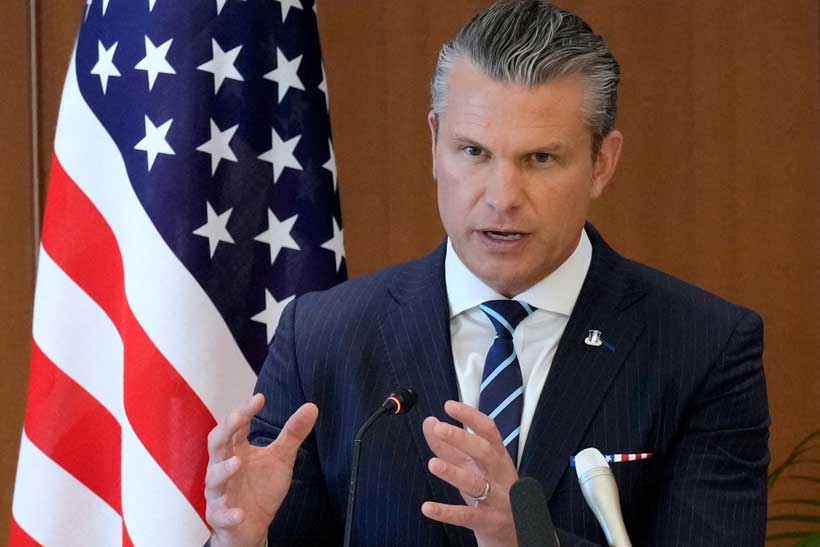
U. S. Defense Secretary Pete Hegseth stated that the next few days in the war against Iran would be crucial, warning Tehran of intensified conflict if a deal is not reached. His remarks followed Iran’s attack on an oil tanker off Dubai, which was part of its pattern of strikes since U. S. and Israeli actions against Iran on February 28. U. S. President Donald Trump threatened to destroy Iran’s energy infrastructure if they do not agree to a peace deal and reopen the Strait of Hormuz, a critical passage for global oil shipments that Iran has effectively blocked. Trump criticized France and Britain for not contributing to the war efforts and urged them to act for their oil needs.
Hegseth, who recently visited U. S. troops in the Middle East, indicated that while Trump was open to negotiations, the U. S. was prepared to continue the conflict if Iran did not comply. He emphasized the increasing military options available to the U. S. and that Iran’s military capabilities were diminishing. The ongoing conflict has resulted in the deaths of thousands, disrupted energy supplies, and threatened the global economy, contributing to rising oil prices.
The oil tanker, the Al-Salmi, was involved in a drone attack but did not result in any oil leaks or injuries. It was carrying approximately 1.2 million barrels of Saudi crude and 800,000 barrels of Kuwaiti crude oil. The Iranian Revolutionary Guards stated their intention was to target a container ship linked to Israel, suggesting a possible mix-up with another vessel nearby. U. S. General Dan Caine announced that the U. S. continued to degrade Iran’s military capabilities, striking significant Iranian sites and impeding naval operations.
Reinforcements from the U. S. Army’s 82nd Airborne Division are arriving in the Middle East, potentially expanding military options to include ground assaults. Concurrently, Pakistan is attempting to mediate the conflict through discussions with China, Turkey, Egypt, and Saudi Arabia. Despite heightened U. S. military pressure, Iran has remained defiant, calling U. S. peace proposals unrealistic.
The lack of a peace deal has prompted warnings from the EU’s energy chief regarding possible prolonged disruptions in energy markets, with rising prices impacting U. S. households and presenting political challenges for Trump ahead of midterm elections. The national average gasoline price surpassed $4 per gallon for the first time in over three years, as global oil supplies tightened.
The war has expanded beyond Iran, with Houthi forces in Yemen targeting Israel and Iran launching missiles that entered Turkish airspace. Tensions with Hezbollah have revived as conflict continues in the region. A strike in Iran led to casualties, while Israel conducted airstrikes in Tehran targeting missile facilities, resulting in additional losses for both sides.
With information from Reuters