


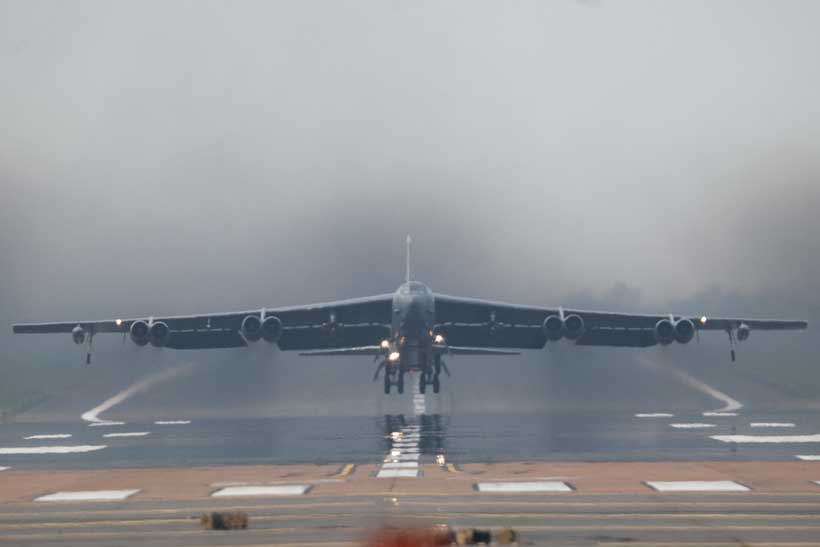
Britain’s decision, reported by Reuters, to let the United States use RAF Fairford and Diego Garcia for strikes linked to the Iran crisis is being sold by London as a narrow act of necessity. But that is too neat and too convenient. Once a government opens its territory and facilities for another state’s military action, it stops looking neutral. It becomes part of the operation in the eyes of the region and often in the eyes of international law and diplomacy as well. Britain may describe the move as protecting British interests, but to much of the world it looks like Britain has chosen a side in a widening conflict.
That is what makes the language from Downing Street so weak. In Starmer’s own remarks, the prime minister has tried to sound careful, measured, and reluctant. He says steps are being taken to protect British interests and avoid a larger war, while ministers have repeated in Parliament that British action is defensive and lawful. But the problem is obvious. If your real goal is to stay out of a broader war, then helping launch or support military action from British-controlled bases is a strange way to do it. A state cannot honestly claim restraint while supplying the infrastructure that makes escalation easier.
Iran understood that point immediately, which is why its reaction was fast and sharp. According to Reuters, Tehran said it had already told Britain that allowing the United States to use British bases would be treated as participation in aggression. The Guardian’s live coverage carried the same hard edge, including the warning that London should not expect to hide behind careful wording. When Abbas Araqchi warned that Starmer was putting British lives at risk, he was not making a subtle diplomatic point. He was stating the plain logic of retaliation. The country that offers the runway can quickly become a target alongside the country that sends the aircraft.
What makes Britain’s choice even more troubling is that there were signs of doubt inside the government itself. Reuters reported on the leak inquiry around the American base request, and that reporting pointed to real unease over legality and escalation. Earlier, in his statement on Iran, Starmer stressed caution, law and the need to avoid a wider spiral. The Defence Secretary later told Parliament that decisions must rest on a legal basis. All that sounds responsible, but it also reveals the problem. When a government must work this hard to insist that it is still acting lawfully and defensively, it usually means the line it is crossing is not a small one.
Stay ahead of the geopolitical week.
MD Briefing delivers expert analysis across five global fronts — the Indo-Pacific, energy, geoeconomics, European security, and the Middle East — every Monday morning. Free.
Diego Garcia makes the whole matter worse, because it is not just another airfield on a map. A House of Commons Library briefing on Diego Garcia makes clear how central the base is to British and American strategy. But another Commons briefing on the Chagos treaty shows why this territory remains politically charged, and a further Commons analysis of the Mauritius agreement underlines how unresolved the wider sovereignty story still feels. So, when Britain allows Diego Garcia to be used in a new conflict, it does not project calm legitimacy. It reminds many countries that Britain still depends on old imperial geography and on a security relationship with Washington that often leaves little room for an independent foreign policy.
This is not just a military issue. It is a diplomatic failure as well. Chatham House has argued that this crisis is partly a test of political will, which means every extra external actor hardens positions and narrows room for compromise. Its separate analysis of the global economic fallout shows how quickly a regional war can spread pain far beyond the battlefield. Britain had a chance to lean into diplomacy, maritime deconfliction and pressure for talks. Instead, it chose the old habit of standing close to Washington and hoping to sound cautious afterward. That does not make Britain look strong. It makes Britain look automatic.
There is also a direct cost at home. A Reuters report on the budget outlook showed how fragile British public finances already look under the pressure of war-driven energy shocks and borrowing costs. Another Reuters report on consumer worries found that the conflict is already feeding anxiety among British households. So, the government is not only raising the strategic temperature abroad. It is also asking ordinary people at home to live with the financial fallout. That is a poor bargain, especially when ministers still insist they are acting only to shield the national interest.
Public opinion makes the choice look even weaker. YouGov polling shows that many Britons do not think America’s reasons for attacking Iran are clear, and separate YouGov data shows that many expect economic harm from the conflict. That matters. A government can sometimes defend an unpopular security decision if the strategic case is strong and openly argued. But that has not happened here. What the public has been given instead is careful phrasing, limited disclosure and a policy that looks like indirect war involvement disguised as responsible statecraft. Britain cannot protect its interests by helping turn its bases into instruments of escalation and then pretending the distinction will be respected by Tehran. If Starmer really wants to keep Britain out of a wider war, he should stop taking steps that make the country look already half inside it.
