


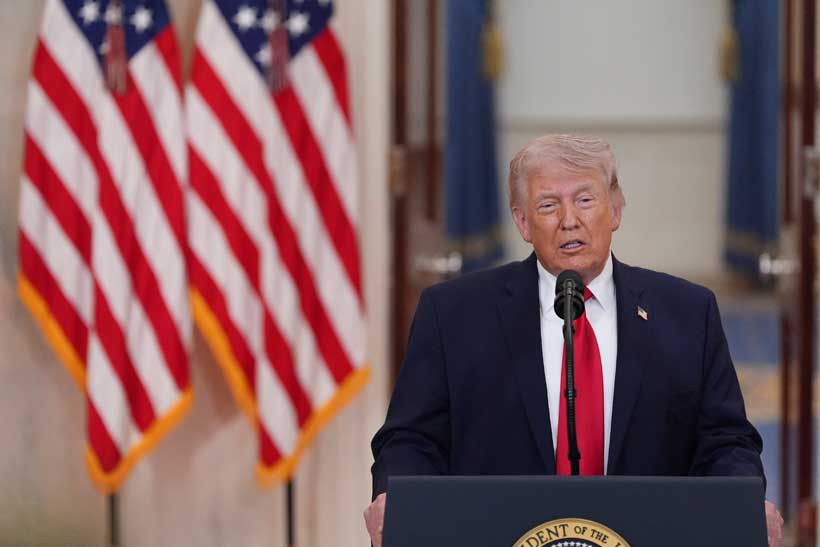
The conflict involving Iran and the United States has entered a prolonged phase, with President Donald Trump signalling readiness to maintain a blockade on Iranian ports for months. The strategy is aimed at exerting maximum economic pressure on Tehran, with rising oil prices reflecting the global impact. Brent crude oil surged sharply, highlighting how energy markets are reacting to the crisis.
At the same time, the war is producing political ripple effects both in the Middle East and within the United States, including debates over free speech and political accountability.
Economic Strain and Energy Shock
Iran’s economy appears to be under severe stress, with inflation reportedly rising significantly since the conflict began. The blockade threatens to further damage its oil sector by limiting exports and potentially forcing production cuts due to storage constraints.
Globally, the crisis has disrupted energy markets. A key flashpoint is the Strait of Hormuz, through which a substantial share of the world’s oil supply passes. Any disruption here drives price volatility and heightens global economic uncertainty.
Stay ahead of the geopolitical week.
MD Briefing delivers expert analysis across five global fronts — the Indo-Pacific, energy, geoeconomics, European security, and the Middle East — every Monday morning. Free.
The decision by the United Arab Emirates to leave OPEC reflects deeper tensions within the oil producing bloc. Disputes over production quotas, regional conflicts, and long term concerns about declining global reliance on fossil fuels have all contributed to this shift.
Limits of Alternative Energy Routes
Efforts to bypass the Strait of Hormuz remain insufficient. Pipelines such as Saudi Arabia’s East West Petroline and the Abu Dhabi crude pipeline offer partial alternatives, but their capacity is far below the volume normally transported through the strait. Damage to these pipelines during the conflict has further reduced their effectiveness.
This underscores the strategic vulnerability of global energy supply chains and explains why the conflict has had such a pronounced effect on oil prices.
Assassination Attempt and Political Fallout
The crisis has also coincided with a reported assassination attempt on President Trump during the White House Correspondents’ Dinner. The incident intensified political tensions, with officials blaming hostile rhetoric for contributing to violence.
This has sparked a broader debate about the limits of political speech and accountability in the United States. Critics argue that linking violent acts to political criticism risks undermining the First Amendment, which guarantees freedom of expression.
Divisions Within the Political Landscape
The situation has also exposed fractures within Trump’s political base. Figures such as Marjorie Taylor Greene and Tucker Carlson have distanced themselves from the administration, particularly over the Iran conflict.
For some critics within the movement, the war contradicts earlier promises to avoid new foreign entanglements. These internal divisions could have implications for future political alignments, especially ahead of upcoming elections.
Analysis
The developments illustrate how a single geopolitical conflict can trigger interconnected crises across economic, political, and social domains. In the Gulf, the war is reshaping energy markets and exposing structural vulnerabilities in global oil supply systems. The inability to replace the Strait of Hormuz as a transit route reinforces the enduring strategic importance of the region.
At the same time, the domestic political impact in the United States reveals how external conflicts can intensify internal divisions. The debate over free speech highlights a deeper tension between security concerns and constitutional protections. Attempts to link political rhetoric with acts of violence risk setting precedents that could constrain open debate.
Moreover, fractures within Trump’s support base suggest that foreign policy decisions are beginning to carry domestic political costs. The erosion of unity within his movement may influence future policy directions and electoral strategies.
Overall, the situation reflects a convergence of pressures. Economically, the war is driving volatility and uncertainty. Politically, it is testing alliances and internal cohesion. Institutionally, it is raising fundamental questions about democratic norms and freedoms. How these dynamics evolve will shape not only the trajectory of the conflict but also broader global and domestic stability.
With information from Reuters.
