


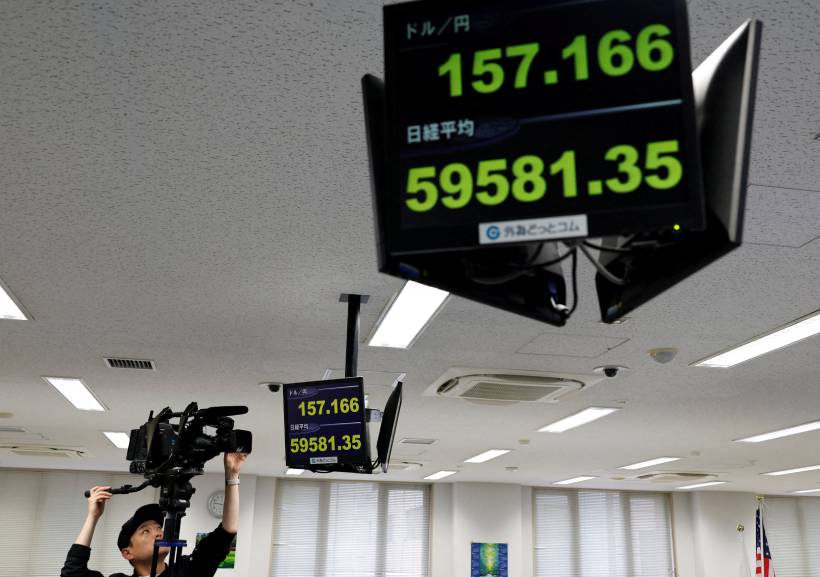
Japan has stepped into currency markets to support the yen following renewed weakness driven by rising oil prices and global uncertainty linked to tensions involving Iran. Policymakers at the Bank of Japan and the Ministry of Finance Japan are increasingly concerned that a weak currency is pushing up import costs and worsening inflation.
Unlike in earlier decades when a weaker yen boosted exports, Japan’s economy is now heavily dependent on imports, especially energy. This structural shift means currency depreciation is more harmful, particularly as oil prices rise and the US dollar strengthens as a safe haven.
How Yen Buying Intervention Works
When Japan intervenes to strengthen the yen, the finance ministry gives the order and the Bank of Japan carries it out. Authorities sell US dollars from Japan’s foreign exchange reserves and buy yen in the market. This increases demand for the yen and helps lift its value.
Japan holds substantial foreign reserves, giving it the ability to act decisively. However, even large scale intervention can struggle to compete with the enormous size of global foreign exchange markets.
Stay ahead of the geopolitical week.
MD Briefing delivers expert analysis across five global fronts — the Indo-Pacific, energy, geoeconomics, European security, and the Middle East — every Monday morning. Free.
Signals That Intervention Is Coming
Japanese authorities rarely act without warning. They typically begin with strong verbal signals, stating they are ready to take decisive action against excessive currency moves. Another key indicator is rate checking, when central bank officials contact market participants to gather pricing information. Traders often interpret this as a sign that intervention may be imminent.
Recent statements from officials suggest Japan has already entered this phase, with increasingly firm warnings directed at currency markets.
New Frontiers Including Oil Markets
Japan is also considering more unconventional measures, including possible intervention in oil futures markets. The aim would be to reduce speculative spikes in energy prices that weaken the yen by increasing import costs.
This would mark a significant expansion of policy tools, targeting not just currency markets but also the underlying drivers of exchange rate pressure. However, analysts remain doubtful about how effective such measures would be given the global scale of oil trading.
Constraints and International Coordination
A major limitation on Japan’s actions is the need for coordination with international partners, particularly the United States Treasury Department. Since intervention often involves selling dollars, maintaining alignment with the United States is important to avoid financial and diplomatic tensions.
Both countries have emphasized that exchange rates should generally be market driven, with intervention reserved for periods of excessive volatility. This places limits on how aggressively Japan can act.
Effectiveness and Structural Challenges
Previous interventions in recent years have only provided temporary relief. The main driver of yen weakness remains the gap between Japan’s low interest rates and higher rates in the United States. This gap encourages investors to move capital into dollar assets, putting sustained pressure on the yen.
Given that daily global currency trading runs into trillions of dollars, even large interventions may have only short term effects unless underlying economic conditions change.
Political Pressure and Outlook
Rising living costs linked to a weak yen are increasing domestic pressure on the government to act. Public frustration often pushes policymakers toward intervention, even when its long term effectiveness is uncertain.
Japan has signaled that it is ready to respond on multiple fronts, combining direct market intervention, strong communication, and possibly action in energy markets. However, the success of these efforts will depend on broader economic shifts, particularly changes in interest rate differentials.
Analysis
Japan’s strategy reflects a pragmatic attempt to manage immediate market stress while navigating deeper structural challenges. Currency intervention can slow the pace of depreciation and stabilize expectations, but it does not resolve the root causes of yen weakness.
The consideration of entering oil markets shows a more expansive approach, recognizing that currency movements are increasingly tied to global commodity prices. However, such measures carry uncertainty and may have limited impact.
Ultimately, intervention is best understood as a tool for controlling volatility rather than reversing long term trends. Without significant changes in monetary policy or global financial conditions, the yen is likely to remain under pressure despite periodic intervention efforts.
With information from Reuters.
