


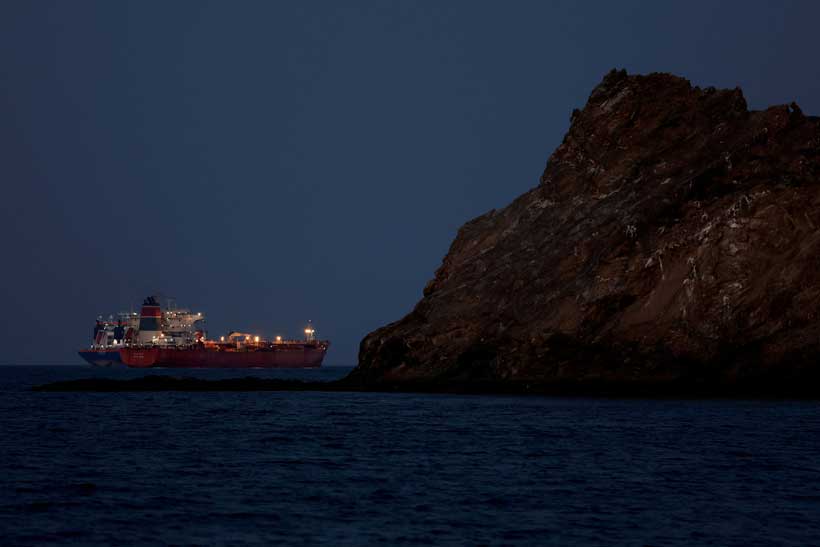
A United States naval blockade of Iranian ports is sharply reducing Tehran’s oil exports, forcing unsold crude onto tankers as storage facilities fill up. The disruption comes amid wider regional tensions and has added pressure to already strained global energy markets. Benchmark Brent crude oil prices have surged since the conflict began, reflecting tightening supply.
Exports Collapse Under Blockade
Shipping data shows a dramatic fall in Iranian exports. Only a handful of tankers have departed the Gulf of Oman in recent weeks, marking a steep drop compared to March levels. Analysts estimate that shipments have fallen by more than 80 percent, with many vessels either intercepted or prevented from completing deliveries.
The scale of disruption has made it difficult to track actual export volumes, as some tankers have switched off tracking systems to avoid detection.
Crude Builds Up in Floating Storage
With exports restricted, Iran is increasingly storing oil at sea. Dozens of tankers are now holding tens of millions of barrels that cannot reach buyers. Onshore storage facilities are also nearing capacity, creating a bottleneck across the supply chain.
Stay ahead of the geopolitical week.
MD Briefing delivers expert analysis across five global fronts — the Indo-Pacific, energy, geoeconomics, European security, and the Middle East — every Monday morning. Free.
If the situation persists, Iran may soon be forced to reduce production, as it runs out of places to store crude.
Global Market Impact
The loss of Iranian supply is compounding a broader النفط crunch triggered by disruptions around the Strait of Hormuz. The strait is a vital route for exports from major producers including Saudi Arabia, the UAE, Kuwait, and Iraq. Reduced flows through this corridor have tightened global supply and pushed prices higher.
The International Energy Agency has described the situation as one of the largest oil supply disruptions in recent years.
Economic Pressure on Iran
The blockade is hitting Iran’s economy hard. Oil exports are a key source of revenue, and the loss of income is contributing to financial instability. The Iranian currency has weakened significantly, reflecting growing economic stress.
Despite these pressures, Iran continues to load crude at key export terminals such as Kharg Island, indicating an effort to maintain production even as storage constraints mount.
US Strategy and Mixed Signals
The United States has framed the blockade as a way to cut off funding to Iran, while also attempting to manage global oil prices. In a notable move, Washington recently issued temporary waivers allowing some sanctioned oil transactions already in transit, suggesting concern about excessive price spikes.
This reflects a delicate balance between applying economic pressure on Iran and avoiding broader damage to global energy markets.
Analysis
The blockade demonstrates the effectiveness of maritime pressure in targeting oil dependent economies. By restricting exports rather than production directly, the United States is creating a logistical crisis that could force Iran to scale back output on its own.
However, this strategy carries global risks. Reduced Iranian supply, combined with disruptions in the Strait of Hormuz, is tightening markets and driving up energy prices worldwide. This creates tension between geopolitical objectives and economic stability.
For Iran, the immediate challenge is managing storage and maintaining revenue streams. If production cuts become unavoidable, the economic impact will deepen, potentially increasing domestic instability.
In the broader context, the situation highlights the vulnerability of global energy systems to chokepoints and conflict. Even targeted actions against a single country can have far reaching consequences, reinforcing the interconnected nature of modern energy markets.
With information from Reuters.
