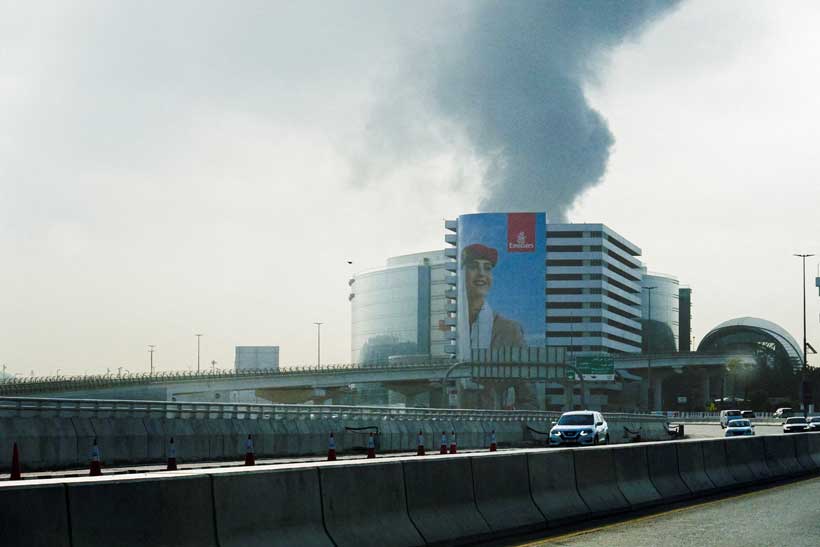
The war on Iran is now into its third week. The Strait of Hormuz remains heavily disrupted, and oil prices have moved above $100/brl following new Iranian attacks on UAE energy infrastructure. Over 20% of global oil and LNG transits Hormuz; Brent forecasts have been raised, and the IEA has already announced a record 400 million-barrel coordinated release from strategic reserves. The new, hardline Iranian Supreme Leader (Ayatollah Mojtaba Khamenei) has rejected ceasefire and de-escalation feelers and remained staunchly fixed on the goal of revenge. The Iranian public remains divided but war-weary. While many still oppose the brutality of the Islamic Republic, they may not see a foreign power’s intervention as the route to freedom.
The conflict is also being shaped by Israel’s leadership-targeting strategy inside Iran, the Trump administration’s effort to increase diplomatic pressure (while failing to secure broad allied military support), widening militia attacks on US assets, and growing Western concerns that Israel could deepen a Lebanon front. While the aggressors have inflicted serious damage and leadership losses on Iran, the Islamic Republic has not yet been neutralized.
Overall, the war’s future will be shaped by a litany of variables: the expansion of US-Israeli war aims, Iranian regime capacity and cohesion, the behavior and political mobilization of the Iranian public, energy-market disruption, the positions and reluctance of Europe, and the possible calculated involvement of China and Russia. Plausible outcomes in light of these key variables include limited coercion and an armed settlement, regional conflict expansion, and strategic backlash leading to a stalemate.
Mutual Attrition and Unstable Stalemate
Stay ahead of the geopolitical week.
MD Briefing delivers expert analysis across five global fronts — the Indo-Pacific, energy, geoeconomics, European security, and the Middle East — every Monday morning. Free.
The most plausible future is not a decisive victory for either side, despite Trump’s UN Ambassador already declaring a ‘dominant victory’ in Iran. More likely is a prolonged stalemate in which the US and Israel continue to inflict infrastructural damage without forcing a stable political outcome, while Iran continues to impose growing economic costs without reversing the war militarily. This outcome seems highly likely because it requires no official success, only each side’s continued ability to block the other side’s preferred outcome.
Iran has remained resilient despite serious losses in leadership and harsh US-Israeli offensives. The murder of multiple state leaders has not yet produced a surrender or a clear breakdown of state control. Iran also maintains asymmetric leverage through Hormuz and regional strikes. Not even naval escorts are a durable solution to the danger that travelling the Strait currently poses. Iran’s maintenance of this strategic lever despite intense bombardment may indicate that they have the capacity to endure a protracted conflict.
Costs are another driver of this outcome. US military costs are mounting without coalition consolidation. 13 US troops have reportedly been killed, with approximately another 200 wounded. With Europe staunchly refusing to turn Trump’s campaign into a broader allied war and with growing costs adding to the military aid packages Israel was already receiving (around $3.8 billion annually), footing the bill for this attack may become increasingly damaging to the, already faltering, US economy. The US and Israel are not the only ones who will feel the costs of continued war; global inflation is likely to start impacting economies as a result of increasing oil prices. External balancing also remains limited, with condemnation from other powers but continued military distance. Russia and China, for example, are only diplomatic enablers—not decisive battlefield actors.
The mutual attrition and stalemate are made much more likely if Iran continues to hurt shipping and energy flows, if US-Israeli strikes continue degrading Iranian assets without achieving a full collapse, if proxy attacks on US-Israeli interests persist at a low enough threshold to not warrant a radically larger intervention, and if Europe continues to resist large-scale involvement.
This outcome would mean high but volatile oil and LNG prices, repeated supply shocks, and growing economic pains far beyond the Middle East. Energy-intensive sectors in Europe will certainly begin to feel the pains of continued attack, and long-term macro-financial risks include prolonged inflation and tighter credit conditions—both of which will threaten future growth.
In terms of political outcomes, the US and Israel could claim tactical successes while failing to impose a settlement, and Iran could claim survival and resistance while absorbing deep damage. Europe would be neither neutral nor fully aligned; they would continue criticism of the Islamic regime but likely stick to the strategy of military distance. Russia would certainly gain from both higher energy prices and the distraction of the West, while China would prioritize maritime access, diplomatic positioning, and trade interests—regardless of ideological conflicts.
Coercive Bargaining Leading to a Negotiated Freeze
A second possible outcome is that none of the underlying disputes are resolved, but the accumulated economic and military costs force all sides into a pause driven by face-saving. External actors’ condemnation is leading to rising pressure for de-escalation, and many non-coalition commentators are seeking a diplomatic solution to Hormuz closure. Europe refuses to legitimize or contribute to indefinite escalation; Britain, France, and Germany have explicitly rejected Trump’s demand for an armada to reopen Hormuz. Europe also fears wider food, fertilizer, and energy shocks, and further angering Iran by substantively backing the aggressor coalition is unlikely to protect their economies. As the international community examines the ambiguity of the war’s aims, they may be wise to avoid being drawn into a wider conflict.
On the Iranian side, the Islamic Republic is likely very concerned with regime preservation. Even a hardened and more extreme leadership under the new Ayatollah may eventually prefer survival, partial retrenchment of sanctions, or an implicit ceasefire to an indefinite continuation of the infrastructure destruction they have endured thus far. Domestic pressure also incentivizes a tacit freeze; while the Iranian public hasn’t yet mobilized en masse against the government, a protracted conflict’s impact on living standards may lead to increased support for foreign intervention—whereas a reduction in the impacts on civilians could have ‘rally-around-the-flag’ effects.
This outcome becomes much more likely if Gulf states push harder for maritime stability than for regime change. Though they have allowed the aggressor coalition to use US bases to launch attacks, sustained economic damage due to Hormuz closure could lead to shifts in their positions. Diplomatic pressure to reopen the Strait may be enhanced by China and even felt by Iran itself as diminishing returns and rising domestic strain become more and more influential pressures. If the US concludes that, without wider support, indefinite escalation will become too costly, then all sides are incentivised to pursue the tacit freeze and Hormuz re-opening.
A negotiated freeze would reopen some shipping, decrease oil prices from crisis peaks, and reduce global panic. However, reopening would not restore trust or solve the underlying ideological conflicts. Under the new Ayatollah, Islamic fundamentalism and anti-Westernism are likely to continue as the state’s mandates. Israel will likely continue aggression toward Iran-backed non-state actors in the region (Hamas, Hezbollah, and the Houthis). The Trump administration also seems unlikely to stop interfering in other states’ sovereignty (Venezuela, Greenland, Iran, and the plan to intervene in progressive European political trends) or reverse its position opposing Islamic fundamentalism. Given that relief from bombardment will not necessarily lead to Iranian political liberalization, war conditions may strengthen coercive and repressive institutions.
Regional-Political Rupture
This third possible future is a broader rupture, in which escalation abroad and instability in Iran mix and combine to create a more dangerous, less manageable regional crisis. This would likely be driven, in part, by unclear (possibly divergent) war aims between Israel and the US. Israeli aims increasingly look like wholesale regime change, and Israeli officials have been quoted indicating that the war ends when the aggressor coalition decides it ends. The US ‘Department of War’ (which notably rejected the traditional defensive nomenclature) offers no further timeline or objective clarification. Maximalist and unclear aims make negotiated closure much harder, as thresholds for victory are higher and more changeable. There is also a principal-agent problem at play here, as Israel (agent) may pursue strategies that expand conflict in ways that the US (principal, financier) does not fully control. Unintended escalation and subsequent contagion become more prevalent risks here.
Also driving the rupture may be the fragility of Iran’s domestic-political order, which is neither stable nor collapsing but fragile and adaptive. Systematic leadership killings and long-running unrest could theoretically trigger fragmentation. Fragmentation by no means leads to automatic democratization and could instead empower the IRGC (or other extreme forces) further. While Iran certainly entered the war with legitimacy deficits (economic hardship, civil unrest, infrastructure failures), it would be folly to assume that this fragility will automatically lead to regime collapse. Instead, we may see consolidation, elite fractures, or even a hybrid instability of local unrest governed by strong central repression.
Regional political rupture would also be driven by expansion through secondary theaters and proxy dynamics, which would transform this effectively bilateral war into a regional system-level conflict. Attacks on US assets in Iraq, Israeli strikes on Lebanon, Iranian-linked activity across multiple regional nodes, and regional disdain for constant illegitimate US interference may allow proxies to create horizontal escalation pathways. Even if direct ‘boots-on-the-ground’ confrontation between Iran and the coalition is unlikely, conflict dynamics are harder to control among their proxy networks—networks containing their own semi-autonomous actors with different incentives. These secondary theatres also interact with great-power politics.
This outcome is made more likely if Israel widens the reach of the war further into Lebanon and other areas with Iran-linked militias, if a major attack injures/kills more US personnel, if the Iranian state shows visible elite fragmentation, or if Russia and China become more active in the conflict.
This is the most dangerous scenario because it could produce a hybrid crisis: civil instability in Iran, wider regional escalation, deeper energy and shipping disruption, and sharper great-power competition. Europe would likely resist any regime-change project even more strongly, due to fears of migrant flows, state collapse and Libya/Iraq-esque power vacuum. The Iranian public faces the most double-edged outcome in this scenario, as they have the possibility of political change but also face the highest risk of coercive consolidation, state fragmentation, and humanitarian catastrophe. Iranian health systems are still functioning despite severe strain, but the system is already under growing pressure.
Conclusion
The most plausible outcome is mutual attrition and unstable stalemate, followed by a coercive but incomplete negotiated freeze. The least likely, but most dangerous, outcome is regional-political rupture. This ranking is grounded in the observable mismatch between military action and political effects; the US and Israel have demonstrated their ability to inflict serious damage (on leadership, infrastructure, and military assets), but this has not translated into any decisive victorious outcomes. Iran retains the ability to disrupt the Strait, impose global economic costs, and sustain proxy actions across the region. On the other side, Washington faces increasing operational costs and casualties with no broader international support. In sum, both sides can prevent each other from winning, and neither can impose a settlement; thus, this war’s trajectory will depend largely on which political configuration—Iranian absorption of economic and military pressure or the coalition’s ability to sustain a costly, ambiguous, and globally lonely campaign—becomes untenable first.