


Four days is not long in war, but it is long enough for a bad assumption to snap. The February 28 joint United States and Israeli strikes on Iran were built on the classic hope that shock and decapitation would end the fight fast. Reporting since the opening night says Iran’s Supreme Leader Ayatollah Ali Khamenei was killed in the initial strikes, and that the campaign quickly expanded in scale. If the goal was regime collapse by paralysis, the first days instead highlighted the opposite lesson: systems matter more than personalities once missiles start flying.
The core problem is arithmetic. Missile defense is not a magic shield; it is inventory, radar time, launcher availability, crews, reload cycles, and a budget that bleeds with every intercept. When attacks come in waves, defenders must decide what to shoot, what to absorb, and what to save for later. That is why saturation is not just a tactic; it is a theory of victory. Even imperfect missiles become useful if they force a defender to spend expensive interceptors, expose batteries, and accept gaps.
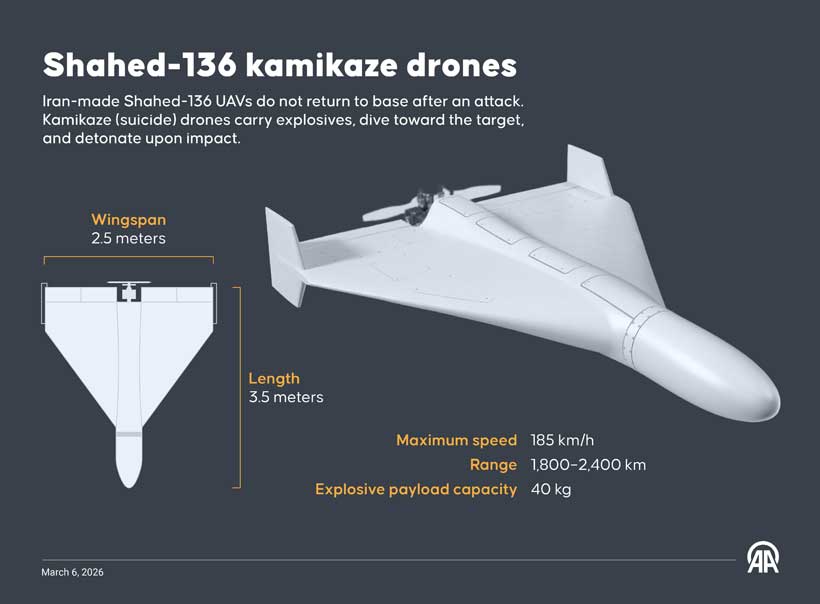
A former Indian Army officer, Colonel Rajeev Agarwal, framed this war as a contest where cost per shot is becoming as important as accuracy. In his NDTV analysis, he argues that American interceptors and strike weapons such as Patriot and Tomahawk sit in the million-dollar class, while many Iranian ballistic missiles are estimated below that range, and Iranian Shahed drones can be produced for a tiny fraction of the cost of an MQ-9 Reaper. Even if you dispute the exact price tags, the direction is hard to deny; intercepting is often more expensive than attacking, especially when the attacker mixes drones, rockets, and missiles to clutter the sky.
This is why people are suddenly talking about “obsolete” air defenses. Not because Patriot is useless, but because it was designed for a world where the defender could manage the rate of fire. In a high-volume fight, the limiting factor becomes magazines. Some cost estimates put a Patriot PAC 3 interceptor in the several million-dollar range. If multiple interceptors are fired per inbound threat, depletion accelerates, and replacement depends on production lines that cannot surge overnight. A defense system can be tactically effective and still strategically unsustainable if the burn rate outruns resupply.
Stay ahead of the geopolitical week.
MD Briefing delivers expert analysis across five global fronts — the Indo-Pacific, energy, geoeconomics, European security, and the Middle East — every Monday morning. Free.
Then there is the fog around Iran’s true inventory. Claims of 20,000 to 50,000 “missiles of various types” circulate in commentary, but independent public estimates for ballistic missiles are often far lower, commonly in the low thousands, with many caveats about what counts as a missile and what remains usable after strikes and launches. The bigger point is not the precise number. It is that Iran has enough depth, dispersal, and redundancy to keep generating launches for longer than many people expected, especially if it has prepared underground storage and mobile launch methods.
Political incentives sharpen the danger. Leaders facing domestic pressure tend to prefer clean narratives, quick wins, and visible punishment. Yet missile wars punish impatience. If you promise fast regime change and instead get a grinding exchange of salvos, every day becomes a referendum on competence and credibility. Reuters has also raised legal questions about the scale of the strikes and the authority basis claimed by President Trump, which adds another layer of friction to sustaining a long campaign. Even if battlefield results look favorable, political endurance can break before the other side’s arsenal does.
The industrial and technological response is already visible. Reporting describes the United States and Israel leaning on a blend of sensors, cyber operations, and newer options such as ship-based lasers and Israel’s Iron Beam concept to thin out drones and rockets. That direction makes sense. Lasers and cheaper point defenses do not replace Patriot, THAAD, or Arrow, but they can reduce the number of times a defender has to spend a multimillion-dollar interceptor on a low-cost target. Over time, layered defense has to include layers that are cheap enough to fire often.
The grim takeaway is that wars like this reward the side that treats logistics as the main battlefield. The famous line often attributed to Omar Bradley fits here: “Amateurs talk strategy. Professionals talk logistics.” If Iran can keep launching faster than its opponents can intercept and replenish, it can impose real strategic costs even while losing launchers and infrastructure. If the United States and Israel can keep their defenses supplied, broaden their defensive mix, and steadily reduce Iran’s ability to generate salvos, then the “cost trap” becomes manageable.
Calling any system obsolete after four days is premature. What is not premature is recognizing that the age of small salvos is over. Whether Iran has 5,000 missiles or 50,000 mixed munitions, the logic of mass is the same. The side that adapts its defenses to volume, not just to performance, will define the next phase of warfare in the region.
· Shift drones to cheap interceptors, lasers, and guns where possible.
· Expand production lines for interceptors, not just deployments.
· Prioritize targeting launchers, reload nodes, and sensors over prestige strikes.
· Build a shared regional air defense picture and reduce duplication.
· Create clear political goals, align military means, and avoid open-ended escalation.
