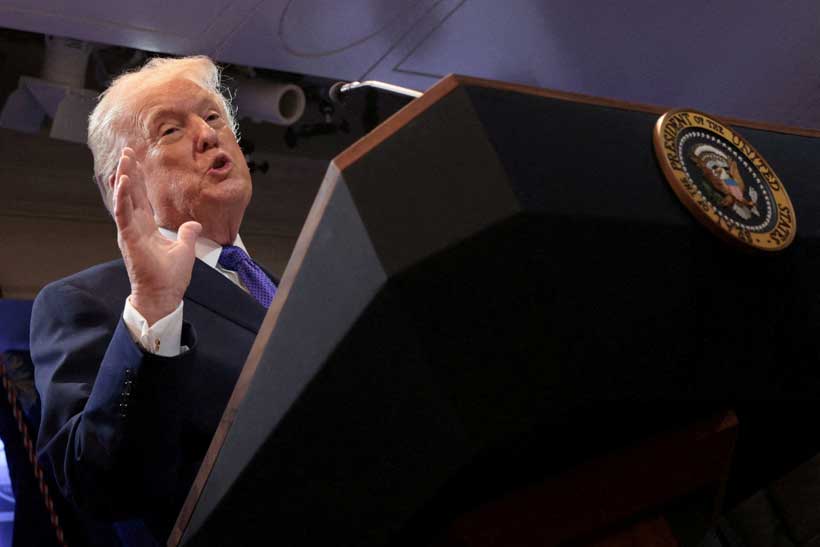
One week into the U. S.-Israeli war against Iran, President Donald Trump faces significant risks that challenge his goal of achieving a clear geopolitical victory. The killing of Iran’s Supreme Leader Ayatollah Ali Khamenei and attacks on Iranian forces may have initially seemed successful, but the conflict has expanded into a regional war, raising concerns about prolonged U. S. military involvement and potential fallout that could harm Trump’s political position and regional stability.
Trump has moved away from his earlier preference for limited military actions and is now seen as leading what experts view as an open-ended military campaign without an immediate threat to the U. S. from Iran. Analysts argue that he has not provided a clear set of objectives or end goals for this operation, called “Operation Epic Fury,” the largest U. S. military initiative since the 2003 invasion of Iraq. The White House maintains, through spokesperson Anna Kelly, that Trump’s goals are to destroy Iran’s missile capabilities, navy, and nuclear ambitions.
However, should the war continue with increasing American casualties and rising economic costs due to disrupted oil supplies, Trump’s foreign policy risks could negatively affect the Republican Party in the upcoming midterm elections. While his core supporters have generally backed him on the Iran conflict, there is a growing concern that fluctuating support could threaten Republican control in Congress, especially as opinion polls show widespread opposition to the war.
There is also confusion about whether Trump is aiming for regime change in Iran, with mixed messages about whether he intends to select Iran’s next leader. In the face of Iran’s retaliatory actions, including strikes on Israel and renewed hostilities from Hezbollah, the conflict appears to be escalating. Although American casualties have been relatively low, the potential for more losses remains, and Trump’s dismissive comments about casualties may indicate a troubling outlook for the war’s future, with many fearing that U. S. losses could lead to an even deeper conflict.
Venezuela Miscalculation?
Many analysts believe that Trump misjudged the situation with Iran, thinking it would be similar to the Venezuela operation earlier this year, where U. S. special forces captured President Maduro with minimal military action. However, Iran is a stronger opponent with a well-established government, and even a significant strike on its leaders has not stopped its military responses. There are concerns that if Iran’s current rulers fall, it could lead to chaos and further destabilize the Middle East.
Mark Dubowitz, CEO of a think tank that advocates for a tough stance on Iran, supports Trump’s war strategy but emphasizes that the president needs to clarify that he does not want Iran to fall apart. One major worry is Iran’s threat to the Strait of Hormuz, a critical area for global oil transport. Halting tanker traffic could severely impact the global economy, affecting rising U. S. gas prices, which have become a central concern for voters.
Despite Trump downplaying the rising gas prices, his administration is looking for ways to manage the war’s economic impact. Analysts note that the unexpected economic consequences may have caught the administration off guard, as they failed to consult oil market experts before escalating against Iran. Trump proceeded with strikes despite warnings from some senior aides about the potential difficulties of controlling the situation, leading to surprise among traditional U. S. allies.
The duration of the conflict remains uncertain, with Trump suggesting it could last several weeks. Retired Lieutenant General Ben Hodges praised U. S. military tactics but expressed concerns that the political and diplomatic strategies were lacking. Trump is also focused on supporting Gulf Arab allies, who have hosted U. S. bases and promised significant investments. However, not all regional leaders, like UAE billionaire Khalaf Al Habtor, support Trump’s actions, questioning his authority to engage the region in conflict.
With information from Reuters
Stay ahead of the geopolitical week.
MD Briefing delivers expert analysis across five global fronts — the Indo-Pacific, energy, geoeconomics, European security, and the Middle East — every Monday morning. Free.