


New intelligence findings suggest that China secretly trained approximately 200 Russian military personnel last year, with some of those soldiers later returning to combat operations in Ukraine.
According to European intelligence agencies and documents reviewed by Reuters, the training programme was conducted under a confidential military agreement signed in Beijing in July 2025 between senior Russian and Chinese military officials.
The programme reportedly focused heavily on drone warfare, electronic warfare, armoured infantry operations, and battlefield engineering. Intelligence sources say the cooperation represents a far deeper level of Chinese involvement in the Ukraine conflict than previously acknowledged publicly.
China’s Neutrality Claims Face Greater Scrutiny
Since the start of Russia’s full scale invasion of Ukraine in 2022, China has repeatedly described itself as neutral and positioned itself as a supporter of peace negotiations.
Stay ahead of the geopolitical week.
MD Briefing delivers expert analysis across five global fronts — the Indo-Pacific, energy, geoeconomics, European security, and the Middle East — every Monday morning. Free.
At the same time, Beijing and Russia have strengthened political, military, and economic ties under what both governments call an “all weather” strategic partnership.
The revelation that Russian personnel received tactical military instruction inside China could intensify criticism from Western governments that Beijing is indirectly supporting Moscow’s war effort while publicly presenting itself as a mediator.
Chinese officials responded by insisting that China maintains an “objective and impartial” position regarding the conflict and denied accusations of escalating confrontation.
Drone Warfare Becomes Central to Modern Combat
The reported training programme focused strongly on drone operations, reflecting how unmanned systems have transformed the battlefield in Ukraine.
Both Russian and Ukrainian forces rely extensively on drones for surveillance, targeting, artillery coordination, and direct attacks. Small first person view drones armed with explosives have become especially important in front line combat.
According to intelligence reports, Russian soldiers trained in China learned to operate various types of drones using advanced flight simulators and battlefield exercises. Some training reportedly involved integrating drones with mortar targeting systems and electronic warfare techniques.
The programme also covered methods for countering drones, including electronic disruption equipment and defensive systems designed to intercept unmanned aircraft.
China’s Military and Technology Capabilities
The training arrangement highlights the growing military sophistication of People’s Liberation Army and China’s expanding expertise in drone technology.
Although China has not fought a major war in decades, it has rapidly modernised its armed forces and developed one of the world’s largest drone manufacturing industries.
European intelligence officials believe Russia sought access to Chinese technological expertise and training systems, especially because drone warfare has become one of the defining features of the Ukraine conflict.
At the same time, Russia contributes extensive real battlefield experience gained during years of combat operations in Ukraine.
Russian Military Instructors Among Trainees
Intelligence agencies stated that many of the Russian personnel trained in China were military instructors rather than ordinary soldiers.
This detail is strategically important because those instructors can later transfer knowledge and tactics throughout Russian military units fighting in Ukraine.
Some intelligence agencies reportedly identified Russian personnel who trained in China and later participated directly in drone operations in occupied regions including Crimea and Zaporizhzhia.
Training reportedly occurred at several Chinese military institutions in cities including Beijing, Nanjing, Shijiazhuang, Zhengzhou, and Yibin.
Growing Strategic Alignment Between China and Russia
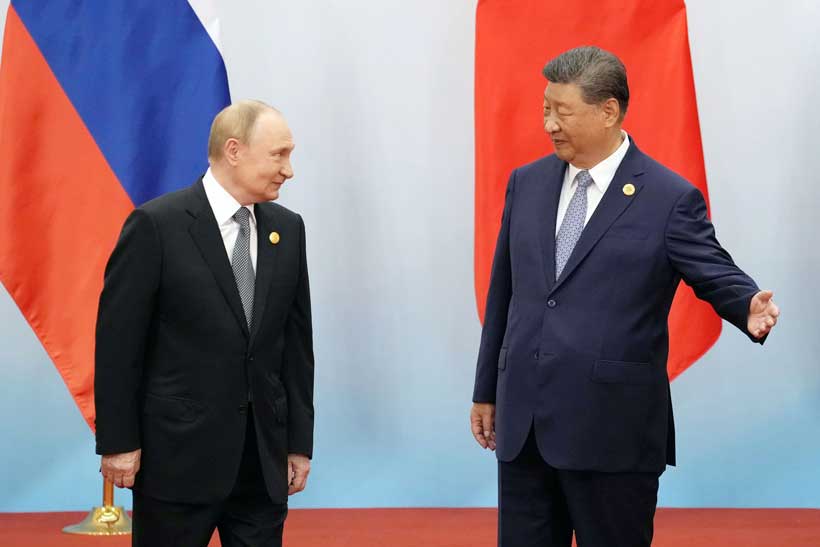
The reported training cooperation comes as Chinese President Xi Jinping hosts Russian President Vladimir Putin for another high level summit focused on economic and strategic coordination.
China has already become a major buyer of Russian oil, gas, and coal since Western sanctions sharply reduced Russia’s access to European markets.
Military cooperation between both countries has also expanded through joint exercises, naval drills, and security coordination.
However, direct tactical military training related to the Ukraine war could significantly deepen Western concerns about the true extent of Chinese involvement.
Analysis
If confirmed fully, the reported training programme would mark a major shift in perceptions of China’s role in the Ukraine conflict.
Until now, Beijing has largely avoided direct military involvement while providing Russia with economic support and maintaining diplomatic backing. Secretly training Russian troops who later return to combat would blur the line between indirect support and operational military cooperation.
The emphasis on drone warfare is especially significant because drones have become one of the most decisive technologies in modern conflict. By sharing expertise in unmanned systems and battlefield integration, China may be helping Russia adapt more effectively to evolving combat conditions in Ukraine.
For Europe and the United States, the reports are likely to reinforce fears that the Russia China partnership is becoming increasingly military in nature rather than simply economic or diplomatic.
The situation may also complicate future peace negotiations. Western governments already question China’s credibility as a neutral mediator because of its close relationship with Moscow. Evidence of military training cooperation could further undermine trust in Beijing’s diplomatic positioning.
At the same time, the partnership benefits both countries strategically. Russia gains technological assistance and operational support, while China gains insight into modern warfare tactics and real world combat lessons from the largest land war in Europe since the Second World War.
Ultimately, the reported cooperation reflects a broader geopolitical transformation in which China and Russia are deepening coordination across military, economic, and strategic domains in response to mounting pressure from Western powers.
With information from Reuters.
