


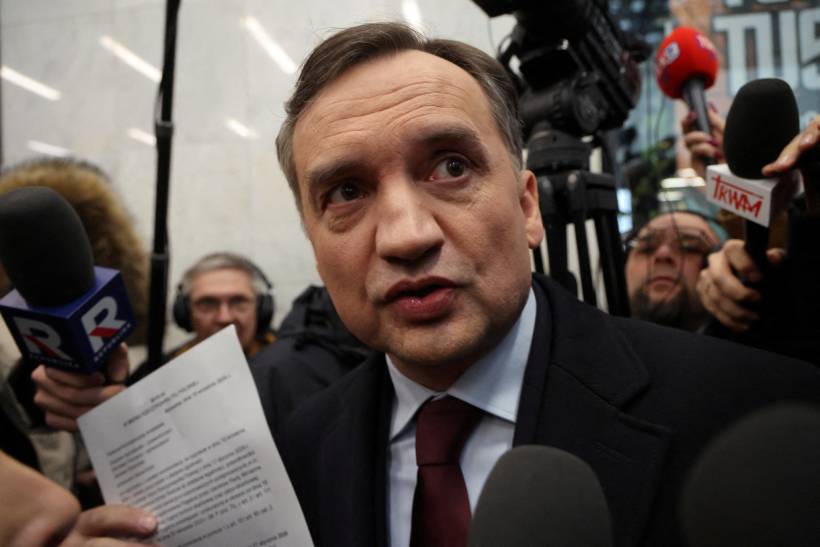
A senior official in the administration of United States President Donald Trump reportedly helped facilitate a visa for former Polish Justice Minister Zbigniew Ziobro, allowing him to travel from Hungary to the United States while facing criminal charges in Poland.
According to multiple sources familiar with the matter, United States Deputy Secretary of State Christopher Landau instructed State Department officials to approve Ziobro’s visa application ahead of a political transition in Hungary that threatened his protected status there.
Ziobro had previously received asylum in Hungary from former Prime Minister Viktor Orban after Polish authorities sought his prosecution over alleged misuse of public funds and controversial judicial reforms.
Poland Seeks Prosecution of Former Justice Minister
Poland’s current government, led by Prime Minister Donald Tusk, has pursued legal action against Ziobro over allegations involving the misuse of money from a crime victims fund for political purposes.
Stay ahead of the geopolitical week.
MD Briefing delivers expert analysis across five global fronts — the Indo-Pacific, energy, geoeconomics, European security, and the Middle East — every Monday morning. Free.
Ziobro faces multiple charges connected to his time overseeing reforms to Poland’s judicial system during the rule of the conservative Law and Justice party between 2015 and 2023.
The European Union repeatedly criticised those reforms, arguing they weakened judicial independence and undermined democratic checks and balances in Poland.
Ziobro denies wrongdoing and claims the case against him is politically motivated.
United States Visa Decision Raises Questions
The reported intervention by Landau has generated controversy because granting a visa to a foreign politician facing criminal prosecution by a close United States ally is considered highly unusual.
Sources indicated that the matter was treated internally as a national security issue, though the exact reasoning behind that classification remains unclear.
Reports also suggest that United States Ambassador to Poland Tom Rose may have informed Landau about Ziobro’s situation earlier this year.
Neither the State Department nor the White House publicly explained the legal or political basis for the visa approval, citing confidentiality rules related to visa records.
Hungary and United States Support for European Conservatives
The case reflects broader ideological alignment between the Trump administration and conservative political movements in Europe.
Trump allies have frequently argued that conservative politicians in Europe face politically motivated legal action, often describing such prosecutions as “lawfare.” Similar rhetoric has also been used by Trump supporters in the United States regarding legal cases involving Trump and other political figures.
Hungary under Orban became an important political ally for conservative nationalist movements across Europe, and Ziobro’s asylum there symbolised that alignment.
However, Hungary’s recent political shift following the election victory of pro European leader Peter Magyar appears to have created urgency for Ziobro to leave before facing possible extradition to Poland.
Poland Considers Extradition Request
Polish Justice Minister Waldemar Zurek said Warsaw was surprised by reports of Ziobro’s visa approval and emphasised that prosecutors are preparing an extradition request.
Polish officials have stated they intend to seek clarification from both the United States and Hungary regarding how Ziobro was able to travel despite Polish authorities reportedly annulling his passports.
The case has also complicated diplomatic dynamics between Poland and the United States at a sensitive moment in broader transatlantic relations.
Broader Political and Geopolitical Implications
The controversy emerges amid wider debates over democratic governance, judicial independence, and political polarisation both in Europe and the United States.
Ziobro played a central role in judicial reforms that became one of the European Union’s most significant rule of law disputes in recent years. Critics argued that the reforms weakened courts and increased political control over judges, while supporters claimed they were necessary to reform inefficient institutions.
The case also highlights tensions between ideological solidarity and traditional diplomatic norms. By appearing to support a politician sought by an allied democratic government, the Trump administration risks accusations of interfering in domestic legal matters abroad.
Meanwhile, Poland remains strategically important to the United States because of its role in European security and support for Ukraine. Reports that the Pentagon recently cancelled a planned troop deployment to Poland have already raised concerns about possible strains in bilateral relations.
Analysis
The Ziobro case illustrates how ideological politics increasingly shape international diplomacy and legal disputes between allied nations.
For the Trump administration, support for conservative political figures abroad aligns with a broader narrative that right wing leaders face unfair treatment from liberal institutions and judicial systems. Granting assistance to Ziobro may therefore reflect political solidarity as much as strategic calculation.
For Poland’s government, however, the situation represents a direct challenge to judicial sovereignty and accountability. Tusk’s administration has made restoring rule of law standards and repairing relations with the European Union central political priorities after years of conflict under the previous government.
The incident could also create friction within NATO and broader Western alliances by politicising legal cooperation between democratic partners.
At the same time, the controversy underscores a deeper global trend in which legal systems, anti corruption investigations, and judicial reforms increasingly become battlegrounds in ideological and geopolitical struggles.
Ultimately, the outcome of Poland’s extradition efforts and the response from Washington may shape not only bilateral relations but also wider debates over democratic governance, political protection, and the limits of international legal cooperation among allies.
With information from Reuters.
