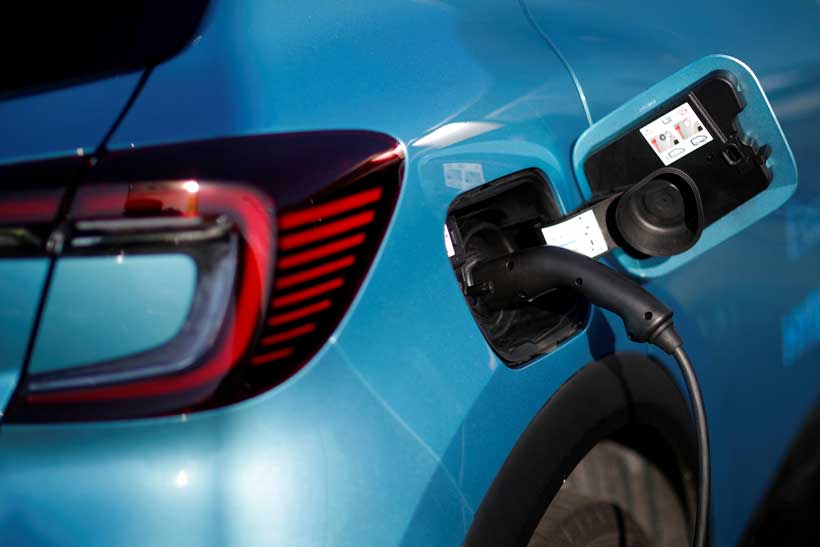
The European Union is planning to introduce ‘Made in EU’ rules for the automotive industry to support local manufacturing while being careful not to upset important trading relationships. These plans are complicated by differing opinions among member states, with France favoring protectionist measures and Germany concerned about possible retaliation.
Automakers are expressing concerns about these rules since many depend on supplies from outside the EU or have significant operations in nearby non-EU countries, such as Ford and Jaguar Land Rover. Countries like Britain, Turkey, and Morocco are interested in the ‘Made in Europe’ rules but want to ensure they are not excluded from benefits.
The situation is crucial for the industry, as failing to adapt could lead to significant relocations according to Christophe Perillat, CEO of automotive supplier Valeo. The proposed Industrial Accelerator Act suggests that an electric vehicle should contain 70% of its parts manufactured in the EU to qualify for subsidies, with additional EU-based requirements for battery packs, while acknowledging China’s strong presence in the battery market.
Europe’s auto sector is under strain, particularly from cheaper, technology-rich electric vehicles from Chinese competitors. French suppliers have reportedly lost half their workforce in recent years, and their president warns of more job losses without intervention. Some industry leaders believe that failure to enforce local content rules could harm European businesses because they cannot compete against the lower costs of Chinese manufacturers.
However, Germany’s automakers are wary that strict local-content rules might provoke trade conflicts, especially since they sell a significant portion of their vehicles in China, which is the largest auto market. China has already responded negatively to EU measures it views as protectionist.
Determining local content levels in auto models is challenging due to complex global supply chains. For example, a study on two European-made electric vehicles found varying levels of local content, with the Volkswagen ID.3 qualifying more easily as ‘made in EU’ compared to Renault’s model, which had a mix of EU and Chinese parts.
Additionally, the EU’s rules consider only parts from EU member states and a few others, yet may include components from selected global partners. Ford has pointed out that excluding countries like Britain and Turkey might weaken EU manufacturing itself. Turkey serves as a low-cost production base for several major brands, and excluding it could impact investments there.
Including Turkey, however, raises concerns about potential advantages for Chinese manufacturers establishing operations there to bypass EU restrictions. This delicate situation requires careful navigation, as highlighted by industry experts who say it’s akin to “walking on eggshells. “
With information from Reuters