


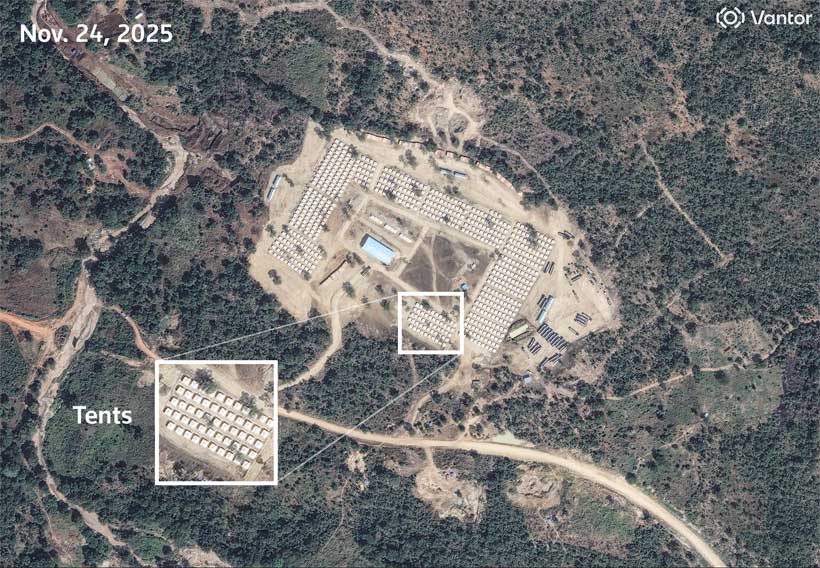
The latest reports of Ethiopia hosting a massive paramilitary training camp for Sudanese Rapid Support Forces (RSF) are to be interpreted as an addition to the latest addition of grim details in an already destabilizing conflict. In the event of the truth of the reporting, the site, supported by satellite photos, internal security briefs, and diplomatic cables, is the most obvious evidence so far of the fact that the Sudanese civil conflict is spilling conclusively across borders, bringing in neighbors and external sponsors whose calculations will invent the stability of the Horn of Africa and beyond.
The camp, which is cut out of the forest along the Ethiopia-Sudan border, can hold thousands of recruits, according to the reporting. Hundreds, or even thousands, are reported to be in training, with trainers, logistics, and funding being reportedly supplied by outside forces. This is a proxy war by infrastructure as evidenced by the presence of drone-control infrastructure in the area and the presence of Sudanese, South Sudanese, and Ethiopian fighters; the level of logistical sophistication involved is far beyond the informal method of recruiting fighters across borders.
One should take an important caveat: a number of aspects of the reporting have not been verified and have been refuted by certain named individuals. The policy implications should not, however, be clouded by that caveat. It could be the creation of a camp by Ethiopia and their allies to watch over the situation, or the result of local commanders taking advantage of networks in the shadows, but the resultant consequences are identical: a war that started as a domestic conflict between the Armed Forces of Sudan and the RSF is now receiving external lifelines that make containment, negotiation, and humanitarian aid difficult.
Why this matters. The Sudanese war has already rendered millions of people homeless and provoked famine in some regions of the country. This influx of trained, well-equipped paramilitaries across the border intensifies the fighting in the theater, especially the conflict in sensitive locations like Blue Nile, and opens up new fronts and new channels of recruitment and weapons transportation. Foreign trainers and logistic assistance complicate de-escalation: when external customers are invested, they are not usually interested in ceasefire and civilian protection.
Stay ahead of the geopolitical week.
MD Briefing delivers expert analysis across five global fronts — the Indo-Pacific, energy, geoeconomics, European security, and the Middle East — every Monday morning. Free.
In the case with Ethiopia, the so-called camp is a dangerous strategic decision. Addis Ababa has internal weaknesses and cross-border complications, and direct or indirect intervention would drag it into the swamp of Sudan. To the UAE and other foreign supporters, allying with proxy players can bring short-term payoffs but will tend to increase instability in the region and reputational losses. To the neighboring states, such as Egypt, South Sudan, and Chad, the regionalization of the violence in Sudan has caused direct security crises: border incursions, the flow of refugees, the spread of arms, and transnational criminality.
The humanitarian impacts are severe. The spillover of conflict is also expected to escalate the migrations of refugees to already overstretched states, overburden humanitarian passageways, and make it difficult to provide assistance. In case the training camps allow the RSF to stage sustained operations in new theaters, there will be an increase in the number of casualties and the risk of displacement and famine. The international humanitarian law is not just a theory in this case; cross-border recruitment of forces and international assistance in helping irregular troops are often paired with the breach of civilians on both sides of a conflict.
The report has a strategic overlay with larger trends in modern conflict: the growing salience of proxy conflicts, reliance on deniable logistical chains, and the arms-length pursuit of state interests through non-state actors. The Horn of Africa has long been the breeding ground of such strategies, and external forces have been using the local divisions to gain bases, routes, and influence. The difference that exists today is the magnitude and publicity of the supposed operation, with the infrastructural presence that can be seen in space.
What ought the international community to do? First, clarity matters. International observers, whether in the form of UN processes, the African Union, or even unbiased satellite-analytic groups, should be the first choice to serve as a way of putting any facts straight and discouraging misinformation. Second, regional institutions need to be enhanced to mediate: the Intergovernmental Authority on Development (IGAD) and the African Union have to intervene in bringing stakeholders to the table and pressuring states to stop the activities that internationalize the war.
Third, those external influences within leverage, especially the Gulf states, the Western capitals, and the regional giants, must organize to lower the incentives towards proxy support. That is connecting diplomatic participation and economic relations to straightforward and enforceable anticipations regarding non-intervention and civilian security. Fourth, humanitarian access should be increased, and it should not be politicized; the corridors should be secure, the interlocutors should be neutral, and the international funding should be sound to ensure no further spread of famine.
Lastly, the perpetrators of transnational violence who are materially involved must also be punished. A weapons embargo, specific sanctions against networks that finance or transport fighters, and systems of accountability for those involved in cross-border recruiting would impose expenses on the potential customers. These are flawed, but with an expanding conflict, they are one of the tools needed to put in place to contain further contamination of the region.
The war in Sudan has long been constructed as a national tragedy with international reverberation. The fact that cross-border training facilities emerge or are established changes that calculus: it has now become undoubtedly a regional security crisis. The border between the inner struggle and interstate warfare is getting thinner with every truck of the equipment, every flight of the drone, and every recruit who crosses a weak frontier. Policymakers who continue to imagine Sudan as an entity that is sovereign to its boundaries are being overtaken by the events. Containment is no longer passive, but it has to be proactive and coordinated diplomacy to ensure that a larger conflagration is avoided that will be more difficult and costly to reverse.
