


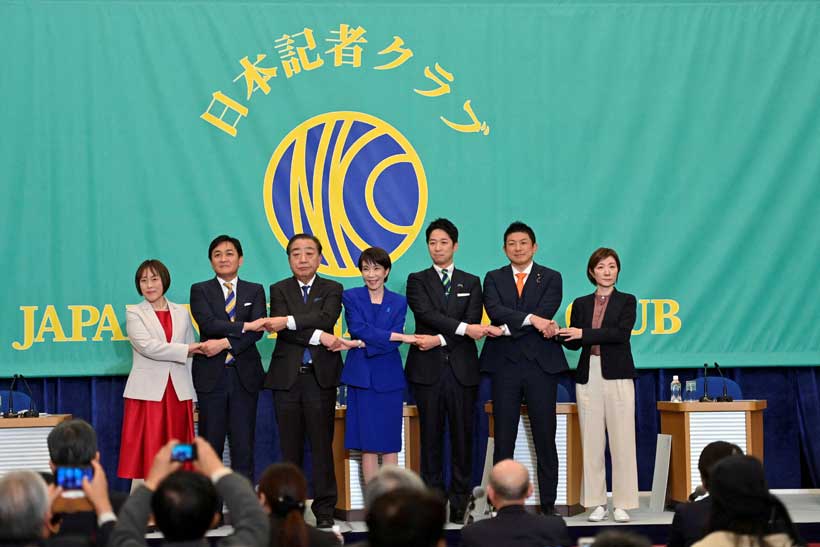
Japan’s first female prime minister, Sanae Takaichi, is aiming for power in an upcoming national election, with polls indicating a significant win for her conservative party. Poll results show her Liberal Democratic Party and its coalition partner, the Japan Innovation Party, could secure around 300 of the 465 seats in the lower house of parliament. A minimum of 261 seats would grant her an absolute stable majority, allowing smoother passage of legislation, while a super-majority of 310 seats would enable her to override the upper house.
Takaichi’s proposal to suspend the 8% sales tax on food to help families with rising prices has caused concern among investors, leading to a market selloff last month. Critics question how Japan, with its high debt, would cope with the anticipated loss of around 5 trillion yen ($30 billion) in annual revenue. There are worries that a market downturn could hinder her effectiveness, as the Bank of Japan may not be able to assist her in that situation.
Support for Takaichi is notably stronger among younger voters, a departure from the usual support from older generations. With her background and nationalistic stance, she appeals to disenchanted youth who wish to revive Japan’s economy. Takaichi has effectively used social media, becoming a fashion icon. However, low voter turnout among the youth, such as the 36% participation from those aged 21 to 24 in the last election, could affect her performance in this election.
A strong victory could enhance Takaichi’s position in ongoing tensions with China, as she has recently taken a firm stance on national security issues. Simultaneously, there is a rise in far-right politics, with the far-right Sanseito party expected to gain around 15 seats, impacting Japan’s political narrative.
Additionally, severe winter weather may affect voter turnout, particularly as this is the first election held in mid-winter since 1990. Heavy snowfall could hinder access to polling stations, which could further lower the already modest turnout rates in Japan.
With information from Reuters
